Big Tech Is Coming for Your Water, Your Land, Your Lungs, and Your Electric Bill
Thom Hartmann The Hartmann Report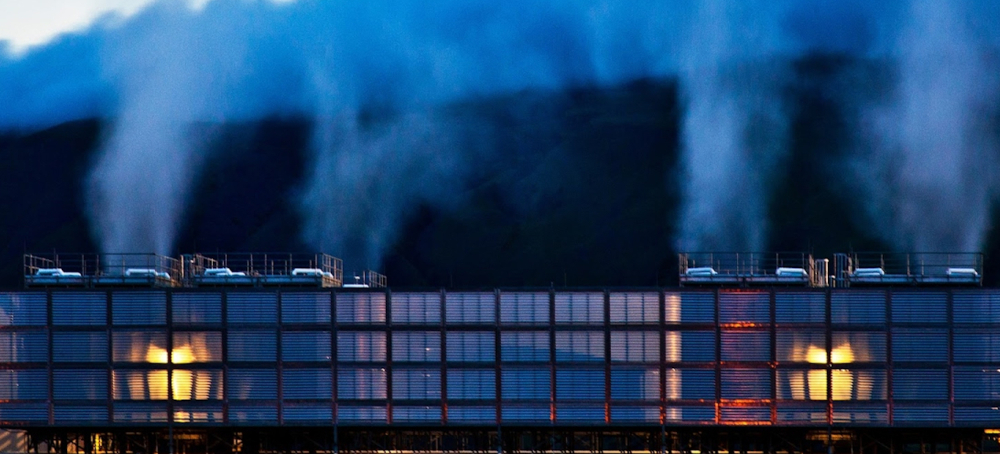 AI billionaires are swallowing America’s resources, polluting communities, and trying to stick working families with the bill. (photo: Getty)
ALSO SEE: The Hartmann Report, Thom Hartmann on Substack
AI billionaires are swallowing America’s resources, polluting communities, and trying to stick working families with the bill…
— Mostly-Republican farmers in Nebraska are joining up with mostly-Democratic environmentalist to fight a proposed 1,300-acre data center complex.
— Conservative ranchers and rural residents in New Mexico are challenging billionaire Larry Ellison’s Oracle over a massive water-consuming data center project.
— Communities in Texas that voted overwhelmingly for Trump are demanding moratoriums on the computer-rack warehouses that are increasingly pockmarking rural America.
This is the 2026 wave of a new populism, and Democrats are jumping on it.
Polling by Gallup finds that 71 percent of Americans are against having an AI data center in their community, and that number includes Democrats, Republicans, and Independents. They get it that the much-ballyhooed “cloud” is actually a gigantic collection of massive industrial buildings that consume staggering amounts of electricity and water, produce both air and noise pollution, and more often than not jack up local utility bills and buy off corrupt local politicians to get tax abatements.
The Department of Energy says that data centers sucked up 4.4 percent of all the electricity generated in America in 2023; by 2028, DOE says, that number could be 12 percent, or about an eighth of all the power produced in our country. And once the buildings go up, the number of jobs created is negligible.
Amazon, Meta, Google, Microsoft, OpenAI, and other tech giants often negotiate special “bulk” electricity rates behind closed doors, sticking homeowners and local small businesses with the cost of expanding the grid and power plant capacity.
People are over it.
Researchers at Harvard’s Electricity Law Initiative documented how these data center costs are rapidly being shifted from the companies to the public. For example, Meta/Facebook is planning a new data center in Louisiana that would suck up about twice as much electricity as the entire city of New Orleans, and require around $3 billion to build out the gas-fired generator capacity it’ll need.
And the contract that discloses how much Meta will pay for that power is conveniently considered “confidential” by the local Republican politicians, so nobody knows how bad the hit to regular people will be.
Working families and small businesses, in other words, will probably be forced to subsidize one of the richest corporations and richest billionaires in the world, and this is an increasingly common situation regardless of the company building the data center.
Even more alarming is the pollution these centers are producing.
Because data centers require an uninterrupted supply of power many contain dozens of back up diesel generators or build their own methane gas-fired turbines. The diesel engines produce exhaust filled with fine particles and other chemical pollutants that are known to cause asthma, heart disease, cancer, and premature death, while the gas-fired plants generate nitrogen oxides, carbon monoxide, particulate pollution, and weather-wilding carbon dioxide.
And just this week we discovered that Trump’s EPA, largely run by former fossil fuel executives, is trying to make it even harder for local communities to find out how much and what type of pollution is in the air they’re breathing. They proposed eliminated federal public-participation requirements for data centers that they classify as “minor pollution sources.”
They’re pulling off this con by claiming that each one of the often-dozens of generators on a single data center site are “individual,” “small,” or “minor” sources, rather than dealing with the entire center as a single source. Thus, no public input is necessary to permit them, and the levels of emissions are treated as trade secrets. Families living nearby will never learn what they and their children are inhaling.
And it’s not inconsequential. Scientists at the Harvard T.H. Chan School of Public Health estimate that the pollution from just one single proposed data center in northern Virginia could produce between $53 million and $99 million in health damages every year.
That includes additional premature deaths, hospital admissions, asthma attacks, and lost worker productivity from sickness and crippling lung and heart disease.
And then there’s the water these centers use for cooling, which — particularly in the West and Southwest — is becoming a rarer and rarer commodity, competing with farmers, ranchers, and nearby towns. A typical hyperscale data center can consume three to seven million gallons of water a day.
Add that to the generator exhaust, disappearing farmland, secret tax breaks, and exploding electric bills and it becomes obvious why rural America is revolting, politics be damned.
This is not a new dynamic.
Back in the late 19th century the owners of the most advanced technology in the world were the railroad barons, and those oligarchs played largely the same game by using their great wealth and monopoly power to charge farmers absurd rates to transport their crops, bought up politicians, seized land with the complicity of corrupt governments, and forced the public to subsidize their empires.
That abuse produced the Granger movement, the Farmer’s’ Alliances, and eventually the progressive People’s Party. They didn’t oppose railroads; they used them heavily. They objected to the oligarchs exploiting them for their own profit.
Today’s AI oligarchs and Tech Bros echo those railroad barons, as does the backlash they’re engendering.
The appropriate response to this exploitation of rural America and homeowners is pretty straightforward, and more and more Democratic politicians are jumping on that bandwagon: force Big Tech to pay its own bills.
No more secret utility contracts, no more forcing residential electric ratepayers to bear the costs of expansion and construction to feed the data centers, no more corrupt tax breaks, and no more polluting generators unless there truly is no other option, and then only with local consent.
AI may turn out to be, on net, enormously beneficial (if it doesn’t destroy the world, as some fear), or it may be the biggest bubble we’ve seen since the internet bubble of the late 1990s. In either case, the richest men and most powerful corporations on Earth shouldn’t have the power to appropriate a community’s water, land, clean air, and electricity while sticking the locals with the bill and pollution.
This isn’t, in other words, a left-right issue; it’s an oligarchy versus democracy issue. And that’s right in the Democratic Party’s traditional bailiwick.
Rural Republican voters are finally waking up to the fact that populism was always about protecting people from the billionaires, not the other way around as the GOP would have it. And some are even embracing Democrats in the process.
Game on.