An ICE Detainee’s Death Followed Months of Pleas for Mental Health Treatment, Records Show
Douglas MacMillan and Aaron Schaffer The Washington Post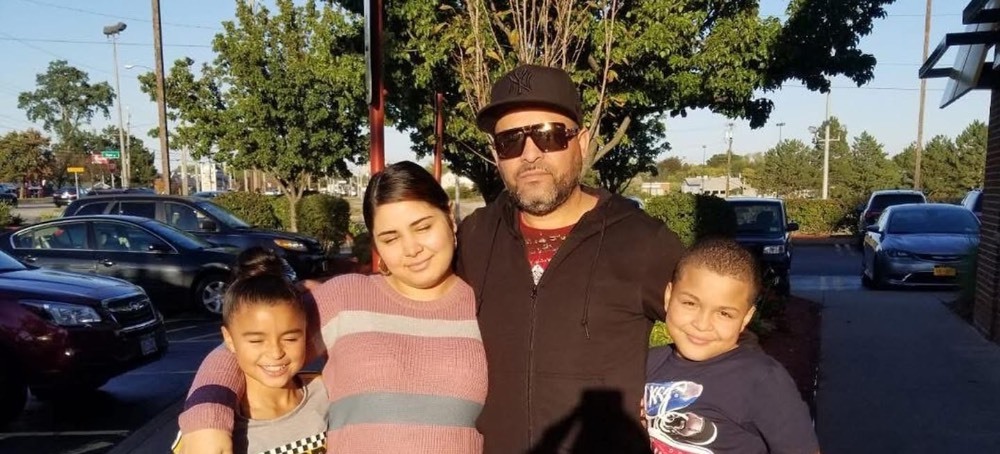 The family of Geraldo Lunas Campos is suing detention center operators and guards over his death. (photo: Jeanette Pagan Lopez)
The family of Geraldo Lunas Campos is suing detention center operators and guards over his death. Records show he repeatedly requested treatment for his mental illness.
Lunas Campos, who suffered from bipolar disorder and anxiety, had complained about not getting the right dosage of antidepressants, expressed suicidal thoughts to staff and reported giving himself a black eye by hitting his head against the wall, the records show.
Three months before he died, guards found Lunas Campos with a sheet tied around his neck, the records say. Staff discussed moving him to “a higher level of care for mental health treatment,” according to the records, but never did.
Lunas Campos’s struggles with mental health, the details of which have not been previously reported, provide context for the chaotic events surrounding his death on Jan. 3. What took place in his final moments, behind the walls of a privately run detention center, is the subject of conflicting accounts, with a witness claiming the 55-year-old Cuban immigrant was choked to death by guards and the Department of Homeland Security alleging he had been trying to take his own life and was killed in an ensuing struggle.
On Monday, Lunas Campos’s family sued the guards and the companies that oversaw Camp East Montana, the El Paso detention center where he died, claiming that the guards killed him and that their employers failed to adequately train and supervise them. The lawsuit also alleges the facility failed to properly treat Lunas Campos’s mental illness, putting him in danger.
The complaint cites the findings of the El Paso County Office of the Medical Examiner, which ruled Lunas Campos’s death a homicide, saying that he died by asphyxiation. The finding of homicide does not imply intent to kill, but rather that the victim’s death was caused by another person.
In the lawsuit, filed in a Texas state court in El Paso County, Lunas Campos’s family is seeking over $1 million in damages.
DHS spokeswoman Lauren Bis declined to answer questions about Lunas Campos’s mental health history, responding instead with an emailed statement about his death. Lunas Campos “attempted to take his own life,” she said. “The security staff immediately intervened to save his life.”
Representatives from Acquisition Logistics, the company that oversaw Camp East Montana at the time Lunas Campos was killed; Akima, the company that employed the guards; and Nana Regional Corp., Akima’s parent company, did not respond to requests for comment. In March, DHS said it was terminating Acquisition Logistics’ contract and bringing in a new contractor after reviewing the facility to ensure it met federal standards for immigrant detention.
One of the guards named in the lawsuit declined to comment. The other three could not be reached.
ICE arrested Lunas Campos in July 2025, as the Trump administration was ramping up immigration enforcement actions across the country. Court records show he had been convicted of several crimes, including aggravated assault with a weapon and, in 2003, first-degree sexual abuse involving a child under 11 years old. He was paroled into the United States in Miami in 1996, according to U.S. Immigration and Customs Enforcement. An immigration judge ordered his removal in 2005, but the government said it could not obtain travel documents for him.
Lunas Campos is one of 20 people to die in ICE custody so far this year, a toll that is on pace to set a record for annual deaths in detention. Because only a small number of homicides have ever occurred in ICE detention, Lunas Campos’s death has drawn added scrutiny.
DHS’s inspector general disclosed last week that it is evaluating the recent increase in deaths of ICE detainees. The watchdog also launched a probe of the use of force in ICE detention centers. ICE detainees are increasingly subject to physical force, including punches, kicks, takedown maneuvers, restraint holds and restraint chairs, as well as less-lethal weapons such as Tasers and pepper spray, The Post reported earlier this year, based on a trove of internal ICE records.
Democratic lawmakers have expressed frustration at what they see as a lack of accountability for Lunas Campos’s death, for which no criminal charges have been filed nor any disciplinary measures announced. ICE said as recently as April that the FBI is investigating the incident.
“This is still an active investigation, and more details are forthcoming,” Bis said in her statement. “ICE investigates the circumstances of all deaths in custody.”
An FBI spokesperson declined to comment.
Lunas Campos began complaining about his medication soon after he was booked into Camp East Montana in September 2025, according to a 279-page batch of documents collected by El Paso’s medical examiner in its investigation of the incident. Many of the records appear to be notes taken by detention center health care workers as they recorded observations about Lunas Campos’s condition.
A large man who suffered from asthma and whom health care providers described as in remission from cocaine and cannabis dependence, Lunas Campos relied on antidepressants. He became irritable when the facility didn’t give him his morning dose until the afternoon, the documents show.
The next month, after guards disciplined Lunas Campos by placing him in the segregated housing unit where detainees are held in isolation, records show, they discovered him with one end of a sheet tied around his neck and the other tied around the handle of a door. He told staff then that he was not suicidal, according to the medical records, which said he claimed to have only made the “suicidal gesture” to get security guards to release him from segregated housing.
Federal standards for immigration detention say that an effort should be made to hold detainees with a serious mental illness in a setting “where appropriate treatment can be provided,” including potentially transferring them to a hospital.
Lunas Campos told staff he wanted to be moved to a facility with a “higher level of care,” according to the medical records, and staff made a note about a potential transfer. However, the section of the notes that described his “treatment plan” said nothing about a transfer; it specified that he was supposed to take all of his medicine, attend therapy sessions and “practice coping skills to manage suicidal thoughts.”
In November, Lunas Campos went four days without getting his medications, according to a note in his medical file.
In the afternoon of Jan. 3, one of Lunas Campos’s cellmates said he saw detention staff repeatedly refuse Lunas Campos’s requests for medication, the cellmate said in an interview with The Post. Becoming frustrated and vocal, Lunas Campos volunteered to be taken to “the hole,” or the segregated housing unit, if that would ensure he got access to his medication, the cellmate said.
The lawsuit filed by Lunas Campos’s family claims he was brought to the segregated housing cell shackled and handcuffed, and when guards refused to give him his medication, he became agitated.
The complaint alleges that the four guards restrained him and that, even after Lunas Campos yelled that he couldn’t breathe, “the guards kept restraining him on the ground, putting pressure on his neck and chest until his body went limp.”
The FBI’s preliminary investigation found that Lunas Campos tried to harm himself by wrapping a sweatshirt around his neck and attempting to tie it to the frame of a bed, according to a letter Special Agent Shannon Enochs wrote to the medical examiner, which was included in the 279-page file.
Guards “made physical contact with the inmate, at which point, the inmate became resistant as contract staff attempted to apply wrist restraints,” Enochs wrote. “The inmate was taken to the ground and wrist restraints were applied. Contract staff then noticed that the inmate appeared to be in medical distress and contacted on-site medical support for assistance.”
When reached by phone, Enochs confirmed the authenticity of the letter but declined to comment on the investigation.
Less than two weeks after Lunas Campos died, ICE reported another death at Camp East Montana — what it called the “presumed suicide” of a 36-year-old Nicaraguan man. A report that the Government Accountability Office published in June found that the man was placed in a medical holding room, not a suicide-resistant cell, and left unattended for long periods, even though he had exhibited risk factors for suicide.