A “Who You Gonna Believe?” Election
Paul Krugman Substack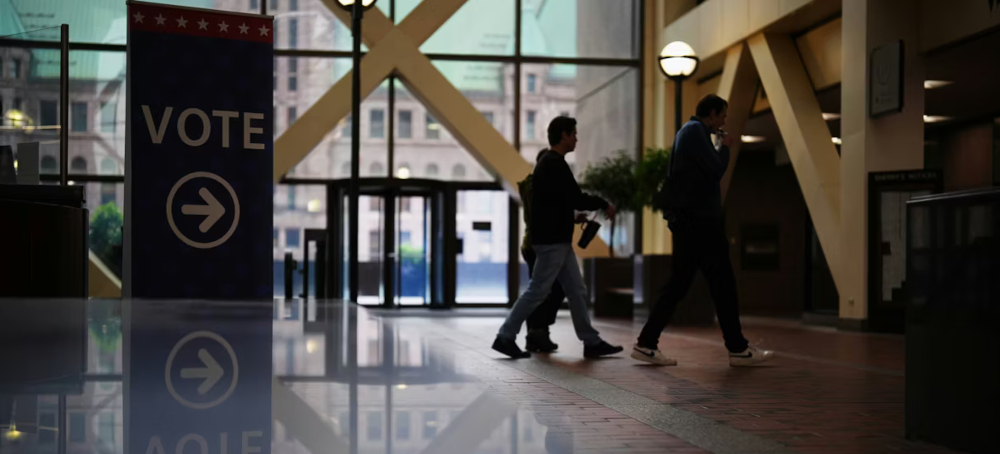 People walk past a sign directing voters on the first day of early voting in Minnesota at the Elections & Voter Services building in Minneapolis, Friday, Sept. 18, 2026. (photo: Ellen Schmidt/AP)
If you’re arguing, you’re losing. Trump is arguing.
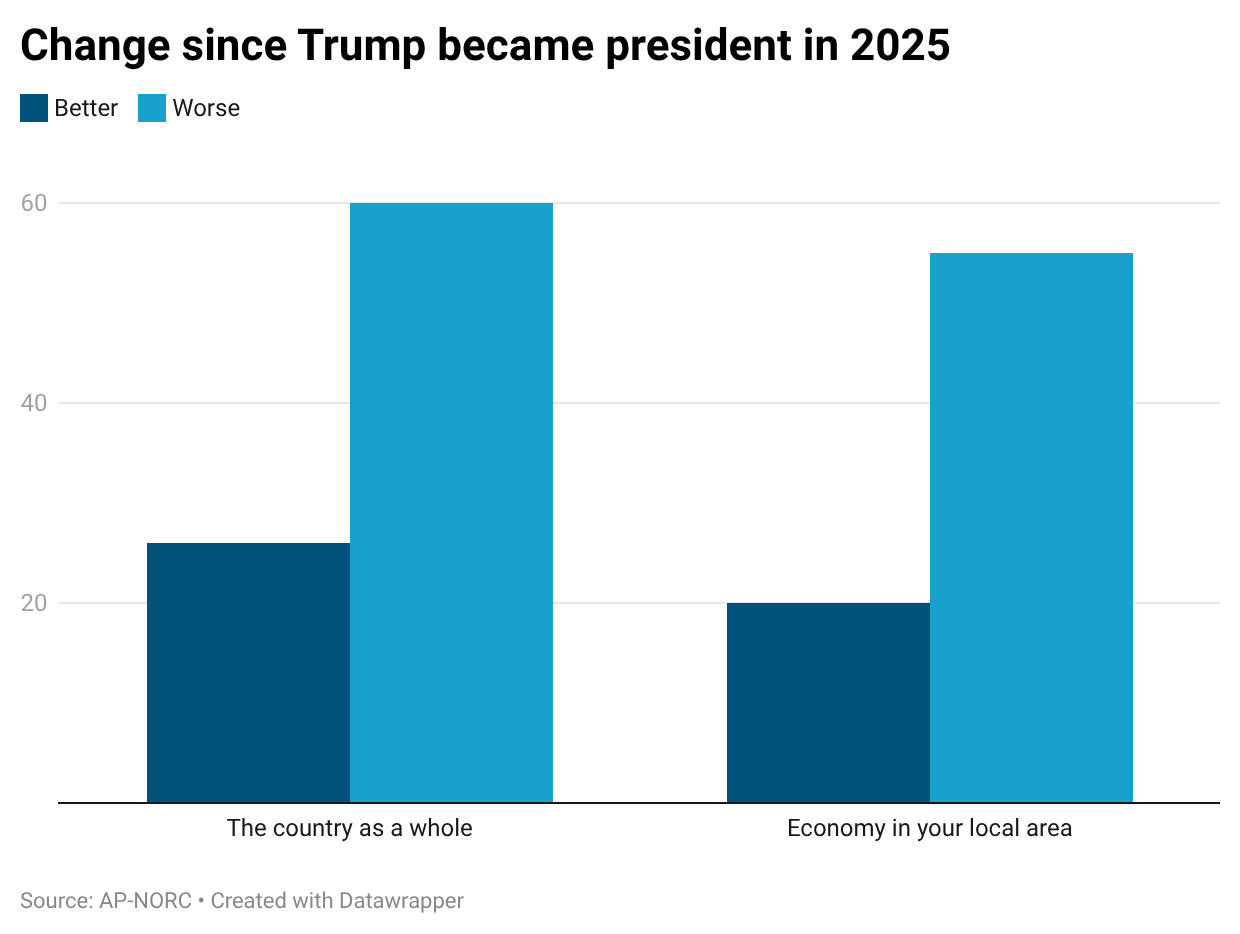
A note here: When Kyla Scanlon introduced the term “vibecession” during the Biden years, Americans generally had a much more positive view of their local economy — which they could observe with their own eyes — than they did of the national economy. That’s no longer the case: Americans are as down on their local economies as they are on the national situation. This downbeat view of the state of the nation isn’t a media narrative concocted by the “fake news”: it’s what people see all around them.
And while I’m not a political consultant, I don’t think “Who are you gonna believe, me or your own eyes?” is a winning strategy.
But then again, who in this administration would be willing to risk Trump’s ire by taking that popup down?
Tomorrow I’ll post a conversation with G. Elliott Morris and David Nir about what polling and other political indicators say about the midterm elections. Today I thought I’d complement that discussion in advance by talking about several economic indicators that are also really, really bad news for Trump and his party.
First, the obvious: prices at the pump:
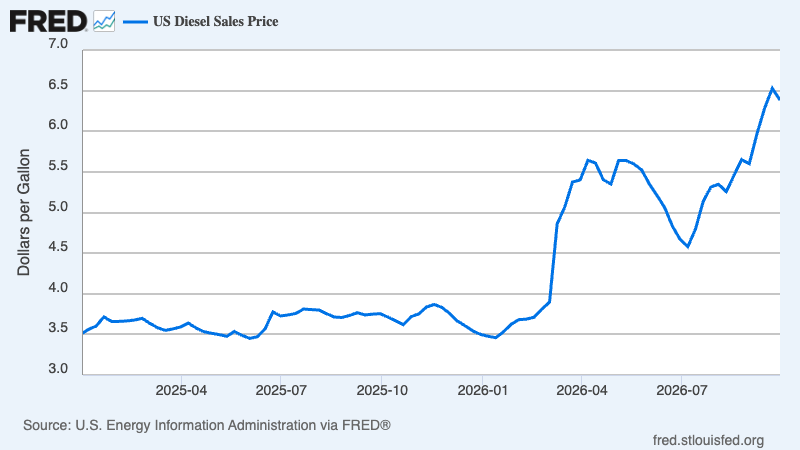
Voters famously blame whoever is in the White House when fuel prices are high, even though presidents normally have very little influence on these prices. In this case Trump, with his disastrous war of choice in Iran, really does bear full responsibility for high energy prices — and voters know it.
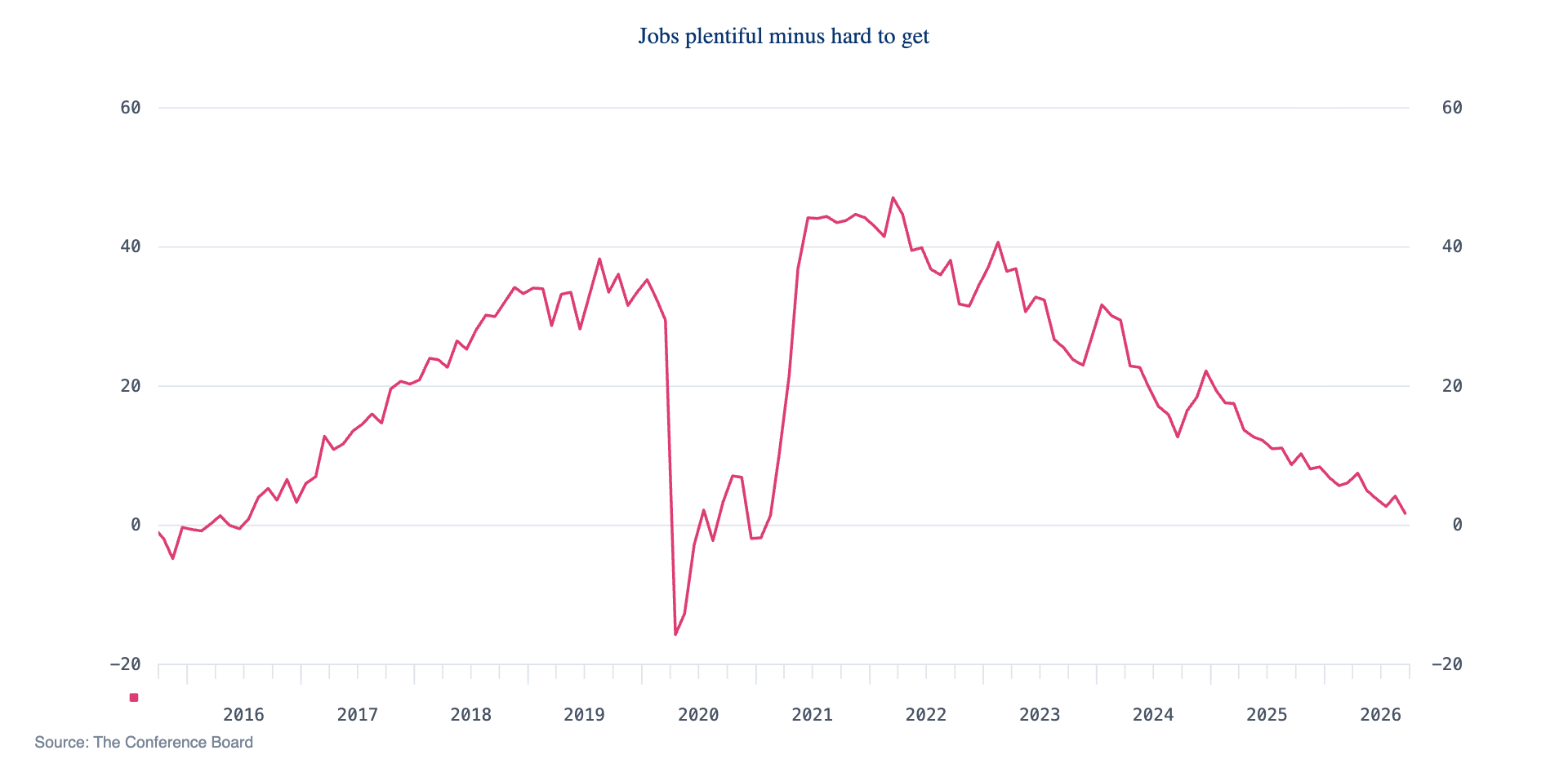
However, fuel prices and inflation in general aren’t the only reasons Americans have a negative view of the Trump economy. Official measures of employment and unemployment look good by historical standards, but perceptions about the state of the job market have dramatically worsened. Every month The Conference Board asks Americans whether jobs are “plentiful” or “hard to get.” The difference between these two answers is almost always positive — we are an optimistic nation — but the “labor market differential” has plunged. Americans perceive the job market as being the worst it has been since Covid:
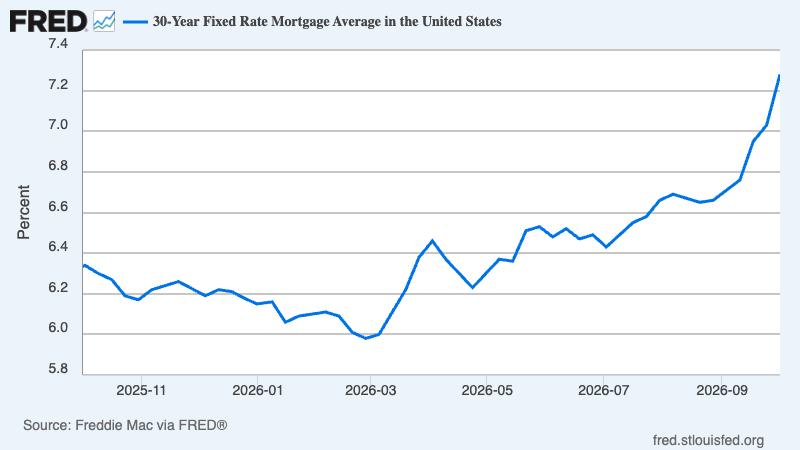
Finally, how about those interest rates? We often hear about elections being swung by an “October surprise,” and maybe Trump still has something up his sleeve. But the big economic news of the past month has been a “September surprise” on interest rates, including rates that matter a great deal to ordinary Americans — such as families trying to buy houses. Here’s the 30-year mortgage rate:
So where are we as we head into the final month of the midterm campaign? Election models based on political polls are almost surreally favorable to the Democrats, who Elliott Morris gives a 99 percent chance of winning the House. But it’s not just the polls. Even though the U.S. economy looks OK by some measures, the overall economic environment looks really bad for Trump and his party.
Oh, and there’s the small matter of that disastrous war.
Yet the Trump administration insists that this troubled environment is a Golden Age. This isn’t just bad politics. It’s an indication that Trump is living in a bubble of fantasy and sycophancy, in which nobody dares suggest — even as a matter of cynical political strategy — acknowledging that things are less than perfect.
And remember: When voters make it clear that they aren’t buying into Trumpist triumphalism, he won’t blame himself. He’ll blame America, and look for people to punish.