
Why Saudi Arabia’s Houthi Problem Is Our Problem, Too
Mark Hertling The Bulwark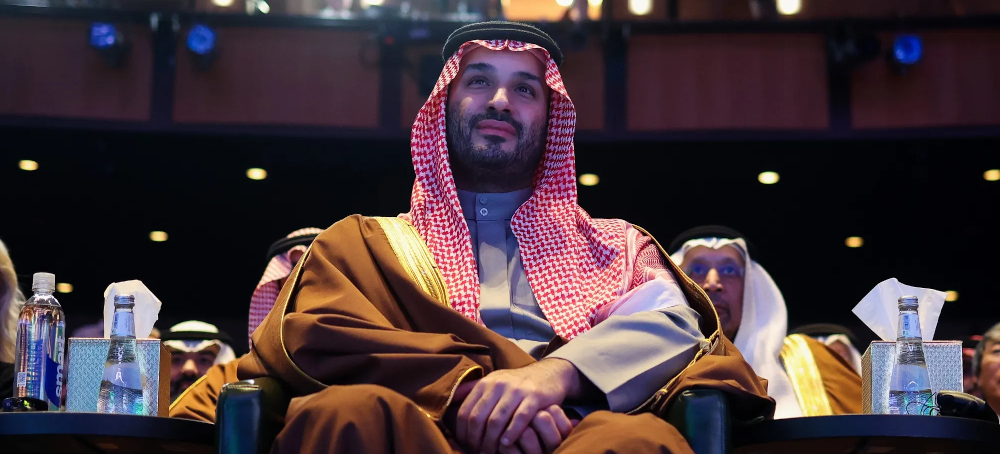 Saudi leader Mohammed bin Salman. (photo: Getty)
 Why Saudi Arabia’s Houthi Problem Is Our Problem, Too
Mark Hertling The Bulwark
The Yemeni extremist group is adaptable, aggressive, and more united than its opposition.
The reason it’s so complicated is that the region has more than its fair share of advanced weapons, armed groups, and hostile factions—but relatively little in the way of organization. But considering the impact the war in Yemen—and beyond—is having on the global economy and American security, it’s worth breaking down all the moving parts.
The Houthis—the Iranian-backed movement that has controlled Yemen’s capital for more than a decade—launched a stunning offensive earlier this month against Yemeni forces. In a matter of days, the Houthis captured territory along Yemen’s Red Sea coast and around the Bab al-Mandab Strait, one of the world’s most important shipping choke points. Yemen’s Saudi-backed government forces collapsed in several places, abandoning American- and Saudi-supplied weapons as they retreated. Reuters reports that the Houthis had quietly massed some 100,000 fighters for the offensive, which the Saudis apparently didn’t see coming.
That’s not the kind of surprise any country likes to admit. Now Saudi Arabia is desperate for backup, which is how we came to the extraordinary events involving Donald Trump. On September 10, the day the Houthis finalized their capture of the port city of Mocha on the Red Sea coast, Saudi Crown Prince Mohammed bin Salman asked Donald Trump for American military help. The president initially said no—twice. Then, a week later, after another direct phone call with MBS, Trump reportedly told the Pentagon to prepare strikes against the Houthis. According to the New York Times, target lists had been approved, and bombs were being loaded onto American aircraft when Trump changed his mind again and called off the operation.
Whatever the reasons for the president’s change of mind, there remains a fundamental question: Why does Saudi Arabia need us to fight the Houthis in the first place?
SAUDI ARABIA HAS ABOUT 35 million residents, enormous oil wealth, and one of the biggest defense budgets in the world. Its air force has F-15s and Eurofighter Typhoons, its army has modern Abrams tanks and armored vehicles, attack helicopters, sophisticated air defenses, and precision weapons. I was a commander at Fort Knox, Kentucky in 1994 when my neighbor, a Saudi Arabian colonel, was assigned there to oversee Saudi troops training on Abrams tanks.
Saudi Arabia also has a separate National Guard that itself represents a substantial ground force, also equipped with some of the best military equipment America and Europe would sell them.
But buying great equipment doesn’t necessarily give you a great military.
The Saudi armed forces have struggled for years to turn all the technology they’ve purchased into battlefield effectiveness. When Saudi Arabia intervened in the Yemeni Civil War against the Houthis in 2015, it possessed overwhelming technological superiority. Yet the Saudis became heavily dependent on airpower, as well as Yemen’s fractious ground forces, and never translated their materiel advantage into strategic success. Saudi Arabia’s campaign was based on overly optimistic assumptions about what airpower could accomplish with limited Saudi and Emirati ground forces. A report by the Center for Strategic and International Studies found that they “exhibited only limited to moderate capability to cooperate and fight effectively when they went to war.”
The Saudi example is worth emphasizing because Americans sometimes confuse the size of a country’s weapons inventory with its military capability—a fallacy that led many to overestimate the Russian military before seeing the performance of its forces in Ukraine in 2022. Effective militaries integrate intelligence, logistics, maneuver, fires, maintenance, command and control, training, and leadership. Most importantly, they develop soldiers and commanders who can make all those pieces work together when people are shooting at them. Saudi Arabia has been good about buying the hardware of war, but considerably less successful at developing the human and operational capabilities required to use it effectively.
The Yemeni ground forces that the Saudis and their allies were supporting were, if anything, worse. Calling them the “Yemeni army” gives an impression of coherence that didn’t really exist—and still doesn’t. They’re a collection of government troops, militias, tribal forces, separatists, and other armed groups with different leaders and loyalties. Some are supported by Saudi Arabia, others by the United Arab Emirates, and many don’t even agree on what Yemen should eventually look like if they defeat the Houthis. The result is something that looks like an army on an organizational chart but often doesn’t behave like one on a battlefield. The latest Houthi offensive exposed their tactical weakness.
At the same time, the Houthis have changed. They are often described in the media as an “Iran-backed Shia militia.” That’s accurate, but it doesn’t go far enough. The Houthis, formally called Ansar Allah, emerged from the Zaydi Shia community of northern Yemen in the 1990s. They remain rooted in Zaydism and closely connected to Iran.1 Iran’s financial and military support has allowed the Houthis to swell into a large authoritarian movement that uses coercion, religious indoctrination, and political persuasion to grow its ranks. When Yemen’s government was destabilized in 2014, following the Arab Spring, the Houthis took advantage and captured the capital, Sanaa. Over more than two decades of fighting, the Houthis have evolved beyond the sectarian insurgency they once were, now recruiting from outside their religious sect. The Houthis have used different religious, political, and social campaigns to mobilize fighters, including people in predominantly Sunni Shafi’i areas.
That particularly interests me because of what I saw in Iraq. During my tours there, especially during the terrible sectarian violence of the middle years of the war, the Sunni–Shia divide was something you could feel. Neighborhoods changed. Families were displaced. Militias formed around religious identity. People were murdered because of which mosque they attended or sometimes simply because of what their name revealed about their faith.
BUT YEMEN ISN’T IRAQ. Its religious history is different, and the division between Zaydi Shia and Shafi’i Sunni, historically intertwined with regional and tribal identity, hasn’t always produced the kind of sectarian hostility Iraq experienced. But sectarianism still matters in Yemen, which makes the Houthis’ ability to recruit beyond their traditional Zaydi base noteworthy.
The Houthis are a Zaydi Shia movement operating in a country where the majority of Yemenis are Sunni (and of the Shia minority, not all are Houthis). Yet they have recruited Sunni Yemenis into their ranks. Where Zaydi religious arguments aren’t persuasive, the Houthis have emphasized Yemeni nationalism, corruption, economic hardship, opposition to Saudi influence, and anger toward the government.
We shouldn’t overstate what that means. The Houthis haven’t become a tolerant, nonsectarian national movement, and not everyone who fights for them does so willingly. But, crucially, the Houthis have been able to convince some of the Sunni Yemenis who do join or cooperate with them—many of whom are already primed by the powerful motivation that is deep resentment toward Yemen’s government and Saudi Arabia after years of war—of the simplest calculation in warfare: One side looks organized, determined, and increasingly successful while the other looks divided, weak, and ready for the taking.
That helps explain the strange military balance we’re now seeing. On one side is Saudi Arabia, with billions of dollars of sophisticated military equipment but a military that has repeatedly struggled to convert that investment into battlefield success. Alongside it is a Yemeni government whose armed forces are divided among competing commanders, factions, and outside patrons. On the other side are the Houthis, who have been fighting for more than twenty years, know the terrain, have learned to survive air attack, have acquired increasingly sophisticated Iranian missiles and drones, and have found ways to recruit beyond the religious community from which they originated.
IN THAT CONTEXT, MOHAMMED BIN SALMAN’S request for American help makes more sense. The Saudis don’t need American help because they don’t have enough airplanes. They need help because airplanes haven’t solved their problem. That’s also why Trump’s apparent vacillation—first refusing Saudi requests, then preparing American strikes, then calling them off—points to a much bigger question. The United States can certainly bomb the Houthis. We have done it before. We can destroy missile launchers, drone sites, command posts, radars, and ammunition dumps. But none of that answers the most basic question a president ought to ask before ordering military action: What are we trying to accomplish?
If the objective is protecting American shipping, that’s one mission. If it’s defending Saudi territory, that’s another. If it’s pushing the Houthis away from the Bab al-Mandab, that’s considerably harder. If it’s restoring the Yemeni government or defeating the Houthis altogether, we’re talking about something much larger still. Those missions aren’t interchangeable, and dropping bombs before deciding which one we’re pursuing is how nations stumble into wars they didn’t intend to fight.
Saudi Arabia isn’t a weak country. It has a large, expensive, technologically sophisticated military. But having weapons and knowing how to translate them into military and political success are different things. Yemen’s government isn’t short of armed men either, but having armed men and having an army are different things. The Houthis can no longer be adequately understood as a band of Shia rebels backed by Iran. They have learned to exploit the political failures, resentments, and divisions of their enemies—including among Yemenis who don’t even share their religious beliefs.
That may be the simplest explanation for why this entire situation is such a mess. Money can buy airplanes, bombs, training, and uniforms. It can fund armies that look impressive on paper. What it can’t buy is cohesion, legitimacy, motivation, public support, and the willingness of people to fight for their government.
And that’s the question Washington needs to answer before launching another round of airstrikes: Are we addressing the actual causes of this crisis, or simply bombing the most visible symptoms of it?