What’s Behind Reports of Israeli Espionage Against the United States?
Ben Samuels Haaretz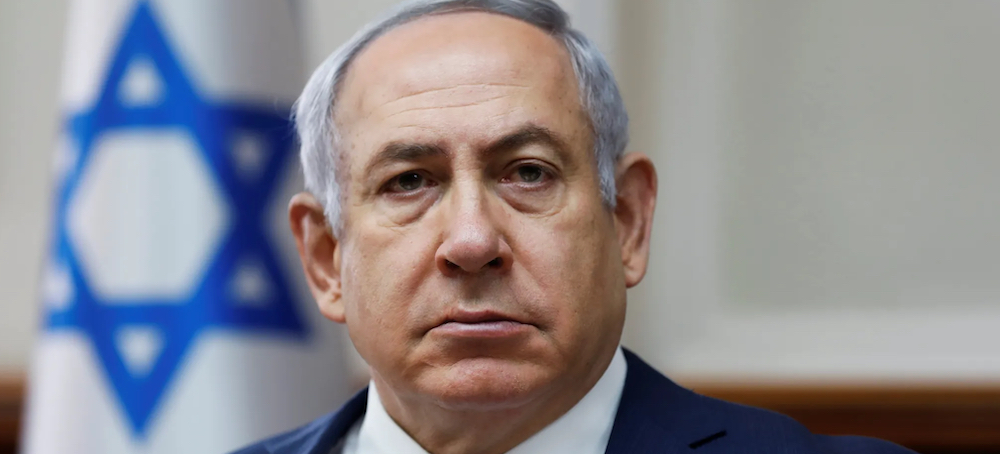 Israeli Prime Minister Benjamin Netanyahu. (photo: Brookings)
The allegations of eavesdropping on U.S. officials come as Congress weighs legislation that could reshape U.S.–Israel defense ties. Ongoing Iran talks and growing scrutiny of the relationship have only fueled sensitivity
Reports in NBC News and The New York Times detailed how the Defense Department's intelligence arm recently raised its reading on the level of counterintelligence threat posed by Israel to the highest level. The Times detailed specific instances of Israeli espionage attempts in recent years, highlighting senior U.S. officials allegedly targeted in such operations.
The White House and the Israeli Embassy in Washington dismissed the reports as inaccurate, anonymously sourced and politically motivated.
On one hand, the reports bring into the spotlight questions that have only been discussed in hushed tones or conspiratorial shouts – do the U.S. and Israel, allies that crucially depend on one another for security and intelligence coordination, secretly spy on each other?
While not dismissing the reports' veracity, nor downplaying any wider conversation about the implications of any eavesdropping or espionage efforts, it is impossible to view the timing of the reports without also considering the more acute crises concerning Iran negotiations and future U.S.-Israel ties.
This is particularly pertinent in recent days, given controversy over looming legislation that would fundamentally alter the structure of U.S. military and intelligence assistance and cooperation with Israel.
The reports also come amid whispers of dissatisfaction within the Trump administration over Israel's push for the Iran war. When combined with its lackadaisical results, the whispers have grown exponentially louder in recent weeks.
Israel, for its part, has denied spying on any of its allies save for the notorious case of Jonathan Pollard in the 1980s, the U.S. Navy intelligence analyst turned Israeli spy who spent three decades in prison before his release. Israel apologized for the episode, calling it a "regretful mistake."
Pollard has since become a vociferous critic of Steve Witkoff, Trump's close confidant and special envoy, allegedly among the targets of increased Israeli eavesdropping efforts. His meeting with U.S. Ambassador to Israel Mike Huckabee in November, at the outrage of the local CIA station chief, only rehashed concerns in Israel and among its supporters about any willingness to brush over the more nefarious elements of the relationship.
Pertinent political timing
Over the past several decades, examples of small-scale device planting by Israel have emerged, with reports usually coinciding with periods of particular political volatility. During the previous Trump administration, for example, a 2019 Politico report alleged the FBI believed Israel planted phone tracking devices to intercept cellphone communications around Washington.
"I don't think the Israelis were spying on us," Trump said at the time. "My relationship with Israel has been great … Anything is possible, but I don't believe it."
Israel observers, even those who give Israel the benefit of the doubt when it comes to its spycraft, generally believe Israel (like any state operating according to the logic of realpolitik) attempts to get a leg up on intelligence gathering as part of its own worldview of being under existential threat.
This has been accepted as fact by successive administrations – whether related to looming military campaigns, threats to Israel's security, or diplomatic efforts concerning the Palestinians or Iran.
Throughout all of this, however, Israel has continued to flat-out deny spying on its allies. Its defenders in the U.S. have only gone so far as to acknowledge its aggressive intel-gathering strategies, but which stop short of unambiguous espionage.
The intelligence reports of increased Israeli surveillance efforts, therefore, should be viewed as motivated by Israel's desire to understand where the ongoing U.S.-Iran talks are heading. This is especially because it has been increasingly sidelined in recent weeks as Witkoff's efforts have intensified and Trump has openly castigated Netanyahu for his actions in Lebanon, potentially jeopardizing diplomatic efforts.
It should also be noted that The Times reported that two other targets of Israel's increased eavesdropping were senior Pentagon officials Elbridge Colby and Michael DiMino, both of whom were flagged by pro-Israel advocates as alarmingly hostile to the U.S.-Israel status quo upon their appointments.
Colby has previously called for a "reset" on the U.S.-Israel relationship while arguing that containing a nuclear Iran "is an eminently plausible and practical objective."
He has more recently maintained positions more consistent with official Trump administration policy during its first year-and-a-half, though questions about his actual views and their influence within policy circles have undoubtedly not abated.
This also holds for DiMino, who previously argued the Middle East poses a "minimal to nonexistent" threat to U.S. security but received outsize attention, and has called the threat of Iran for the Mideast region "fearmongering" and "pablum [that's] not supported by the facts."
One month after Hamas' October 7 attack, DiMino called for the U.S. to avoid direct military involvement in the war, saying, "No major U.S. interest is served by direct involvement, Israel can handle its own defense, and the risk of escalation and blowback against the United States is profound."
Towards legislation for a 'new era' of U.S. aid to Israel
These reports are also part and parcel of pending legislation that would fundamentally alter the U.S.-Israel defense relationship, adding a new layer of sensitivity to questions about intelligence sharing. This comes months after Prime Minister Benjamin Netanyahu himself first called for ending Israeli reliance on U.S. military aid.
Rep. Marlin Stutzman, a Republican congressman, visited Israel last week and is introducing the resolution to shift the U.S.-Israel relationship "away from one of traditional foreign assistance towards a new era of mutual cooperation, joint investment, and shared development."
Stutzman said the alliance between the two countries is rooted in "shared Western values," and that "as long as those values are under threat, we will defend them side by side." He added that the resolution affirms the U.S. "stands with Israel not out of obligation, but out of shared strength and shared strategic interest. Israel has come of age where our nations should contribute equally and share results equally."
The resolution comes just ahead of a House Armed Services Committee vote on an annual defense appropriations bill, which includes a provision that critics charge would actually increase U.S.-Israeli military and technology cooperation rather than weaning Israel away from U.S. assistance.
The relevant section – formally known as Section 224 of the National Defense Authorization Act – would increase U.S. and Israeli military cooperation by committing to bilateral research and development, weapons co-production, joint ventures, licensing agreements, and deeply integrating both countries' weapons industries.
The section goes beyond traditional foreign military sales and existing cooperative programs. In a letter to Strutzman last week backing the plan, Netanyahu described the concept as "my plan to shift the framework for U.S.-Israel defense cooperation."
It has generated some strong pushback. "This is what complete capture to a foreign government looks like and there hasn't been a single shot fired," said former Rep. Marjorie Taylor Greene, still considered one of the most influential voices of the isolationist right despite resigning from Congress.
Rep. Ro Khanna, a Democratic member of the committee, failed in his bid to pass an amendment stripping the bill of the relevant section. Rep. Thomas Massie, the harshest Republican critic of Israel in Congress who recently lost his primary, vowed he would offer an amendment on the House floor after it advanced out of the committee.
Most Republican proponents of the bill, however, are defending any outrage as misguided and misleading.
Rep. Mike Rogers said the legislation "simply adds transparency and improves efficiency by designating a single official to coordinate existing initiatives," dismissing claims that it gives away control of the military. "Misinformation in relation to Israel and our close partnership with them has always run rampant, and bad actors are all too happy to stoke these flames when given the opportunity," he added.
The NDAA still must pass the full House, then be reconciled with the Senate's version of the bill, and then be signed by Trump before becoming law. This is all an increasingly tall order considering Congressional gridlock and Israel's increasing pariah status among U.S. lawmakers and voters – a fact born out by repeated polling.
Expect stories, reports and concerns over Israel's behavior to become more commonplace in the coming weeks as the legislation advances and Iran talks proceed.