
U.S. Troops Abandon Military Bases Amid Iran Strikes
Edith Olmsted The New Republic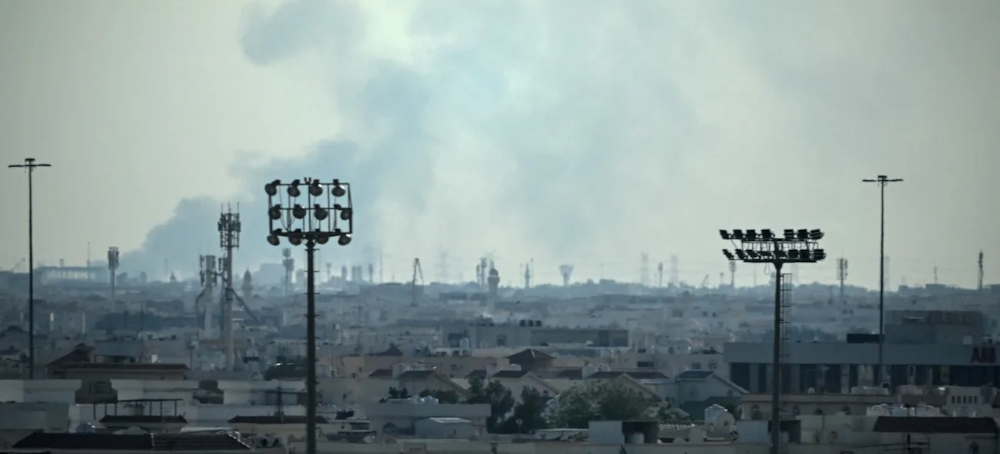 Smoke rises from an area in the direction of Al Udeid Air Base, which houses the Qatar Emiri Air Force and foreign forces including the U.S., in Doha on February 28, following a reported Iranian strike. (photo: Mahmud Hams/Getty)
 U.S. Troops Abandon Military Bases Amid Iran Strikes
Edith Olmsted The New Republic
Service members have been forced to work remotely.
Within the first two weeks of the war, Iran’s attacks on U.S. military bases caused an estimated $800 million in damage, according to a report by the Center for Strategic and International Studies and a BBC analysis.
When the war began, there were close to 40,000 troops in the region. Now some of them have been removed as far as Europe, while many struggle to prosecute a work-from-home war.
“Yes, we have the ability to set up expedient operation centers, but you’re absolutely going to lose capability,” Master Sgt. Wes J. Bryant, a retired Special Operations targeting specialist in the U.S. Air Force, told the Times. “You can’t just put all that equipment on the top of a hotel, for example. Some of it is unwieldy.”
The mass displacement of thousands of troops raises questions about what preparation, if any, the U.S. made for retaliatory strikes from Iran. By Donald Trump’s own admission, he was caught completely by surprise that Iran struck back against other Gulf nations.
U.S. military bases in Kuwait have suffered the most extensive damage. In Port Shuaiba, a makeshift military operations center was struck, killing six U.S. service members. Iranian drones and missiles have also targeted Ali Al Salem Air Base and Camp Buehring.
In Bahrain, a one-way attack drone damaged communications equipment at the U.S. Navy’s Fifth Fleet headquarters in Manama. In Saudi Arabia, missiles and drones struck five refueling planes at the Prince Sultan Air Base. In Qatar, Iran targeted Al Udeid Air Base.
Iranian officials have accused the U.S. troops holed up in hotel rooms of using civilians as human shields.
“We are forced to identify and target the Americans,” the intelligence arm of the Islamic Revolutionary Guard Corps said in a message to people in the region, according to Tasnim News Agency. “Therefore, it is better not to shelter them in hotels and to stay away from their locations.”