
US Hits International Criminal Court With Sweeping Sanctions as Part of Drive to Dismantle Tribunal
Matthew Lee and Molly Quell Associated Press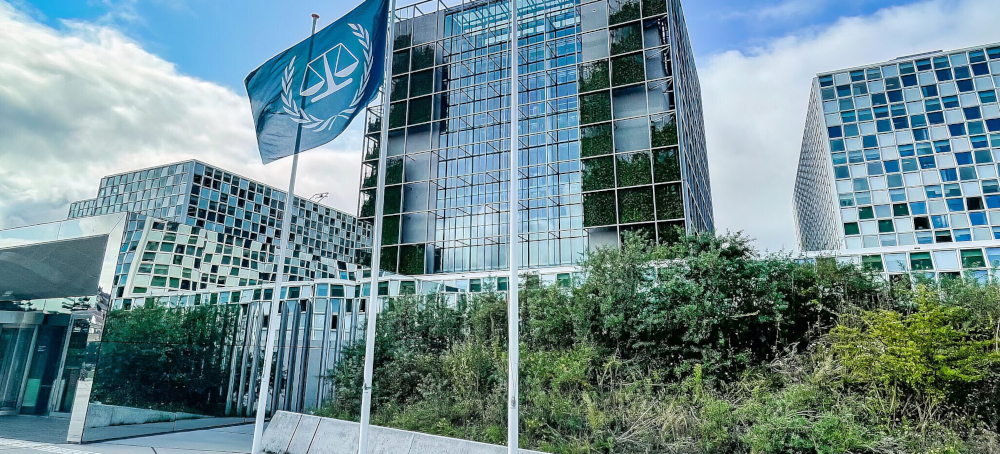 Trump administration says US ‘doesn’t need’ ICC after accusing court of unfairly targeting Americans for war crime charges. (photo: Getty)
 US Hits International Criminal Court With Sweeping Sanctions as Part of Drive to Dismantle Tribunal
Matthew Lee and Molly Quell Associated PressSecretary of State Marco Rubio announced the sanctions Friday, after the Nobel Peace Prize was awarded to South African jurist Navi Pillay, a former judge at the ICC and other international courts. President Donald Trump has coveted that prize for himself. U.S. officials maintained that the timing was purely coincidental and the sanctions had been in the works for months.
“We will ban transactions with this rogue court, cutting off their resources and crippling its ability to operate against us,” Rubio said in a video address posted to social media. “The United States and the American people are not subject to the jurisdiction of this fake ICC.”
The sanctions cut the court off from U.S.-based financial services, technology companies and even using U.S. dollars. They set a six-month timeline for U.S. companies and individuals that have business with the court to wind that business down.
The Hague-based ICC, the world’s first permanent war crimes tribunal. denounced the step as an attack on the rule of law and the foundations of international order, themes that Rubio had appeared to embrace only two days ago in a speech in front of the Acropolis in Athens.
“It is an attempt to obstruct the course of justice and to prevent the court from doing what it was created to do,” the court said in a statement.
The court’s president, Tomoko Akane, a citizen of U.S. ally Japan, also defended the court. “This is not just about defending a single institution, but about safeguarding the international order grounded upon the rule of law,” she said in a statement.
A spokesperson for U.N. Secretary General Antonio Guterres condemned the U.S. sanctions against the ICC, saying the decision dealt a “a serious blow to our collective pursuit for international criminal justice.”
“Accountability for international crimes and delivery of justice to victims are central to our global commitment to peace, security, human rights and fundamental freedoms,” Stephane Dujarric said in a statement.
Rubio said U.S. allies should join in the U.S. actions. “If they do not, the United States will continue its campaign to dismantle the ICC, piece by piece, until Americans are threatened no longer,” he said.
However, the initial response from governments allied with the United States was overwhelmingly negative.
“As committed supporters of the ICC we regret and strongly disagree with the announcement of sanctions to be imposed upon the court by the United States,” Canada, Denmark, Germany, France, Italy, Japan, the Netherlands and the United Kingdom said in a joint statement.
“We will continue to work together to support the court’s vital work, uphold the rules-based international system, and advance accountability,” they said. Seven of the eight signatories are NATO members and Japan has a separate treaty alliance with the U.S.
Human rights groups also decried the move and called on countries to push back.
“The ICC was created to ensure that no one, no matter how powerful, is above the law,” said Philippe Bolopion, executive director at Human Rights Watch. “Governments that value human rights and accountability should condemn this outrageous move and take swift action to protect the ICC.”
The court’s host country, the Netherlands, has been preparing for weeks for the move. One possible measure to mitigate sanctions is the European Union’s “blocking statute,” which could be used to protect European court staff by preventing companies on the continent from complying with the U.S. measures.
The EU said it intends to work with the ICC and take “any necessary measures’’ to ensure it can continue its work. Dutch Prime Minister Rob Jetten told reporters he was disappointed in the sanctions but happy that “all the diplomatic efforts over the past few months were effective” in ensuring the sanctions are not effective immediately.
A number of countries have withdrawn from the court this year, including Venezuela and Chad. The South Pacific island nation of Nauru was the most recent to announce it would quit.
The United States under successive presidential administrations has been suspicious of the ICC since its founding.
Former President Bill Clinton’s administration signed the Rome Statute under which the tribunal would be created but never submitted the treaty for Senate ratification, citing concerns it could infringe on U.S. sovereignty.
The U.S. “unsigned” the Rome Statute at the beginning of President George W. Bush’s first term in office, but acknowledged the court’s existence after it was created in 2002 by mounting a global push to get members to sign waivers that would exempt U.S. soldiers, officials and others from being referred for ICC prosecution.
During President Barack Obama’s tenure, the hostile U.S. policy toward the ICC eased and Washington provided the court’s investigators with intelligence and other information to assist in potential prosecutions, notably that of Ugandan rebel leader Joseph Kony.
During Trump’s first term, the U.S. shifted back to an antagonistic approach and imposed sanctions on individual ICC officials, although none as sweeping as Friday’s measures.