
Trump Sought to Break Iran’s Regime. He Settled for Reopening Hormuz.
Michael Birnbaum The Washington Post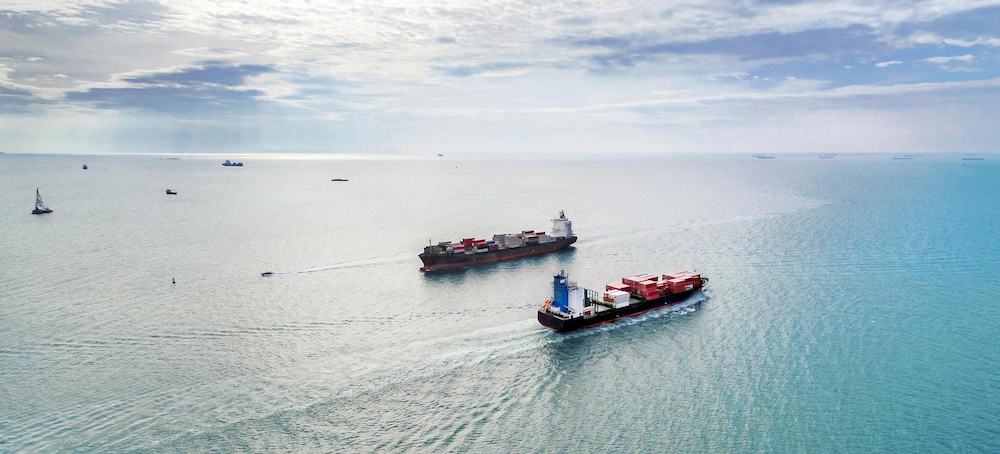 Ships in the Strait of Hormuz. (photo: Vessel Tracker)
 Trump Sought to Break Iran’s Regime. He Settled for Reopening Hormuz.
Michael Birnbaum The Washington PostALSO SEE: Israelis Denounce Trump’s Deal With Iran
The emerging agreement ends a costly war but leaves Iran’s leadership intact and its nuclear future still subject to negotiation.
With the Iranian regime still in place, he was celebrating a resumption of the way the world was on Feb. 27, the day before the United States and Israel attacked Iran.
A return to a version of the status quo was a far cry from the original aims of a war effort that kicked off with a vow to come to the aid of the Iranian protesters who had taken to their nation’s streets to denounce their regime. Once strikes killed Iran’s supreme leader, Ali Khamenei, in the opening hours of the war, Trump told Iranians that the moment to seize back their nation had come.
An uprising never happened. In the nearly four months since, Iranian leaders demonstrated an ability to withstand withering attacks from the most powerful military in history, shut down the Strait of Hormuz, cripple global energy markets, and drive such a deep wedge between Trump and Israeli Prime Minister Benjamin Netanyahu that the U.S. leader spent part of his 80th birthday Sunday cursing out his Israeli counterpart to journalists.
In promoting a deal that halted the fighting, Trump and his top lieutenants said Iran had agreed not to pursue a nuclear weapon. But Iranian leaders, who have made similar pledges repeatedly for decades, suggested Sunday that the difficult conversations about their nuclear program were still ahead and would come only after the U.S. naval blockade on their ports was lifted.
With the details of Sunday’s agreement still not public and nuclear issues a question mark, experts said it was too early to assess the full legacy of a conflict that spanned five-and-a-half weeks of intense fighting followed by more than two additional months of an uneasy truce as global oil stocks drained.
But Trump’s approach has shifted. Rather than exhort Iranians to overthrow their repressive leaders, the focus is now on bargaining with the regime. The president has pushed back on military action that might jeopardize the peace, as he did Sunday with Netanyahu.
“As far as regime change, I never cared about regime change,” Trump told the Wall Street Journal on Sunday. Iran’s current leadership is “the third group we’ve dealt with, and this is the most rational group yet.”
Trump and his backers say the war was a major success, wiping out several ranks of top leaders, destroying more of Iran’s already damaged nuclear program and eliminating its conventional navy.
“If the Iranians comply with this deal, it is going to fundamentally transform the Middle East for the next 50 years,” Vice President JD Vance told Fox News on Sunday. “This region of the world has been a basket case for my entire life, and longer than that.”
Some Middle East experts question that, even as many said a deal that ended the fighting and reopened the strait was likely superior to the alternative of continued war.
“If this agreement goes forward as reported, it will leave a brutal regime in control of Iran and in control of most of the tools it uses to threaten the region: ballistic missiles, drones and a weaker but still-dangerous regional proxy network in Lebanon, Iraq and Yemen,” said Brian Katulis, a senior fellow at the Middle East Institute.
“Trump backed down here in a real sense,” Katulis said. “He knew that there were no good military options, so he had to get to some sort of a deal. Both sides are going to claim victory. That’s what the next four or five days will be about.”
As Trump sold his deal, some of his staunchest backers from the tough-on-Iran flank of his coalition questioned whether an end to the fighting now left the world in a better place.
“I have asked for days, why can’t we, the people, see the damn [Memorandum of Understanding]? Not through people briefed by an anonymous person,” radio host Mark Levin wrote on X. Levin has spoken frequently to Trump about Iran issues over the course of the second term.
“Honestly, I’ve never seen anything like this. If it is a great outcome for peace, then release it,” he said.
Another Trump confidante, Sen. Lindsey Graham, also politely questioned the terms of the deal, saying he was “somewhat concerned” that Iran’s account of the agreement differed from the American one.
“Under our law, any nuclear deal with Iran will be sent to Congress for review and a vote. I look forward to reviewing the final product,” he wrote on X, where he referred to Vance as the “architect of the deal.”
“Time will tell.”
Iranian leaders said Sunday that the terms of the deal would be published only after it is signed Friday — a decision that insulates the agreement from outside lobbying but may also increase the risk it falls apart as negotiators continue to discuss details.
Iranian policymakers said little about nuclear issues Sunday, a clear difference in emphasis from the U.S. side. They suggested that they would need significant sanctions relief before agreeing to major concessions on that issue.
Negotiators will now need to discuss a moratorium on further enrichment of nuclear fuel as well as the fate of Iran’s existing stockpile of highly enriched uranium, which Tehran developed after Trump pulled out of the Obama-era nuclear deal in 2018.
“Iran knows how to drag out those negotiations, and try to pocket concessions along the way,” Dan Shapiro, who worked on Iran issues under the Biden administration and was the U.S. ambassador to Israel when the 2015 Iran deal took shape, posted on X. “It is possible that no deal will every [sic] be reached, and very likely that if one is reached, it will be worse than what we could have achieved through diplomacy before the war.”
The legacy of Sunday’s agreement is likely to be narrower, Shapiro said — and one with a lesson for Iran that it may want to use in the future.
“Getting the Strait of Hormuz open is the most important outcome of this” agreement, Shapiro said. “Iran has taken a theoretical point of leverage and turned it into a very real and powerful one, imposing costs across the global economy and rattling President Trump.”