
Trump Says Cuba Is Next: ‘Gonna Fall Pretty Soon’
Andrew Feinberg The Independent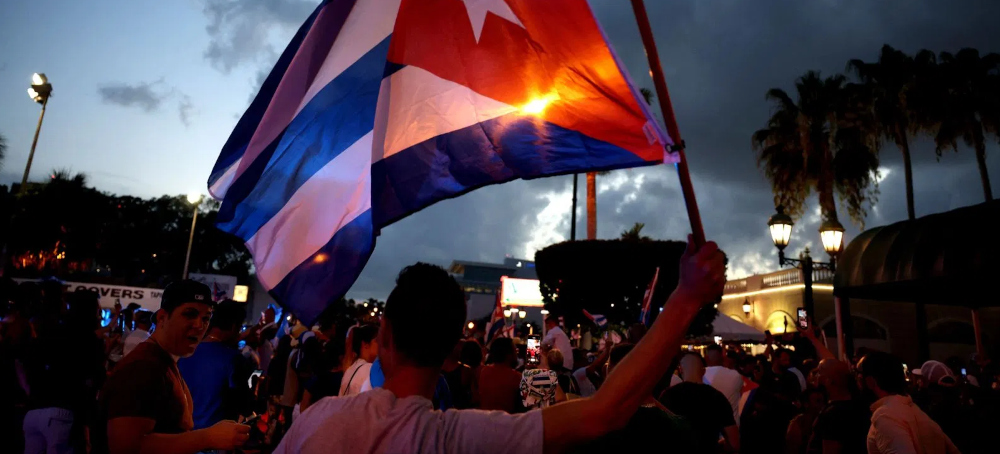 American administrations have tried to destabilize the communist-led government in Havana since 1959. (photo: AP)
 Trump Says Cuba Is Next: ‘Gonna Fall Pretty Soon’
Andrew Feinberg The Independent
American administrations have tried to destabilize the communist-led government in Havana since 1959
The president told CNN in an interview on Friday that he believes his administration is close to toppling the communist government that has led Cuba, the Caribbean island just 90 miles off the Florida coast, since 1959.
“Cuba is gonna fall pretty soon,” said the president, who spoke with CNN correspondent Dana Bash by phone.
The brief interview was meant to tout American military successes in the six days since U.S. and Israeli warplanes opened an air campaign that has plunged the Middle East into chaos and left Tehran scrambling to choose a new supreme leader after an early bomb strike killed Ayatollah Ali Khamenei, the country’s longtime de facto head of state.
“They want to make a deal, and so I’m going to put [Secretary of State] Marco [Rubio] over there and we’ll see how that works out. We’re really focused on this one right now. We’ve got plenty of time, but Cuba’s ready — after 50 years,” Trump continued.
“I’ve been watching it for 50 years, and it’s fallen right into my lap because of me ... and we’re doing very well.”
The president’s prediction of the imminent fall of the government that was led by the late Fidel Castro and later his brother Raul before power was handed to loyalist Miguel Díaz-Canel seven years ago comes less than a day after he said it was a “question of time” before the countless Cuban exiles who have fled the island over the last 67 years could return there.
He also said on Thursday that Rubio, the son of Cuban immigrants who came to the U.S. just before Castro took power, would turn his attention to his parents’ homeland once the administration has wrapped up the war it started against Iran nearly one week ago.
“He’s doing some job, and your next one is going to be, we want to do that special Cuba,” Trump said.
“He’s waiting. But he says, ‘Let’s get this one finished first.’ We could do them all at the same time, but bad things happen. If you watch countries over the years, you do them all too fast, bad things happen. We’re not going to let anything bad happen to this country.”
Trump’s push to undermine and topple the Cuban government echoes decades of similar unsuccessful efforts by successive administrations dating back to the ill-fated Bay of Pigs invasion by a group of American-trained Cuban exiles in the early days of the John F. Kennedy administration.
In 1960, the U.S. government imposed a blanket ban on almost all trade with the island in what has become one of the world’s longest-running and broadest trade embargoes. A year later — before the attempted invasion — the U.S. broke off diplomatic relations with Havana.
It was a breach that would continue until 2015, when the Obama administration re-established diplomatic relations as part of what became a brief thaw in tensions that saw some sanctions eased and a resumption of limited travel and tourism flights to the island.
When he entered office for his first term in 2017, he reimposed economic sanctions and travel restrictions that had been loosened under his predecessor. Trump’s return to hardline positions against the Castro government was part of a series of actions that were seen as aimed at rewarding the powerful Cuban exile community in Florida for their support in the previous year’s election.
In January 2026 — just over a year into his second term — he signed an order imposing import taxes on goods from any country that supplies Havana with oil, citing alleged links between the Cuban government and Middle Eastern terrorist groups Hamas and Hezbollah.
Mexico and Venezuela have since halted shipments of oil to Cuba, and the president has described his administration's efforts to interdict tankers bound for Cuban ports as a “blockade.”
The result has been widespread fuel shortages on the island, which have led to blackouts and a suspension of commercial air traffic.