
Trump Dramatically Shrinks Two National Monuments in the West — Again
Jake Spring The Washington Post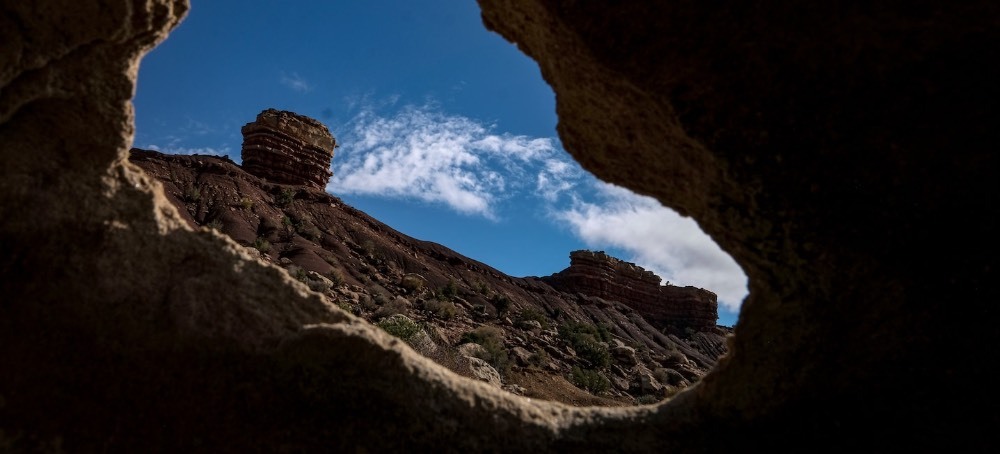 The oresident's orders reduce the size of Grand Staircase-Escalante National Monument from about 1.87 million acres to about 181,500 acres. (photo: Bonnie Jo Mount/The Washington Post)
 Trump Dramatically Shrinks Two National Monuments in the West — Again
Jake Spring The Washington Post
The president’s orders trim Grand Staircase-Escalante and Bears Ears national monuments to a small fraction of their current size.
The orders reduce the size of Grand Staircase-Escalante National Monument from about 1.87 million acres to about 181,500 acres, and Bears Ears National monument from about 1.36 million acres to about 121,100 acres. Both sites are home to spectacular expanses of Utah’s famous red rock cliffs and canyons, sandstone formations that are iconic among hikers and outdoor enthusiasts.
That surpasses how much Trump initially shrank the two protected areas in 2017, a move that was undone by President Joe Biden.
Trump has declared a national energy emergency and rolled back dozens of environmental protections, seeking to aggressively boost drilling for oil and gas and mining for critical minerals that are essential to energy infrastructure. The two national monuments contain significant deposits of coal, uranium, oil and gas.
“Revising the boundaries of the Monument will also unburden public National Forest System lands that can and should be put to a higher-priority use,” Trump said in the order shrinking Bears Ears. “The Bears Ears region contains several resources that are vital to energy and resource independence and, in turn, critical to national security.”
Environmental and public lands groups blasted the decision.
“This action will only bring uncertainty and chaos to places that should instead be protected for their rich biodiversity, unique geology, and remarkable cultural values,” Scott Braden, executive director for the Southern Utah Wilderness Alliance, said in a statement. ”Grand Staircase-Escalante is a crown jewel of America’s public lands and Bears Ears is an incomparable cultural landscape.”
Trump’s move sets up a legal battle with environmental advocates. The Antiquities Act, signed into law by President Theodore Roosevelt in 1906, gives the president broad authority to establish monuments without spelling out many details.
Supreme Court Chief Justice John G. Roberts Jr. in 2021 suggested the court would welcome litigation asking to limit the president’s power under the act, stating that the law had been transformed from its original intent “into a power without any discernible limit to set aside vast and amorphous expanses of terrain above and below the sea.”
Trump’s orders cite the same legal principle as Roberts’s opinion that the monuments should be “the smallest area compatible with the proper care and management of the objects of scientific or historic interest identified therein.”
Whether a president has the power to shrink a monument is particularly unclear. The Antiquities act only addresses the creation of monuments without congressional approval but does not mention whether such moves can be undone by subsequent presidents.
President Bill Clinton established Grand Staircase in 1996 and President Barack Obama established Bears Ears in 2016. Trump is the first president in at least half a century to attempt to shrink a monument.
Dozens of tribal groups have advocated for the protection of the monuments, with Native Americans first referring to the area’s two distinctive buttes as “bears ears.”
The Grand Staircase-Escalante Inter-Tribal Coalition, a group founded by six tribes, said the administration shrank the monument without consulting them, in violation of U.S. obligations under treaties with Native American groups.
“Our Tribes were not informed of or asked about this decision, and that’s unacceptable,” coalition coordinator Autumn Gillard, a member of the Southern Paiute tribe, said in a statement. “It is through our strong connection to the land that we can maintain our spiritual and religious beliefs and practices.”
Sen. Martin Heinrich (D-New Mexico), ranking Democrat on the Senate Energy and Natural Resources Committee, vowed to fight the orders, saying the protections safeguard critical wildlife habitat, conserve areas important to tribes and benefit local economies that rely on outdoor recreation.
“Time and again, this administration has put the interests of billionaires and powerful industries ahead of America’s public lands and the people who own them,” Heinrich said in a statement.
Some conservatives have seen presidents’ unilateral declaration of vast protected areas as an example of federal overreach that hampers mining and drilling that damages the economic development of their states.
Many conservative Utah politicians particularly take issue with the establishment of new protected areas, as nearly two-thirds of the state is public land controlled by the federal government.
“Today’s proclamation shows that President Trump listens to Utahns and respects the limits Congress placed on the Antiquities Act,” Sen. Mike Lee (R-Utah) said in a statement. “For too long, presidents have weaponized monument designations to lock up millions of acres, close roads, restrict grazing, and cut rural communities off from lands their families have lived on and worked for generations.”
The Washington Post reported in April last year that Interior Department staff were analyzing whether to shrink at least six national monuments in the West.