
Top Democrat Opposed Surveillance Bill — Then Whipped Votes For It
Freddy Brewster and Veronica Riccobene The Lever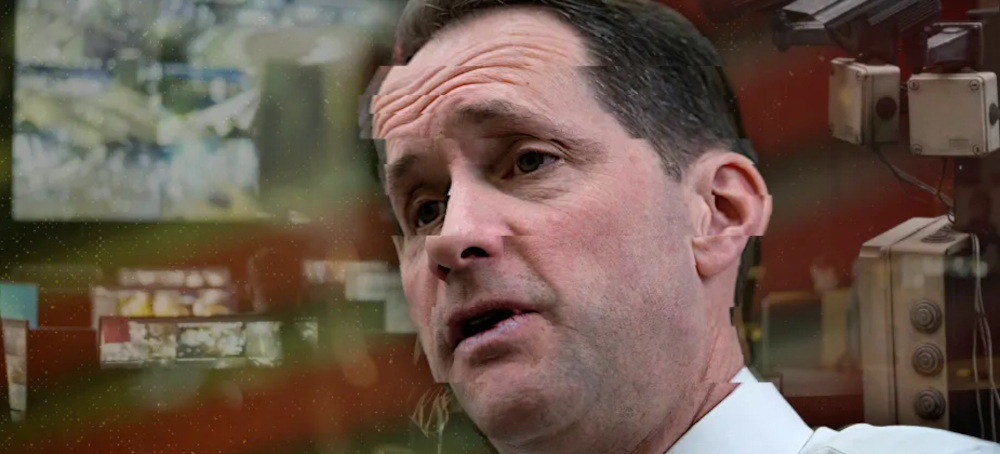 Rep. Jim Himes, D-Conn. (photo: AP)
 Top Democrat Opposed Surveillance Bill — Then Whipped Votes For It
Freddy Brewster and Veronica Riccobene The Lever
Emails reveal Democratic Rep. Jim Himes privately urged colleagues to back Trump’s expanded spy powers — while he publicly opposed them.
In a social media response to The Lever editor-in-chief David Sirota on April 16, Rep. Jim Himes (D-Conn.) posted that a five-year extension of Section 702 of the Foreign Intelligence Surveillance Act (FISA) — a War on Terror-era measure that has allowed federal law enforcement to unofficially spy on Americans’ communications — was “not acceptable.”
But emails reviewed by The Lever show that the following day, Himes, the top Democratic lawmaker on the House Intelligence Committee, urged his colleagues to support a Trump administration-backed bill that would have extended the spying powers for another five years.
An April 17 internal email sent by House Intelligence Committee staff stated that “Ranking Member Himes recommends a ‘yes’ vote on the bill.”
“I have seen (too many) instances in which Section 702 has literally saved lives — and, as a result, I cannot in good conscience vote to allow it to expire,” Himes explained. “If I saw any evidence that Trump administration officials were directing the intelligence community to use Section 702 for illegal or improper purposes, such as to persecute, surveil, or harass Americans, I would urge a ‘no’ vote on reauthorization.”
Himes added that “I have not seen evidence of misuse,” as he’s said in various published statements.
Such a claim runs counter to mounting data: A 2022 Office of the Director of National Intelligence memo found that in June 2020, during Trump’s first administration, an unnamed federal agent used the law to investigate individuals who attended George Floyd rallies.
Meanwhile, the Trump administration is actively hiding documents detailing potential FISA abuse from public view. Just this month, the FBI ignored a judge’s deadline ordering the release of internal records related to Section 702 noncompliance.
“Watchdogs continuously find violations of FISA on an ongoing basis, basically since it was created,” Daniel Schuman, executive director of government watchdog group American Governance Institute, told The Lever. “It would be astonishing if there are no violations of the law. I suspect that Congressman Himes may need to simply look a little bit more closely.”
A Himes’ spokesperson told The Lever: “Ranking Member Himes voted against Republicans’ late-night effort to push through a FISA 702 reauthorization, both the amendment and the rule itself. As he has made clear, this critical national security program must be reauthorized, but that process should include a serious debate around proposed reforms, including the judicial process reform that Congressman Himes proposed in an amendment earlier this month.”
The War On Terror Comes Home
In 2008, years into the War on Terror, Congress added Section 702 to the 1978 Foreign Intelligence Surveillance Act, which allowed U.S. intelligence agencies to conduct warrantless communication surveillance of foreigners. Since then, the section’s well-documented misuse has been criticized by Democrats and Republicans alike.
According to the 2022 Office of the Director of National Intelligence memo, federal agents had conducted more than 278,000 “non-compliant FBI queries of raw FISA-acquired information,” many of which occurred during President Donald Trump’s first administration from January 2017 to January 2021.
Moreover, a previously classified Sept. 2021 report from the National Security Agency’s (NSA) Office of the Inspector General also alleged that searches of FISA-acquired data on U.S. citizens “did not always follow NSA procedural and policy requirements” meant to “protect the civil liberties and privacy rights” of Americans.
In particular, the law has allowed federal agents to illegally spy on their wives, husbands, girlfriends, boyfriends, and other family members. It has also been used to surveil an unnamed U.S. senator, an unnamed state senator, and a state judge who “had complained to FBI about alleged civil rights violations perpetrated by a municipal chief of police.”
One of the most high-profile abuses of the law happened to former Trump campaign adviser Carter Page, who was a focus of the 2016 special counsel investigation into Russian election interference. In 2019, the Justice Department admitted that it lacked probable cause in two warrant applications for Carter’s communications. Carter sued the Justice Department and the FBI, and the parties reached a settlement last week.
Earlier this month, amid bipartisan backlash over the abuse of Section 702’s spying powers, Congress passed a two-week extension of FISA. Republican leaders are seeking to strike a more permanent deal extending the spy powers by April 30 — the day the two-week deal expires, and the last day in session before lawmakers depart D.C. for a week-long recess.
Himes has come under scrutiny because of his repeated lobbying for the bill as some experts argue his statements urging for the bill’s passage have been overblown.
“Himes has demonstrated himself to be a bad actor when it comes to FISA reauthorization,” said Hajar Hammado, senior policy advisor for the progressive policy center Demand Progress. “Tens of thousands of Americans have been subject to unlawful sort of searches. It’s an issue that has persisted, and any sort of reauthorization that does not include reforms to protect Americans from warrantless searches will only perpetuate this issue and make it even worse.”
Himes isn’t the only leading Democratic lawmaker who appears to be backing FISA’s reauthorization despite its documented misuse. Rep. Gregory Meeks (D-N.Y.), a long-serving leader on foreign affairs, reportedly pressured the Democrat-dominated Congressional Black Caucus to support a reformless FISA extension. Only after reporting from The Lever and other independent outlets did the caucus quietly announce its opposition to the bill.
House Republicans, who recently widened their majority after the resignation of Rep. Eric Swalwell (D-Calif.) amid sexual harassment allegations and the death of Rep. David Scott (D-Ga.), are still in need of Democratic votes to reauthorize FISA because of several conservative detractors. That includes longtime critics of government surveillance overreach like Rep. Thomas Massie (R-Ky.).
Arizona Republican Reps. Eli Crane and Andy Biggs threw another wrench into the GOP leadership’s plan for a “clean reauthorization” of FISA this week by proposing their own reform amendment requiring warrants for searches made under the auspices of Section 702.
Follow The Money
Himes’ protection of the sprawling surveillance state comes as he accepts campaign cash from the premier spy firm contracted by the government.
Since 2024, Himes has received $3,500 from a political committee representing employees of Palantir, the surveillance giant tapped for billions in federal contracts involving Customs and Border Protection, the Department of Defense, the Treasury, and other agencies.
A recent attack advertisement in Himes’ hometown newspaper in Bridgeport, Connecticut, criticized the Democrat for allegedly handing warrantless spy powers to the Trump administration amid its draconian surveillance-driven crackdown on immigration.
“Section 702 allows the government to collect communications between Americans and foreigners located abroad, which agents then search for information about Americans — without warrants. Meanwhile, ICE, and other federal agencies, are bypassing constitutional protections by directly buying sensitive data, including your location, from data brokers,” argues the ad, paid for by leading progressive advocacy groups including Fight for the Future and Demand Progress Action.
“Members of Congress have offered solutions to close these loopholes and protect us from increasingly dangerous mass surveillance,” the ad continues. “Will Congressman Himes continue to stand in the way?”