
The Supreme Court Has Grown Too Powerful. This Is How to Rein It In.
Kate Shaw The New York Times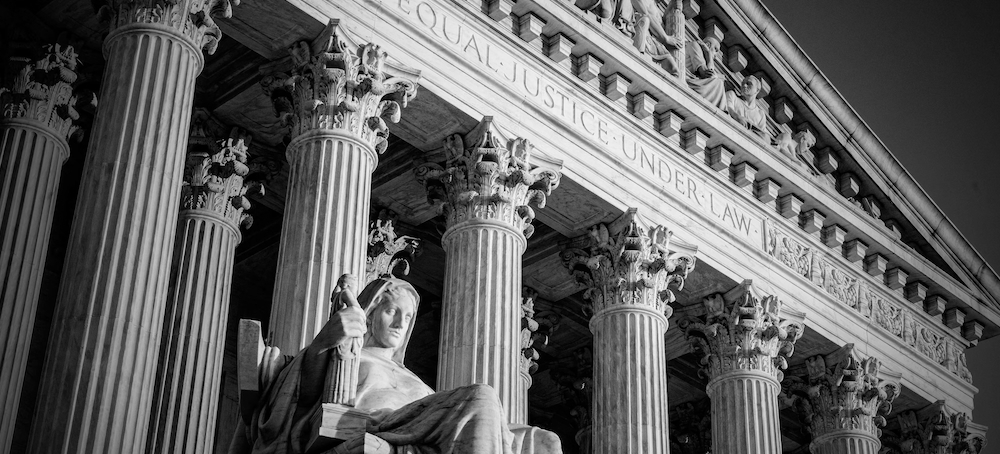 The Supreme Court Building in Washington, D.C. (photo: Mark Peterson/Redux)
 The Supreme Court Has Grown Too Powerful. This Is How to Rein It In.
Kate Shaw The New York TimesIt also feels different because this is a precarious moment for American democracy and for the mechanisms of democratic participation — and because it’s impossible to ignore the Supreme Court’s role in creating this instability. In this election cycle, state legislatures have aggressively redrawn congressional districts to maximize their partisan advantage and, in Southern states, to extinguish Black political power; the ultrarich are spending tens of millions of dollars helping to elect their preferred candidates; and the president has sought to radically change the rules for voting by mail, while openly promising voters payouts for helping his party retain control of Congress.
True, the court has rebuffed some of the most egregious efforts at election subversion this year. But it has laid the foundation for the electoral upheaval we are experiencing.
That’s one of the reasons fixing the Supreme Court must be a top priority — and why Democrats, if they take control of one or both houses of Congress in November, must place Supreme Court reform at or near the top of their list.
Beginning with John Marshall’s 1803 pronouncement in Marbury v. Madison that “it is emphatically the province and duty of the judicial department to say what the law is,” we have gradually come to view the Supreme Court as the final arbiter of the meaning of laws and the Constitution. When the court is functioning properly — when it plays a meaningful but limited role in our system — that’s a reasonable state of affairs, whatever the merits of any particular Supreme Court decision.
But when the court develops an outsize sense of its own authority and when it uses that authority to impose its policy preferences and, increasingly, its partisan preferences on the rest of us, the arrangement becomes untenable. That has happened before, and it is manifestly the case now.
This court has asserted extraordinary power and has, again and again, used that power to undermine democratic participation and thwart meaningful self-governance. It substituted its judgment for the judgment of Congress about how to make real the Constitution’s promises of equality and voting rights. It insulated the president from various criminal laws. It hobbled the ability of administrative agencies to respond to pressing problems like climate change. Many of these decisions conspicuously depart from the court’s professed commitments about how legal interpretation should be done, leaving the distinct impression that the court is simply announcing its policy preferences as binding law.
The consequences of these decisions are everywhere. Take presidential lawlessness. Since it declared presidents all but above the law in Trump v. United States two years ago, the court has created a permission structure for much of President Trump’s second-term lawlessness. In the June decision Trump v. Slaughter, it handed Mr. Trump complete control over most of the last remaining pockets of independence — and checks on the president — inside the executive branch.
When the lower courts have challenged his lawlessness, the Supreme Court has regularly interceded to greenlight the president’s actions — allowing the unilateral canceling of billions in funding, granting the so-called Department of Government Efficiency access to sensitive Social Security information, permitting the rendition of individuals to third countries without complying with the Convention Against Torture, letting ICE agents stop citizens and noncitizens alike simply because of their appearance. Both the court’s rulings in these cases and its approach to them — rushed dispositions, failure to provide full reasoning and disregard for the careful rulings of lower courts — are impossible to square with the rule of law.
Then there are the court’s decisions overriding congressional efforts to protect the democratic process. The ones invalidating key provisions of the Voting Rights Act have undermined both electoral stability and an inclusive and representative democracy. The most recent case, last term’s Louisiana v. Callais, functionally rendered the Voting Rights Act a dead letter while declaring partisan gerrymandering a god-given right. After that decision, orders from the shadow docket — also now referred to as the emergency or interim docket, the practice of issuing orders and summary decisions typically without full briefing or oral arguments — allowed states to put the decision into effect immediately. That rushed effort resulted in the elimination of majority Black districts throughout the South and ever more extreme partisan gerrymanders. The court has also, through Citizens United and its progeny, paved the way for wild distortions of our electoral process by ultrawealthy individuals and corporations.
When the delegates to the Constitutional Convention gathered in Philadelphia in 1787, they considered a number of approaches to designing the process of lawmaking. One proposal, part of the Virginia Plan, would have included judges in a “council of revision” that, together with the executive, would review proposed legislation and either approve or reject it. The convention actively debated this proposal, and in the end decided against including judges in a council of revision; instead, the delegates gave the president alone the power to sign or veto legislation.
The current court has fashioned itself into a council of revision, with the power to decide whether it approves of laws passed by Congress and thus whether those laws will have force at all.
Facing the reality of what the Supreme Court has become is critically important — especially for people, and I count myself among them, who think of themselves as institutionalists. If you detest the Supreme Court, I probably don’t need to convince you that the court needs fixing. But if you’re a fan of the Supreme Court, you should also support Supreme Court reform.
As a new book by the law professors Nikolas Bowie and Daphna Renan argues, there is a rich American tradition of pursuing court reform. At critical moments in our history — before and after the Civil War; leading up to and during the New Deal era — the Supreme Court acted to undermine democratic participation and to routinely substitute its judgment for the will of the people as expressed by their elected representatives. In response, political actors and the people pushed back, including legislatively. The current moment calls for nothing less.
A legislative package should include term limits, for which there is now bipartisan support. According to a recent Brennan Center analysis of polls, 73 percent of the public supports such limits, including 61 percent of Republicans. With a law that sets terms at 18 years, justices could transition to senior justice status and would no longer be able to spend decades wielding enormous public power without any meaningful accountability.
Any law imposing term limits should contain binding ethics rules that would prohibit justices from receiving large gifts and luxury travel from wealthy benefactors. The rules should also mandate detailed financial disclosures and include a meaningful enforcement mechanism — either an inspector general for the judiciary or a committee of current or former federal judges.
Congress could also rein in the court from issuing too many rulings on the shadow docket by codifying which cases deserve emergency consideration and requiring the justices to provide reasons for any shadow-docket ruling. It could require the agreement of a supermajority of justices to disturb a lower court ruling on the shadow docket. It could also impose such a voting rule more generally, requiring a supermajority to invalidate any act of Congress.
Finally, the law should include a mechanism for regularizing appointments across presidential terms while also increasing the size of the court. Each president might get two or even four Supreme Court nominations at designated points during a presidential term.
This list is just a start. If Democrats win the upcoming midterm elections handily, there will be much debate about the specific shape a reform package should take. But for the future of the court and the country, it’s critical that the discussions begin now.