
The Strait Iran Closed Will Not Reopen Into the Same World
Bobby Ghosh Substack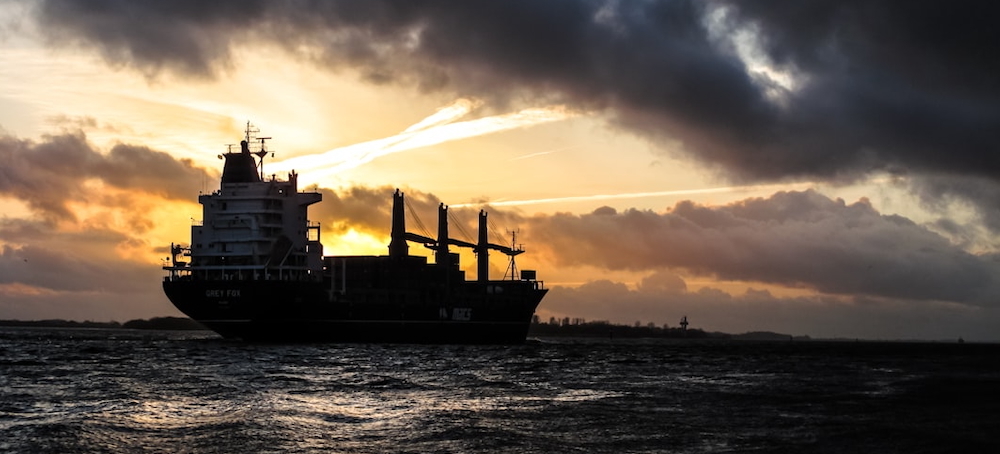 "The closure of the Strait, in Tehran’s plan, is no longer a temporary act of war." (photo: Jens Rademacher/Unsplash)
 The Strait Iran Closed Will Not Reopen Into the Same World
Bobby Ghosh SubstackALSO SEE: Ghoshworld, Bobby Ghosh on Substack
Tehran is selling sovereignty over the Strait of Hormuz. Nobody should buy it.
The closure of the Strait, in Tehran’s plan, is no longer a temporary act of war. It is the beginning of a permanent revenue stream and a permanent claim of sovereignty over the most important oil chokepoint on the planet.
The pitch is aimed less at shipping companies than at the Trump administration, the Gulf monarchies and governments of countries that get their hydrocarbons through the Strait: Tehran wants them all to accept that this is the new normal. “We own the Strait now,” it is saying. “The world will pay.”
It is a bluff. Iran threatened to close Hormuz for 40 years and never did it; there was a reason for that, and that reason has not gone away. I argued in a column for Foreign Policy a month ago that the surprise element of the Hormuz weapon was already spent — that the world would adapt and the costs Iran could impose would dwindle. The picture today is harsher than that for Tehran. The world is not adapting to Iranian leverage. It is dismantling it.
First, consider what the Arab oil producers are doing. Tehran’s threat to close the Strait was potent for so long because the Gulf monarchies had no serious way around it. That is no longer true. Saudi Aramco’s East-West pipeline, built during the Tanker War of the 1980s for exactly this contingency, was running at its full 7 million barrels a day by late March, according to Bloomberg. That is roughly 85% of the Kingdom’s pre-war export volume rerouted out of the Red Sea port of Yanbu, bypassing Iran’s chokepoint entirely. The terminals at Yanbu cannot yet handle all of it, but Riyadh is now spending serious money to fix that constraint.
The Emiratis already have their Habshan-Fujairah line, which also bypasses Hormuz. It, too, will likely be expanded. The Carnegie Endowment’s paper on post-war scenarios notes that the closure has “validated longstanding investments by Saudi Arabia and the UAE in pipeline projects that can bypass the strait.”
Others will follow suit. The Iraqis, who have spent two decades as the GCC’s most reluctant member, approved $1.5 billion in fresh pipeline spending in April, with options pointing to Aqaba in Jordan or Baniyas in Syria. Maisoon Kafafy, senior adviser to the Atlantic Council’s Middle East programs told CNBC that until February, “the costs … did not reach the threshold that would justify the scale of investment alternative infrastructure requires.” That threshold is now well behind us.
Then there is China, which for the better part of a decade was Tehran’s single most important diplomatic and commercial relationship. Beijing took about 90% of Iran’s oil exports before the war. Closing the Strait imposed an oil shock on Iran’s only patron and biggest customer. Columbia University’s Center on Global Energy Policy has reported that the disruption is pushing Beijing to reconsider its LNG mix, fast-track the Power of Siberia 2 pipeline from Russia, and accelerate a long-mooted plan to lift the share of oil arriving overland to 45% of imports by 2030.
Beijing has done what one expects a patron to do. It vetoed the Bahraini-drafted UN Security Council resolution calling on Iran to reopen the Strait. Vladimir Putin received the Iranian foreign minister in St Petersburg and praised the Iranian people for, in his phrase, “bravely and heroically fighting for their sovereignty.” But these are the things great powers say. What great powers actually do is build pipelines. Iran spent its strategic asset to teach Beijing to need Tehran less.
Next, there is the Gulf Cooperation Council. You might assume that the closure has welded the GCC together against Iran in a way no American diplomat ever managed. It hasn’t. Anwar Gargash, diplomatic adviser to the UAE president, told a conference in late April that the GCC’s position is “the weakest in history.” The day after, Abu Dhabi announced it was leaving OPEC and OPEC+ after 59 years of membership, without first consulting Riyadh. Bloomberg has reported that the UAE asked the UN Security Council to authorize the use of force to reopen Hormuz; the Saudis lobbied against it and pushed for mediation. The two heaviest Gulf powers are pulling in different directions on the war’s central question.
A divided Gulf is supposed to be good for Iran: splitting the Sunni Arab states has been the Islamic Republic’s most consistent diplomatic project for a generation. But both halves of the fracture are moving away from Iran, not toward it.
The Emiratis are hardening. They are closer to Israel than they have ever been, openly contemplating direct military action against Iran, and free now to pump up to a million extra barrels a day without Saudi permission. When Hormuz eventually reopens, those Emirati barrels will press down on the oil price Iran depends on.
The Saudis are doing something quieter, and worse for Iran. Crown Prince’s Mohammed bin Salman’s nation-building project is being reorganized around the assumption that Hormuz is permanently unsafe. The Chatham House Middle East program described the shift as Riyadh “beginning to reassess its economic geography, reducing its dependence on Hormuz and reorienting policy towards the Red Sea.” The Saudis will spend tens, perhaps hundreds, of billions of dollars on the premise that Iran cannot be accommodated, only engineered around — and that spending will outlast Mojtaba Khamenei, Donald Trump, and whatever ceasefire finally holds.
As I’ve written before, Iran has a second chokepoint. The Houthis sit on the Bab el-Mandeb, the narrow gateway between the Red Sea and the Gulf of Aden, and they spent two years of the Gaza war demonstrating that drones and anti-ship missiles can shut down a maritime route at a fraction of the cost of a navy. If they attack Saudi tankers leaving Yanbu, the entire Red Sea bypass collapses and Riyadh is back to Hormuz with no alternative.
And yet. Deep into the third month of the Iran war, the Houthis have not attacked a single commercial vessel. They have fired the occasional ballistic missile at Israel; every one has been intercepted. They have warned that closure of Bab el-Mandeb is “likely.” They have not closed it.
The reasons, as the Atlantic Council has laid out in detail, are not flattering to Tehran. The 2022 Saudi-Houthi détente offers Yemen’s de facto rulers more than another war with Riyadh does. Yemeni public opinion mobilizes for Palestine, not for Iran. With Khamenei dead and American bombs falling on Natanz, the Houthis seem to have decided to fire at Israel and leave Saudi tankers alone.
Now to Hormuz Safe. The Bitcoin wrapper is the tell. A regime confident that the world will pay does not need to disguise tolls as insurance and route them through cryptocurrency. The wrapper exists because Tehran knows the dollar system is closed to it. The US Treasury’s Office of Foreign Assets Control warned in early May that any payment in “fiat currency, digital assets, offsets, informal swaps, or other in-kind payments” — even charitable donations to the Iranian Red Crescent — will expose the payer to US sanctions. Iran has built a tollbooth most of the world’s customers cannot legally use.
J.P. Morgan’s $70-90 billion projection assumes a world that is willing to pay. There isn’t one. The International Maritime Organization’s secretary general, Arsenio Dominguez, told the world in April that no international agreement permits charging tolls on transit through international straits, and any such toll would set a “dangerous precedent.”
None of this means Iran lost the war. The regime survived. Its nuclear infrastructure was bruised but not eliminated, and its missile arsenal remains larger and more accurate than anything its neighbors can field. Mojtaba Khamenei, who spent two decades operating in the shadows of his father’s office, may yet wring a settlement out of the Pakistan-mediated talks that lets him claim he forced the US to come to terms.
But survival is not victory. The deterrent that defined Iranian power for 40 years has been spent on a single deployment. A weapon is most powerful when it has never been used. The Strait of Hormuz will reopen, on some terms, likely before the year is out. It will reopen into a world that has learned it should never to depend on it the same way again.