
The Pause That Isn’t: Why the Iran Ceasefire Changes Everything
Prof Robert Pape Substack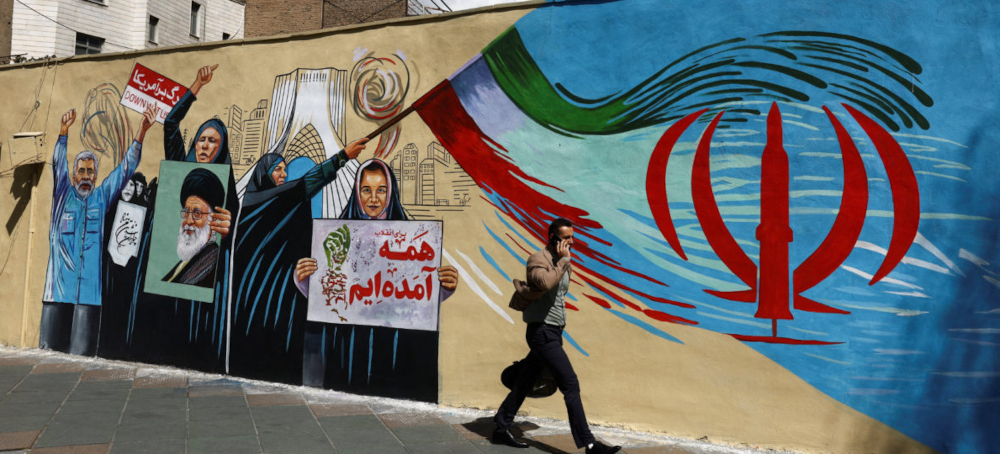 A man walks on a street in Tehran after President Donald Trump said that he had agreed to a two-week ceasefire with Iran, on April 8, 2026. (photo: Majid Asgaripour/WANA)
 The Pause That Isn’t: Why the Iran Ceasefire Changes Everything
Prof Robert Pape SubstackALSO SEE: Escalation Trap, Prof Robert Pape on Substack
That is the most misleading word in the system right now.
After 40 days of escalation, the United States and Iran have agreed to a two-week pause: no strikes, no missile attacks, and coordinated passage through the Strait of Hormuz.
It looks like de-escalation. It is not.
The capability to disrupt global energy flows is still intact. The incentives that drove escalation are still in place. And key actors—most importantly Israel—have not committed to restraint. Nothing fundamental has been resolved.
What has changed is more important.
The system has shifted from visible conflict to structural repositioning—the phase where power actually moves.
This is the moment most analysis gets wrong.
What This Briefing Will Do (That Headlines Cannot)
You already know what happened.
This briefing is about what happens next—before it becomes obvious.
I will walk through five things that will determine the next phase of this conflict:
1. What the ceasefire actually changed—and what it didn’t
Why this is not stability and why treating it as such is the first analytic mistake.
2. The real winners and losers (structural, not political)
Who gained power over the past 40 days—and why that power will persist even if the ceasefire holds.
3. Why the Escalation Trap is still active
The core mechanism—failure → fear → escalation—has not been broken. I will show exactly where it is likely to reappear.
4. The three break points over the next 14 days
Where this ceasefire is most fragile—and what specific events could collapse it.
5. What to watch in real time
The indicators that will tell you—before the headlines—whether the system is stabilizing or sliding back toward conflict.
Why This Moment Matters More Than the War Itself
When bombs fall, everyone pays attention.
When they stop, people assume the danger has passed.
That is when the real shift occurs.
Over the next two weeks, governments, markets, and militaries will quietly adjust to a new reality: a world in which the reliability of energy flows can no longer be assumed – without the cooperation of Iran.
Those adjustments—contracts, deployments, diplomatic signals—are what reshape power.
They happen before the next escalation.
They happen out of view. And once they happen, they are hard to reverse.
By the time the next highpoint in crisis is visible, the underlying shift will already be locked in.
Access Details
- Date: Thursday, April 9
- Time: 6:00 PM CT / 7:00 PM ET
- Format: Live Zoom briefing + Q…A
- Access: Paid subscribers only
As before, the Zoom link will be automatically emailed to paid subscribers 15 minutes before the session.
A full recording and written memo (including key takeaways and selected Q…A) will be posted afterward for all paid members.