
The Maduro Case May Be About to Take a Hairpin Turn
Michael Rips The New York Times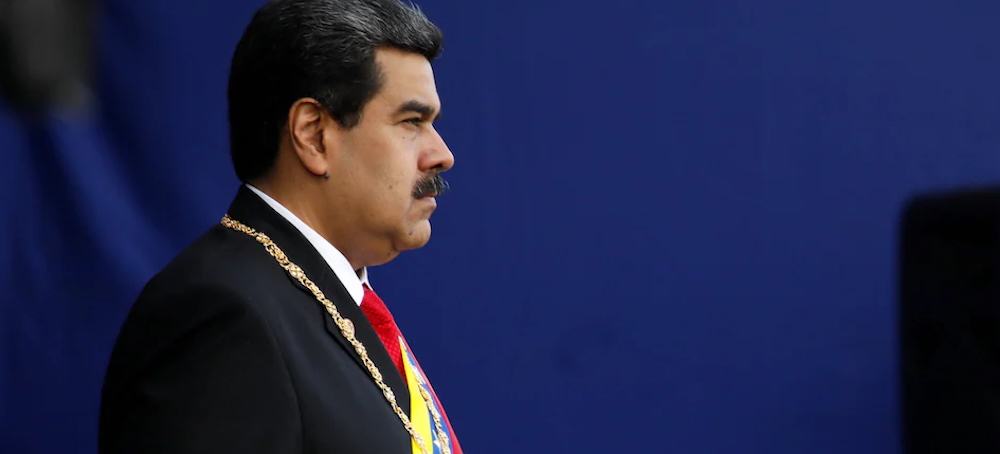 Venezuelan President Nicolas Maduro. (photo: WP)
 The Maduro Case May Be About to Take a Hairpin Turn
Michael Rips The New York TimesIf the United States honors its agreement, it could well be forced to release its prized captive.
The reason dates back to the first decades of the 20th century, when a topic that seems dry and legalistic today — international arbitration — was an exciting and idealistic cause, championed as a modern, rational tool of justice with the power to change the world.
President William Howard Taft felt so strongly about its promise that he spent part of his 1909 Inaugural Address extolling its virtues: “We favor every instrumentality, like that of the Hague tribunal and arbitration treaties, made with a view to its use in all international controversies, in order to maintain peace and to avoid war.” He advocated the practice throughout his presidency and, when he left the Oval Office, went on to serve as an international arbitrator. President Woodrow Wilson also took up the cause. His secretary of state, William Jennings Bryan, proposed permanent independent commissions to resolve disputes between nations. Taft, Wilson and Bryan had good reason to look for new ways to maintain peace: The world was descending into war.
Years later, when peace was restored, the United States began including arbitration clauses in many treaties. One of those was a 1922 extradition treaty between the United States and Venezuela. It states, in part, that “all differences between the contracting parties relating to the interpretation or execution of this treaty shall be decided by arbitration.” Approved by the Senate and ratified by the president, that document has the force of law.
Well, there sure are “differences between the contracting parties” today. The government of Venezuela is playing along with the Trump administration when it comes to oil exports, but it has publicly insisted that Mr. Maduro’s capture was illegal under international law — and that would include the extradition treaty.
A dispute of this nature should clearly trigger the 1922 treaty’s arbitration clause. According to its stipulations, Judge Alvin Hellerstein, who is overseeing Mr. Maduro’s trial, must suspend the proceedings and send the matter to a panel of independent evaluators to examine the treaty and decide whether it has been honored. Should the arbitrators conclude that Mr. Maduro’s capture violated the treaty, the United States would be required to release him.