
The Evolution of Trump’s Corruption
David A. Graham The Atlantic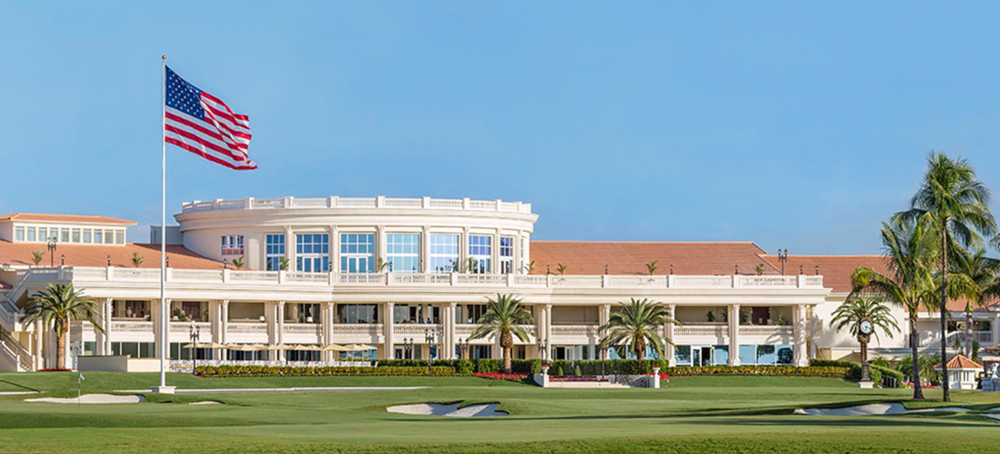 The president is no longer intimidated by backlash. (photo: Getty)
 The Evolution of Trump’s Corruption
David A. Graham The Atlantic
The president is no longer intimidated by backlash.
Things are different in Trump’s second term. Later this year, the United States will host the G20 summit—an offshoot of the G7 that includes approximately 20 leaders of the world’s largest economies—and the president has selected Trump National Doral as the location. A few days ago, The Washington Post reported that Trump even intends to invite Russian President Vladimir Putin, a global pariah, to the meeting. But the Doral G20 has gotten nowhere near the same amount of attention, and much less backlash.
The way the two summits have been received feels like a case study in the differences between the first and second Trump presidencies. In 2019, neither the press nor the public was yet so fatigued by news and numb to outrage, as New York magazine observed this week, nor were they yet accustomed to a president using his position to openly enrich himself. (The Atlantic’s headline about the G7 announcement was “Trump’s Most Shameless Act of Profiteering.” How young we were!) The Republican Party also had more leaders who were willing to criticize the president, either publicly or privately. Finally, although Trump has never seemed especially vulnerable to shame, the president and his aides could still be swayed by sufficient embarrassment back then. The phrase shameless corruption gets used a lot, but Trump’s second term embodies it.
Although the first Trump administration created a fire hose of news, the country has been going at this pace now for 10 years, and the public is getting tired. Trump’s announcement of the location for the G20 back in early September, was overshadowed by larger stories, particularly the Epstein files; days later, Charlie Kirk was assassinated, briefly blotting out all other coverage. The G20 summit may also seem less relevant than other global events, especially given that Trump is currently shaking or breaking the world order through different means. (He has also already disinvited South Africa from the summit for largely imagined offenses against Afrikaners.)
Perhaps most important, the idea of Trump grubbing a few dollars out of hosting a meeting at one of his properties seems positively quaint today. During the first Trump term, I covered a succession of egregious choices: Trump refusing to financially disentangle himself from his companies; diverting Mike Pence to his Irish resort for a stopover; charging the Secret Service exorbitant rates to stay at Mar-a-Lago while protecting him; and making his hotel in Washington, D.C., a physical affront to the Constitution’s emoluments clause.
To say that these actions now look like nickel-and-diming is not to forgive them but to acknowledge the much larger scale on which Trump and his family are working now. The president’s government is signing off on big payouts to former aides, including Michael Flynn ($1.25 million for a case in which Flynn pleaded guilty) and Carter Page (another $1.25 million, even though courts twice dismissed his lawsuit). The government has not yet made deals with people convicted for their involvement in the January 6, 2021, riot, but their lawyers are hopeful. Trump has handed out clemency to a slew of people who have donated money to his campaign or his other efforts, which looks a great deal like selling pardons.
Trump’s family business, the Trump Organization, has signed lucrative deals in cities around the world where his administration is also conducting foreign policy. His son-in-law Jared Kushner, too, is making business deals in some of the same countries with which he is negotiating on behalf of the president, even though he has no government role. Trump’s media company has jumped into cryptocurrency and prediction markets, a clear conflict of interest given the federal government’s role in setting crypto policy. The New York Times recently reported on how a Syrian billionaire had sought to get sanctions removed on his country with a charm offensive that included an offer to open a Trump-branded golf course. He was egged on by a Republican member of Congress. (The sanctions have been removed, but the Trump Organization says that no deal to build a golf course is in the offing.)
Last summer, David Kirkpatrick of The New Yorker attempted to quantify how much Trump and his immediate family had made off the presidency and came up with a rough figure of $3.4 billion. By late January, Kirkpatrick estimated that the total was up to $4 billion. And it will continue to grow. Trump is even suing his own government, hoping to get the Justice Department—led for now by his former personal attorney—to pay him $230 million for investigating him, and the IRS to pay him $10 billion for mishandling his tax information.
I worry that summarizing so many examples so briefly only contributes to the same fatigue that has enabled them. If one death is a tragedy and 1 million deaths are a statistic, perhaps it is also true that charging the Secret Service thousands of dollars on hotel rooms is corruption, but raking in billions is simply a new paradigm. Yet these examples pop up regularly. The Trump administration has realized that its profiteering no longer produces the same public fury it once did, that nearly all Republican officeholders will stay quiet, and that it can grit out or ignore any residual shame. The result is on a dollar basis, and perhaps on any basis, the most corrupt administration in American history.