
The Cost of the Iran War Is Mounting. Here’s the Latest Tally.
Sammy Westfall The Washington Post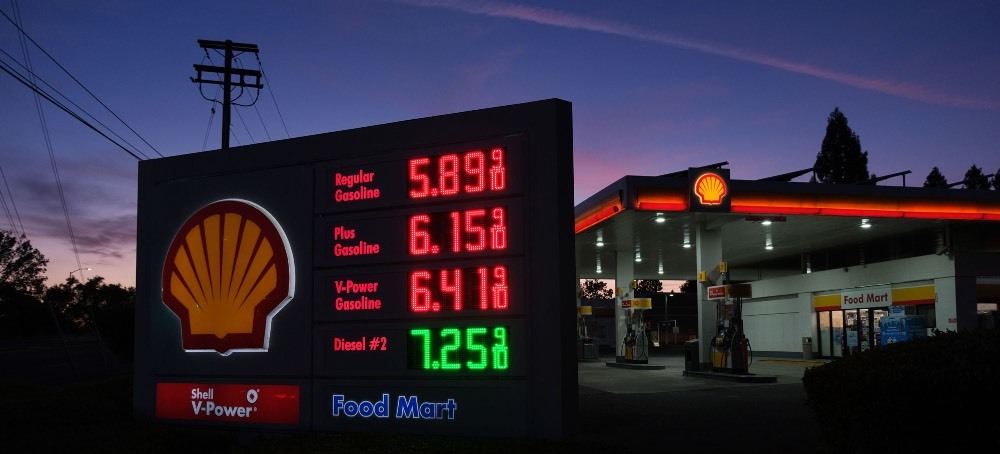 The U.S. military is spending billions, and the typical U.S. household will pay $1,000 because of the conflict, an economist said. (photo: iStock)
 The Cost of the Iran War Is Mounting. Here’s the Latest Tally.
Sammy Westfall The Washington Post
The U.S. military is spending billions, and the typical U.S. household will pay $1,000 because of the conflict, an economist said.
Lawmakers are wrangling over a plan to pay the bill. Consumers face bills of their own, including gas prices driven up by supply disruptions during the war. And people around the world face shortages and higher prices, some connected to Iran’s effective closure of the Strait of Hormuz to commercial shipping — as U.S. allies press for a deal to open it.
U.S. officials are warning of a Pentagon funding crunch and extreme munition shortages that pushed President Donald Trump to clash with Defense Secretary Pete Hegseth last week, The Washington Post reported.
Here is what we know so far about the costs of the war.
Military costs
“It takes money to kill bad guys,” Hegseth told reporters in March.
The war began on Feb. 28 with a joint U.S. and Israeli attack on Iranian targets. By September, the military will have incurred some $37.5 billion in taxpayer-funded costs in connection to the war, excluding the cost of damage to U.S. bases in the region struck Iran, according to Hegseth’s latest estimate, which he offered at a hearing last month in which he pushed lawmakers to approve $67 billion in additional funding to cover the expense of the conflict, including replenishment of some weapons stocks.
The House late last month approved some $73 billion for the Iran war, not all of which would go to the Defense Department, and the Republican-controlled Senate is rushing to approve it, along with a stopgap spending measure, before leaving Washington for summer recess meant to begin Friday.
House Republicans on July 22 passed a $1.15 trillion defense policy bill and created a $95 billion budget plan that would provide some $73 billion in military and indigence funding, as well as relief for farmers, among other measures.
Some analysts, based on their own calculations or projections, put the cost of the war higher than Pentagon estimates.
Mark F. Cancian of the Center for Strategic and International Studies, a Washington think tank, put out an estimate in June of a cost of $35.2 —$42.5 billion for the war, counting only additional costs incurred by the Department of Defense due to the war, as many operational activities are already baked into the budget.
The CSIS estimate draws from six categories of spending: deployment, munitions, higher operational tempo, equipment losses, base damage and increased fuel prices.
Munitions are the key cost driver — at more than $26.1 billion, he estimates.
The United States has depleted much of its advanced missile-defense interceptor inventory — using more high-end munitions to defend Israel than Israeli forces used themselves against Iran, Washington Post reporting found. At the same time, Iran is using much cheaper munitions, causing an asymmetry in costs.
Last week, Trump expressed anger to Hegseth over the matter, demanding answers as to why he felt misled on munitions shortages, two people familiar with the exchanged told The Post.
U.S. officials in May told The Post the U.S. launched more than more than 200 Terminal High Altitude Area Defense, or THAAD, interceptors to defend Israel — roughly half of the Pentagon’s total inventory. A THAAD interceptor costs about $15 million.
Those interceptors have to be replenished at higher costs now, analysts said.
Tomahawks missiles, U.S. long-range cruise missiles, cost more than $2 million each but are replaced for as much as double, said Linda J. Bilmes, a professor of public policy at the Harvard Kennedy School. Fuel in the inventory, too, she said is at a lower cost than the fuel replacement costs now.
The earlier supplemental ask of roughly $67 billion is “probably a reasonable estimate of extremely short-term costs — using inaccurate accounting,” Bilmes said. The $67 billion may cover only “some of the very tip of the iceberg costs of this up-front, short-term personnel, munitions, fuel,” she said.
The first few days of war, after the United States and Israel began a joint attack on Iran in February, were especially expensive. The Pentagon burned through $5.6 billion worth of munitions in the first two days of war with Iran, U.S. officials told The Post. In four weeks of war, the U.S. fired more than 850 Tomahawk cruise missiles — of which only a few hundred are manufactured annually.
Costs continue to rise amid ongoing operations in region even as the level of strikes dropped after Trump’s interim truce agreement in June.
Medium and long-term costs are often excluded from Pentagon estimates.
U.S. military base damage has been costly, and the Pentagon has said it has not yet factored those repairs into its cost estimates. A Washington Post visual analysis of satellite imagery found that the amount of destruction to U.S. military sites is far larger than had been publicly acknowledged by the U.S. government. Iranian airstrikes had damaged or destroyed at least more than 228 structures or pieces of equipment at U.S. military sites across the Middle East by May.
The American Enterprise Institute, a right-leaning Washington think tank, estimated that damage to U.S. military bases in the region, including Qatar and the UAE, could cost $5 billion — in rebuilding, repairs and indirect costs such as design and engineering.
The Congressional Research Service in May said that at least 42 aircraft have been reportedly lost or damaged, raising potential budgetary issues.
AEI’s Elaine McCusker’s estimate puts the cost of Operation Epic Fury at $38.6 billion, as of June.
McCusker, a senior fellow at AEI and a former top Pentagon official, said it is important to assess the war’s price against the value of what Americans are getting in return. She put the cost for each individual American at roughly $115 so far — the estimated $39 billion cost of the military operation divided by the size of the U.S. population.
The Kennedy School’s Bilmes said that wars also have “long-tail cost,” including long-term veterans benefits and surges to the Pentagon budget, which already increases every year. “And it’s going to go up by a bigger amount than it would have in the absence of this war,” she said.
This year’s defense budget is about $1 trillion; for next year, the Trump administration has requested $1.5 trillion, a number that has raised concerns on Capitol Hill over adding to the $39 trillion national debt.
Short- and medium-term costs will be financed through borrowing, at rates much higher than they were in the 2000s, she said.
“I’ve said since the beginning that this war is going to cost something like a trillion dollars,” Bilmes said, by the time all the munitions are replenished, facilities are reconstructed, allies are helped, veterans benefits are paid, and borrowed funds are repaid with interest.
“It’s a very costly operation, and the American taxpayer is gonna be paying for this for years,” she said.
Consumer costs
The war has second-order costs on top of direct costs to taxpayers, including consumer burdens due to increased prices amid wartime disruptions.
“The indirect cost of this war may well outpace the direct costs in the years to come,” said Gabe Murphy, a policy analyst at nonpartisan budget watchdog Taxpayers for Common Sense.
Trump has called higher gas prices “peanuts” compared to the threat of Iran attaining a nuclear weapon.
Comparing the current war scenario to a counterfactual “no-war” scenario, Brown University’s Climate Solutions Lab put the extra costs paid for gasoline and diesel by all Americans since the start of the war at more than $79.8 billion — or about $609 per U.S. household. Its ticker continues to rise.
Mark Zandi, chief economist of Moody’s Analytics, said the typical household will pay $1,000 because of the war — about a third of which is related to the cost of gasoline. His estimate also encompasses the cost of diesel, which affects anything put on a truck including groceries, jet fuel and higher interest rates. There’s another $250 in taxes for direct military spending, he said.
He didn’t include any confidence effects, he said, adding that consumer sentiment, including small business sentiment, has been “hit hard.” The $1,000 cost is “on the low side of what we’ve actually paid,” he added.
There are tax cuts that have offset some of the war costs — but “still the benefit of the tax cut is now in the rear view” as war costs accumulate, Zandi said.
There is also the larger, global macroeconomic consequences of the war, including the closure of the vital Strait of Hormuz — a number so large and complex to derive that analysts say it would be difficult to calculate with current data.