
Sudan: Hospital Strike Highlights Surge in Drone Attacks on Civilians
Dominika Tomaszewska-Mortimer UN News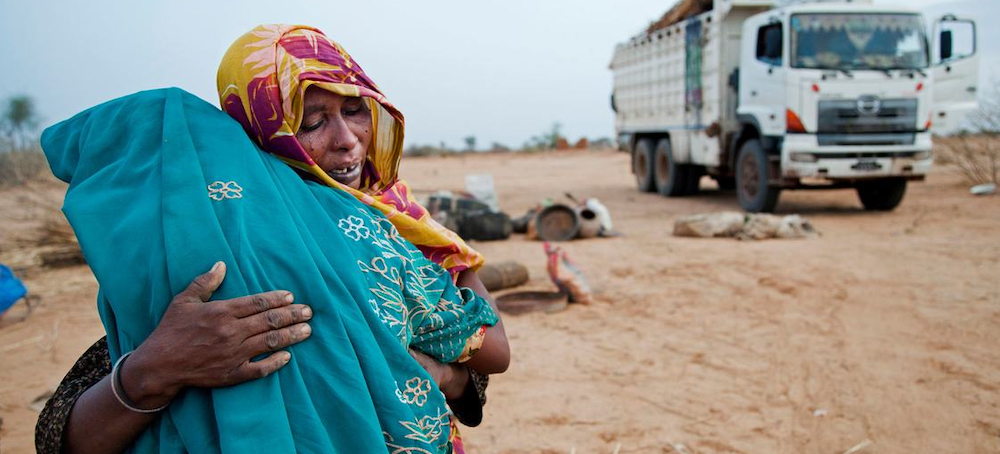 People continue to be displaced by conflict in Sudan. (photo: Albert González Farran/UN)
 Sudan: Hospital Strike Highlights Surge in Drone Attacks on Civilians
Dominika Tomaszewska-Mortimer UN NewsAccording to the UN World Health Organization (WHO), the number of people killed has risen to 70, including seven women and 13 children, following search efforts.
Health workers - one doctor and two nurses - were also among those killed, while injuries have increased to 146 people, including patients and family members accompanying them.
Call for immediate de-escalation: Guterres
The Secretary-General António Guterres on Tuesday strongly condemned the killings calling on the rival military leaderships “to immediately de-escalate the fighting and agree on a cessation of hostilities.”
He renewed his appeal for the warring parties to work with mediators, including his Personal Envoy for Sudan, “to return to the negotiating table to pursue a lasting ceasefire and a comprehensive, inclusive and Sudanese-owned political process.”
Health care a frequent target
Since the start of the conflict, the total number of fatalities linked to attacks on health facilities has surpassed 2,000 according to WHO.
“An attack on a hospital is not only an attack on a building, it's an attack on people seeking care, on health workers risking their lives to save others, and on the very possibility of survival at times of crisis,” said WHO Deputy Representative to Sudan, Dr Hala Khudari.
“Sudan is approaching its third year of armed conflict, but the attacks on healthcare continue,” she deplored, stressing that health facilities, ambulances, health workers and patients have been “repeatedly targeted”.
The attack on the teaching hospital has effectively closed it and patients “may have to travel over 160 kilometers to reach the next referral hospital, which for patients requiring specialized services, is very difficult”, the UN health agency official said.
She stressed that Al Deain served as a referral hospital for over two million people in the city as well as nine other localities in the East Darfur state.
Perpetrator hunt
Asked who was responsible for the Al Deain attack, UN Human Rights Office (OHCHR) spokesperson Marta Hurtado said that while the perpetrators have not been identified, both parties to the conflict use drones extensively.
“Our call is for both parties to stop immediately using this type of weaponry,” she said.
Ms. Hurtado warned of a surge in the use of drones to conduct airstrikes this year in Sudan, which “underlines the devastating impact of high tech and relatively cheap weapons in populated areas”.
More than 500 civilians were killed in such strikes from 1 January to 15 March, she said, the vast majority in three states in the Kordofan region.
The deadly attacks continued in the past week, culminating with the Al Deain attack as the month of Ramadan came to a close on Eid Al-Fitr.
Chad strike condemned
The UN Human Rights office spokesperson also said that “widening drone attacks are spiralling across Sudan[’s] borders, with serious risk of further escalation, carrying regional consequences”.
She mentioned deadly drone strikes last week on the town of At Tina close to the Sudan-Chad border and in the border locality of Tine in Chad, “after earlier ground offenses by the RSF”.
“Continued patterns of such attacks striking civilians and destroying civilian infrastructures raise serious concerns about compliance with international humanitarian laws, fundamental principles of distinction, proportionality and precaution, and may amount to war crimes,” Ms. Hurtado concluded, calling for an end to “arms transfers that are feeding the conflict”.