
Saving Our Ocean to Save Our Future: National Marine Sanctuaries
Philippe Cousteau, Jr. and Lela DeVine EcoWatch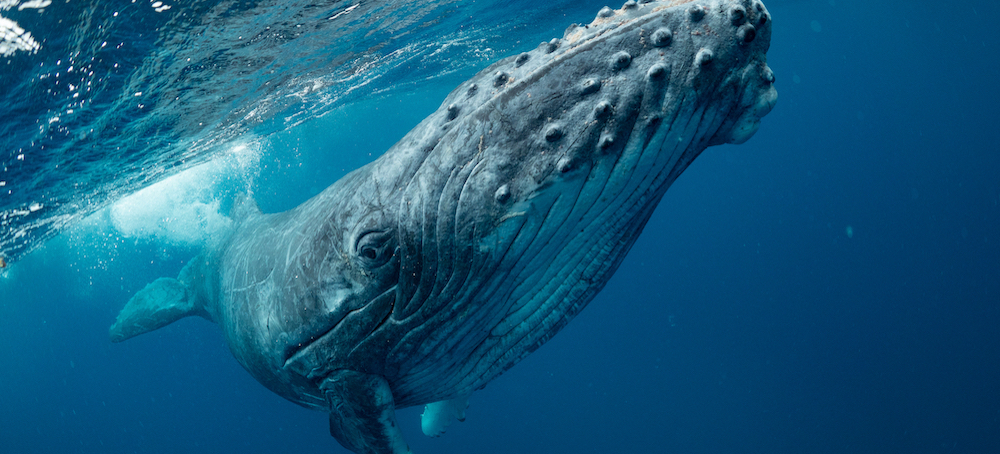 A humpback whale. (photo: Live Science)
Saving Our Ocean to Save Our Future: National Marine Sanctuaries
Philippe Cousteau, Jr. and Lela DeVine EcoWatchYou don’t need to be a scientist to understand the urgent nature of the challenges facing the ocean, our most precious natural resource that provides more than 50% of our oxygen and supports up to 80% of life on the planet. These impacts aren’t nuanced trends on a chart, they are widely visible. If you view footage from Jacques Cousteau’s original film The Silent World, you will see the waters off the coast of France teeming with sea life, from giant groupers to stunning corals. Today, those waters bear little resemblance to that vibrant world of a few decades ago. Startling ecosystem declines are evident from the Great Barrier Reef to the Florida Keys to the coral ridges off the coasts of Hawai’i.
Fifty years ago, the United States ushered in a new era of ocean conservation with the National Marine Sanctuaries Act. Jacques Cousteau himself was an early supporter of the movement to preserve key ocean habitats and helped introduce a new mindset regarding ocean conservation. Since then, the initiative has grown into a nationwide network of 15 national marine sanctuaries and two marine national monuments that, combined, conserve more than 620,000 square miles of spectacular ocean and Great Lakes waters, an area nearly the size of Alaska. We have discovered that when ocean ecosystems are given time and space to recover from detrimental human activities, they can rebound at an astonishing rate.
In the United States, the National Marine Sanctuary System supports coastal communities and drives local economies by providing jobs and opportunities for people to discover, recreate, and form life-long connections with these spectacular places. Perhaps most importantly, these sanctuaries connect people to the ocean through science education and stewardship. We rely on these networks to inspire community-based solutions that help us understand and protect our nation’s most spectacular underwater habitats, archaeological wonders, and cultural seascapes. Marine protected areas also play a key role in promoting climate resilience by offering protection for “blue carbon” habitats—coastal ecosystems including salt marshes, seagrasses, and mangroves that provide long term storage for massive amounts of atmospheric carbon.
Other benefits may not be as obvious. The National Marine Sanctuary System also provides a rich resource for research that can directly impact human health and wellness, such as a recent study of the medicinal potential of marine sponges and corals that yield novel compounds effective in combating prostate and ovarian cancer cell lines.
Linking this research to some of the largest marine protected areas, including Papahānaumokuākea Marine National Monument, allows us to pinpoint opportunities that combine exciting medical breakthroughs with marine conservation.
The state of the ocean, at its core, is a people problem and thus people are the key to solving it. Youth in particular are a growing voice in the push for action. At EarthEcho International, tens of thousands of young people each year are given the knowledge and tools to understand how their communities are impacted by the ocean and what they can do about it. From coastal cleanups and restoration projects to education campaigns and engaging policymakers, EarthEcho youth are changing the world. National marine sanctuaries and marine protected areas provide a foundation for this growing youth movement to take action in communities around the globe.
Ultimately, each one of us is connected to the ocean regardless of age, geographic location, race, or economic status. We all have a role to play in ensuring our ocean planet is a thriving, healthy home for all people. As we look toward the future, national marine sanctuaries can help us make that connection to the ocean and be a source of pride, enjoyment, and hope for all. They should be cherished and celebrated on their 50th anniversary and every day.