
New Mexico Bans Uranium Leasing on State Lands
Dylan Baddour and Wyatt Myskow Inside Climate News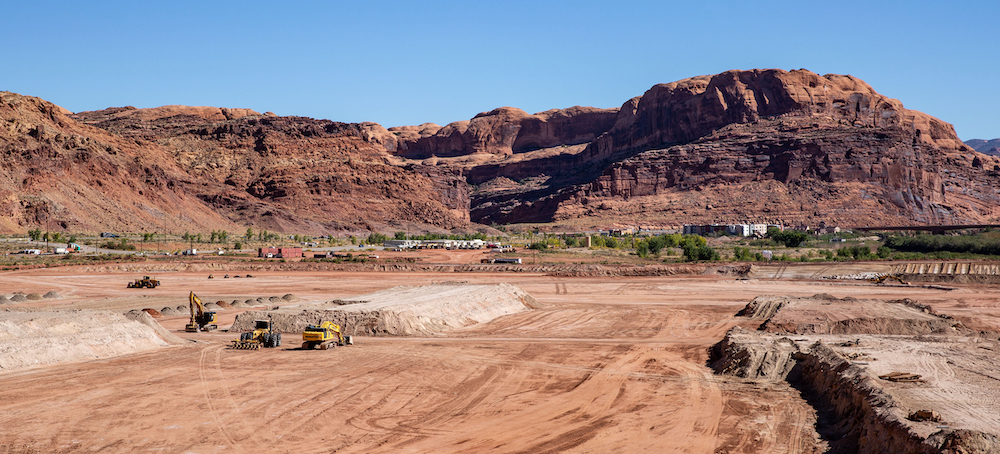 "New Mexico, home to hundreds of abandoned uranium shaft mines, has two active uranium leases but no active mines." (photo: George Rose/Getty Images)
 New Mexico Bans Uranium Leasing on State Lands
Dylan Baddour and Wyatt Myskow Inside Climate News
The move to block new mining projects comes as the Trump administration seeks to revive American uranium production.
State Land Commissioner Stephanie Garcia Richard signed the executive order at a press conference in Sante Fe as the Trump administration seeks to revive American uranium mining and rebuild a domestic supply chain for nuclear fuel.
“Today we get to say something our fathers were never given the opportunity to say,” said state Sen. Angel Charley, the daughter of a uranium miner. “No community in New Mexico should have to sacrifice its people, its water and its land, so someone else can make a profit.”
New Mexico, home to hundreds of abandoned uranium shaft mines, has two active uranium leases but no active mines. Trump administration officials have pushed for uranium mining on federal lands, including national forests in New Mexico, and added one to its fast-tracking program.
“Increasing the domestic production of uranium is critical to national security and energy dominance,” said Emily Domenech, executive director of the federal Permitting Council, in a press release this summer.
New uranium mines are humming in Wyoming, Arizona and Texas, with dozens more queued to re-open, according to reporting by Inside Climate News. In New Mexico, Australian miner Laramide Resources and Colorado-based Energy Fuels aim to begin producing uranium next year. The order signed by Garcia Richard on Friday doesn’t stop uranium mines from moving forward on federal land within the state. Nor does it stop any active leases, of which there are two, in the state. But it does signal the office’s position on uranium mining, Garcia Richard said, and prevents any new mines from moving forward.
“The Trump administration is aggressively seeking to promote new domestic uranium production,” the executive order said.
The U.S. ceased large-scale uranium production decades ago when it stopped building nuclear reactors and shifted fuel supply chains to foreign sources. The remnants of the mining industry in the Four Corners region, the epicenter of U.S. uranium production, have caused generations of health impacts and environmental pollution, including in the community of Laguna where Charley grew up.
“When the uranium companies were done, they got to leave,” Charley said. “We don’t.”
New Mexico is home to the largest spill of radioactive material in U.S. history: a 1979 tailings dam collapse that spilled 94 million gallons of radioactive water and 1,100 tons of uranium waste across portions of New Mexico, Arizona and the Navajo Nation. The state is also home to the Trinity Site, where the first atomic bomb was tested. Nearby communities, mainly tribal reservations, continue to face health impacts from both being downwind of the test sites and exposed to the mining operations.
“This order banning new uranium mining on state lands is a critical step toward ensuring we don’t worsen the deadly legacy uranium mining has already left across the Four Corners region,” said Taylor McKinnon, Southwest director for the Center for Biological Diversity, in a statement on Friday. “It’s long past time to proactively protect people, water, land and biodiversity.”
Last year the Trump administration added uranium to its list of high-priority mining products for national security. Successive federal administrations have sought to rebuild supply chains for nuclear fuel, especially since the 2024 prohibition of Russian uranium imports.
Among its policy priorities, the New Mexico Chamber of Commerce lists: “Encouragement of New Mexico’s unique ability to contribute to, and benefit from, the nuclear fuel cycle through uranium mining.”