
Netanyahu Orders to Uncover Identity of Soldiers Interviewed in ‘NAZA’
Jonathan Lis Haaretz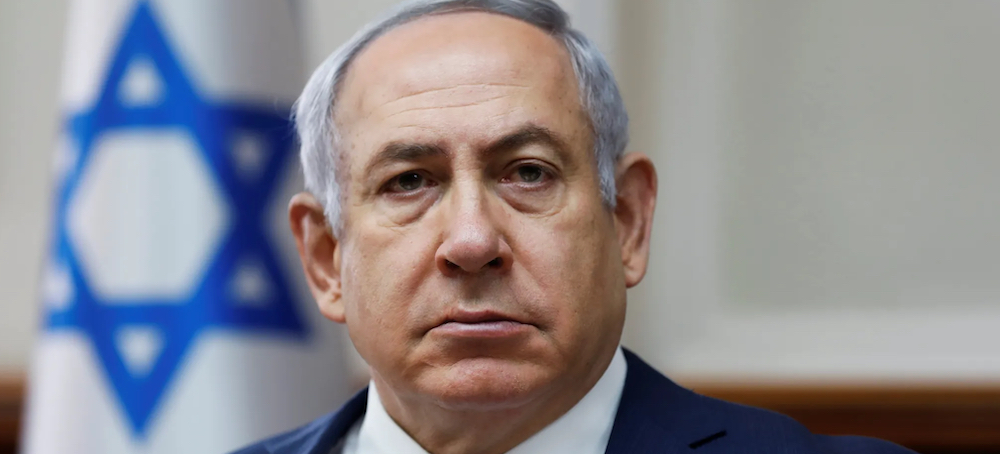 Israeli Prime Minister Benjamin Netanyahu. (photo: Brookings)
 Netanyahu Orders to Uncover Identity of Soldiers Interviewed in ‘NAZA’
Jonathan Lis Haaretz
In a letter to the IDF chief of staff, Shin Bet chief and attorney general, Netanyahu accused soldiers who appeared in the film of 'exposing classified information' and of 'breaching information security in a sensitive intelligence unit'
The film shows interviews with soldiers and officers, concealing their identities. These interviews, the film's creators say, reveal "the systems behind Israel's calculated mass killing of Palestinian civilians in Gaza."
In his letter to IDF Chief of Staff Eyal Zamir, Shin Bet chief David Zini and Attorney General Gali Baharav-Miara, Netanyahu wrote that "the film presents a false, misleading and biased narrative that defames the State of Israel and the IDF around the world and severely damages Israel's standing."
He added that "there is concern that those involved in the defamatory film committed serious criminal offenses by exposing highly classified information and creating a breach in the information security of a highly sensitive intelligence unit."
"NAZA," which won the special jury prize at the Venice Film Festival earlier this month, reveals "in detail the systems behind Israel's calculated mass killing of Palestinian civilians in Gaza," according to the official synopsis, and is based on the testimonies of 24 Israeli soldiers and intelligence personnel.
Following the film's recognition at the Venice festival, Israeli Culture Minister Miki Zohar appealed to the Interior Ministry to consider revoking the citizenship of the film's creators and described the film as "vile" and saying it "constitutes treason."
IDF chief Zamir said at the time that the film "is an attack on the State of Israel," and the military "will not allow IDF soldiers to be made targets through lies and blood libels" and will use "every tool at our disposal" against it.
The IDF chief added that he instructed the military's top lawyer to "advance possible legal measures concerning the film and those involved in it," citing the documentary's "potential implications" to soldiers' safety and Israel's national security.
In the wake of the premiere, IDF Chief of Staff Eyal Zamir instructed Military Intelligence, the Military Advocate General's Corps and the Israeli Air Force to begin identifying the soldiers featured in "NAZA," particularly whether they are active-duty or career officers or reservists.
The IDF's top lawyer, Military Advocate General Itai Offir, said during a discussion on the matter that there would be no legal basis for criminal prosecution unless the participants had committed information-security violations or disclosed classified material. If they are found to have violated military orders, however, disciplinary or command measures could be taken against them.
Earlier this month, the Israeli military issued an official response to the film, rejecting it as a distorted and misleading portrayal of how it selects and approves targets in Gaza, saying the film contains "substantial factual errors."
In its 17-page response, the IDF said it only relied on a "detailed review by a representative that attended the public screening, and the public statements of the film's creators," as it was refused a copy of the film.
The IDF also said that the film did not ask for comment before airing it and did not give any details regarding the incidents mentioned in it after its airing.
"The tragic consequences of war do not justify distorting the facts," the army said. "Serious discussion of civilian harm requires a serious account of how decisions were actually made. That is precisely what the film fails to provide."
In response, British newspaper The Guardian, which produced the film, said that the "process of assessing the credibility of the testimonies was rigorous. It included leaked classified documents, detailed verification of specific strikes and corroboration via a wider pool of confidential journalistic sources who did not appear on camera in the film."
The newspaper added that in the past three years it has "interviewed more than 100 sources familiar with IDF systems used in the war in Gaza, including senior-ranking commanders directly involved in the authorisation of strikes."