
Latin America Is a Dangerous Place for Environmental Activists
teleSUR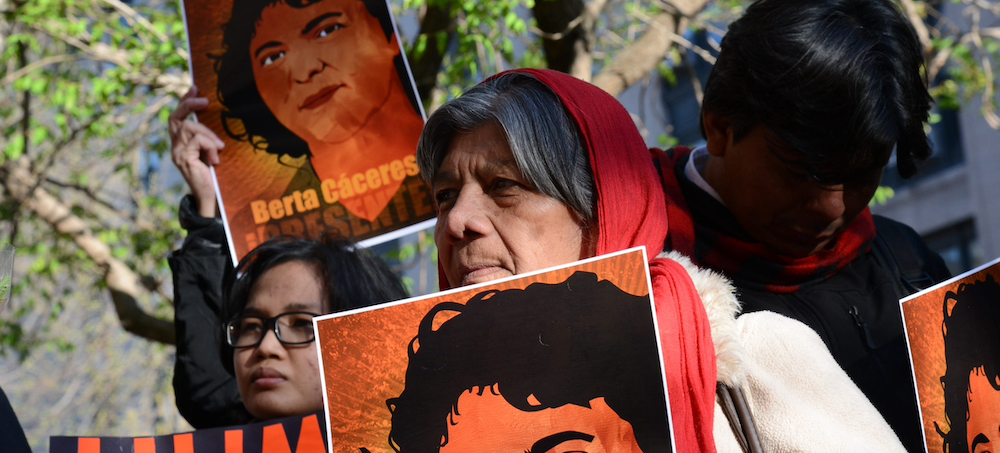 A vigil for Berta Cáceres, who was murdered on March 3, 2016, in Honduras. (photo: ET)
Latin America Is a Dangerous Place for Environmental Activists
teleSUR
Seventy-five percent of the murders of the human rights and environmental activists that occurred in the world in 2020 took place in this region.
According to the United Nations Human Rights Council (UNHRC), 75 percent of the murders of the human rights and environmental activists that occurred in the world in 2020 took place in Latin America.
In that year, the Latin American cases, which were mainly linked to the rejection of the activities of transnational corporations, were registered in Colombia (65) Mexico (30), Brazil (20), Honduras (17), and Guatemala (13).
In Sept. 2020, for instance, Mexican Indigenous environmentalist leader Oscar Eyraud Adams was assassinated for fighting industries that prompted water scarcity in Baja California.
People want the truth about climate change and cataclysms. Please, if you are an eyewitness, share the information @_GlobalCrisis_ #GlobalCrisis #time4truth #CreativeSociety #ClimateCrisis #ClimateChange #climate #WeWant2Live #LastWarofHumanity #Brasil #flooding pic.twitter.com/VNMQnbQEXe
— Elena Martin (@ElenaMartin_Mo) April 4, 2022
Later, in Feb. 2021, Brazilian teacher Isac Tembe was killed for opposing the escalation of logging activities in the Amazon rainforest. In Jan. 2022, Honduran environmentalist Melvin Mejia was shot dead for fighting to defend the Tolupan lands from international companies.
To counteract such situation, the UNHRC urged regional authorities to adopt policies that guarantee not only the integral sanction of all crimes against environmental leaders but also the prevention and integral reparation of the victims’ relatives.
"Authorities are primarily responsible for the investigation of these crimes. If they do not assume such obligations, environmentalist struggles will continue to be bathed in blood," the UN Council stated.