
Judge Grants Trump's Request for Special Master to Handle Seized Documents
Guardian UK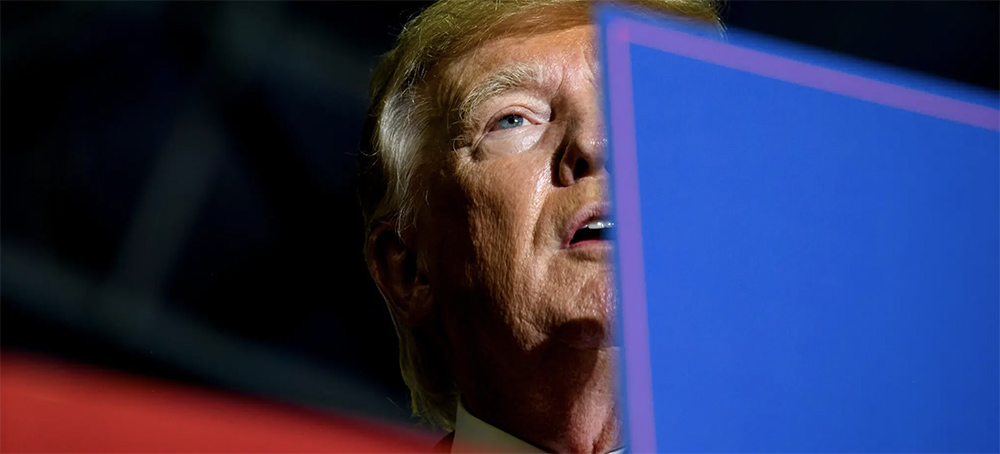 Donald Trump. (photo: Brittany Greeson/NYT)
Judge Grants Trump's Request for Special Master to Handle Seized Documents
Guardian UK
Federal court at least partially accepts the ex-president’s bid for official to set aside materials potentially subject to privilege protections
The request was granted on Monday morning, a court filing showed. The court temporarily instructed the government not to review or use seized materials for investigative purposes, pending completion of such a special master’s review or a further court order, according to the filing.
The order on Monday from Judge Aileen Cannon, a Trump appointee, also temporarily barred the US Department of Justice (DoJ) from reviewing the documents for its criminal inquiry until the special master completes its work, in a decision that marked a procedural victory for the former president.
Cannon said in her 24-page ruling, however, that the Office of the Director of National Intelligence (ODNI) could continue to review the seized materials for its separate inquiry into whether Trump’s retention of documents with classified markings at Mar-a-Lago risked national security.
Cannon gave Trump’s legal team and the DoJ until Friday to file a proposed list of special master candidates.
The DoJ is likely to appeal the decision to the US court of appeals for the 11th circuit, officials said, though in the meantime it will delay the investigation into potential violations of the Espionage Act and potential obstruction of justice.
Trump has accused the DoJ of launching a partisan witch-hunt against him, and his lawyers argued that the appointment of an independent third party to review the materials would be an important check on the government.
Trump is under investigation for removing government records, some of which were marked as highly classified, from the White House after he departed office in January 2021, and storing them at his home in Palm Beach, Florida.
The estate includes a private club and resort as well as the former president’s private residence, and it has long been a hub of comings and goings by members as well as world leaders when Trump was in office. It also has a history of occasionally being breached by imposters.
The DoJ has also said it is investigating possible obstruction, after the FBI uncovered evidence that Trump’s team may have deliberately concealed classified documents when agents tried to recover them in June.
At a meeting on 3 June, Trump’s representatives falsely certified they had conducted a diligent search and returned all classified materials to the government – a claim that was later disproved after the FBI recovered about 33 boxes containing more than 11,000 government records and photos and more than 100 records marked as classified.
Trump’s legal team waited until two weeks after the FBI’s 8 August search before asking the court to appoint a special master – an independent third party who is sometimes assigned in sensitive cases to review materials that could be covered by attorney-client privilege.
A special master was used, for instance, to review materials seized in the searches of the homes and offices of two of Trump’s former attorneys – Rudy Giuliani and Michael Cohen.
But Trump’s request was unique. Not only did his team want the special master to review traditional attorney-client privileged material, but they also told Cannon the special master was appropriate because some of the records could be subject to executive privilege – a legal doctrine that shields some White House communications.
Neal Katyal, former US acting solicitor general, wrote that the appointment of a special master wouldn’t derail the federal investigation but that this decision “sets a terrible precedent”.
“Even though this judge’s order appointing a special master won’t stop the very serious Trump stolen docs investigation, having been the decider of whether DOJ should appeal various cases in the past, I think DoJ has to appeal here,” Katyal said on Twitter, adding: “That’s what I’d do.”
The DoJ has staunchly resisted Trump’s request, saying he cannot claim executive privilege because the records do not belong to him; they belong to the government.
“He is no longer the president,” Jay Bratt, the department’s top counter-intelligence lawyer, told Cannon at a 1 September hearing.
“And because he is no longer president, he did not have a right to take those documents.”
The DoJ also said it made no sense to appoint a special master because its filter team – a group of agents who are not part of the investigation – had completed its work.
The agents located and set aside a limited number of records that could be subject to attorney-client privilege.
The rest of the records have already been reviewed by the investigative team for the criminal investigation.
At the same time, the ODNI is conducting a parallel review as part of a national security damage assessment.
Many former DoJ attorneys, Democrats and Republicans, have criticized Trump’s call for a special master.
The former US attorney general Bill Barr, whom Trump appointed, called a special master “a waste of time” in an interview on Fox News.
A group of former federal prosecutors who served in Republican administrations also filed an amicus brief in the case, saying Trump’s request was “unprecedented”, filed in a court with no jurisdiction, and “manifestly frivolous”.
However, at the 1 September hearing Cannon, signaled a willingness to grant his request.
“Ultimately, what is the harm of appointing a special master?” she asked.
However, the issue and timing are highly sensitive, just two months before the midterm elections in November and amid fevered speculation about whether Trump will announce that he is running for the Republican nomination in 2024.