
How Scientists Found a Weakness in One of the the Deadliest ‘Undruggable’ Cancers
Carolyn Y. Johnson Washington Post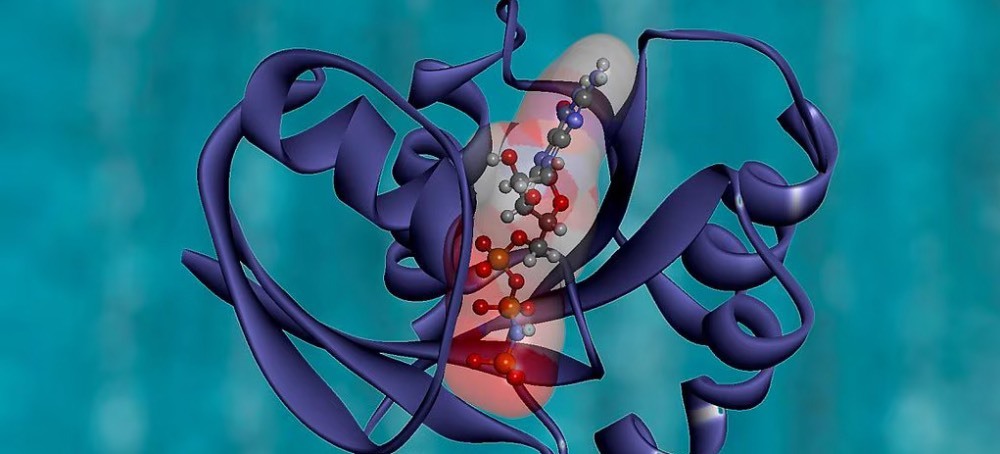 https://www.washingtonpost.com/health/2026/05/24/pancreatic-cancer-seemed-undruggable-then-scientists-cracked-key-target/
 How Scientists Found a Weakness in One of the the Deadliest ‘Undruggable’ Cancers
Carolyn Y. Johnson Washington PostALSO SEE: New Pancreatic Cancer Drug Nearly Doubles Survival
An experimental pill has shown unprecedented success in treating pancreatic cancer, upending conventional wisdom about the disease.
Pancreatic cancer is an exquisitely cruel diagnosis, leaving only 13 percent of people alive after five years. But in the early 1980s, scientists discovered a weakness — a mutated protein called KRAS — that spurred the aggressive growth and spread an array of tumors. In pancreatic cancer, it would turn out to be a key driver of nearly every case.
There was just one problem. The KRAS protein they needed to block was flat and smooth, without the crevices and cracks, pockets and sockets that a drug needs to get a toehold.
Scientists came up with various nicknames. A bowling ball with no holes. A greasy ball. Undruggable. The elephant in the room for cancer research — everyone knows it’s there, nobody wants to deal with it.
No longer.
In the span of a few weeks, the conventional wisdom on pancreatic cancer and KRAS has been upended. In April, biotech company Revolution Medicines announced that its experimental pill, called daraxonrasib, had notched an unprecedented success — patients lived for 13 months, twice as long as those given regular chemotherapy. The full details will be presented next weekend at the American Society of Clinical Oncology meeting in Chicago, but federal regulators have already expanded access to the drug while it is being reviewed.
“It’s the start of a huge wave for this disease,” said Eileen O’Reilly, a gastrointestinal medical oncologist at Memorial Sloan Kettering Cancer Center. Following behind are other drugs that may work better and the potential to use the approach against lung and colorectal cancers.
To the public, the advance arrived like many revolutions in science — out of the blue. Ben Sasse, the former U.S. senator from Nebraska, drew attention to the drug in an interview with the New York Times. But this success is the end product of decades of meticulous, unglamorous, brute-force chemistry. It also required the bravery of patients like Alyson Luck, an art educator, wife and mom of two young children who was diagnosed with Stage 4 pancreatic cancer in 2022.
Luck was one of the participants in an early clinical trial testing daraxonrasib. She died in 2025, but her husband, Michael Shafrir, recalls the precious year that the drug gave their family.
“I look at pictures from that year, versus the year and a half when she was doing chemo. They’re so different. She was smiling. She could do things,” Shafrir said. The family took vacations to Disney World, to Spain, to the Jersey Shore. “Every day you got where she was able to function and feel like a human was a blessing.”

From left, Michael Shafrir, Olivia, Sam, Alyson Luck and Gus the dog. (Courtesy of Michael Shafrir)
‘Drugging the undruggable’
When Kevan Shokat, a chemical biologist at the University of California at San Francisco and an investigator at the Howard Hughes Medical Institute, set out to work on KRAS in 2008, scientists had already been striking out against it for years. He cautioned his students and postdoctoral fellows that they would try it for a year or two.
“If we don’t find anything, we’re going to have to switch projects,” Shokat recalled saying. “There’s nothing in the literature that tell us this is going to work.”
They worked on one particular mutation of KRAS that drives a fraction of cases of the most common lung cancer, non-small-cell lung cancer. And they used the form of KRAS that was bound to a molecule called GDP, which functions like an off switch.
In 2013, they reported the development of molecules that stuck to KRAS, revealing a pocket that had never been apparent before. It was a major advance, but it was not yet clear whether the KRAS dam was breaking or only cracked. Two drugs that use this approach have now been approved, but it was progress against a very specific version of KRAS, which occurred in only about 1 percent of cases of pancreatic cancer.
A chemical biologist on the other side of the country took a very different approach. He looked to nature for inspiration, searching for examples of small molecules that found a way to bind to flat-as-a-pancake targets like KRAS.
“It started as a way of antagonizing people — I started giving talks on ‘drugging the undruggable’ to force people not to capitulate,” said Gregory Verdine, a Harvard professor, venture capitalist and entrepreneur who in 2012 launched Warp Drive Bio, which was later acquired by Revolution Medicines.
Verdine’s insight was that nature had developed a hack. There were at least three small molecules created by bacteria and fungi that can’t bind to their targets by themselves. But when they attach to a bystander protein, they glue together to form a larger complex that can hook on to the target.
“Evolution is telling you something you should pay attention to,” Verdine said.
Scientists at Warp Drive, and eventually Revolution Medicines, spent years engineering a drug that could imitate nature’s work-around — a “molecular glue” drug that could build a complex in the body that blocked KRAS. This one didn’t need to target a specific mutation or find a pocket, and it bound to the protein when it was on — and shut it off.
It seemed half-crazy to skeptics and nonbelievers. But the proof is in longer lives for some of the patients facing one of the toughest cancers.
“This is the news we’ve been waiting for. This is the breakthrough — it’s been a long time coming,” said Tyler Jacks, founding director of the Koch Institute for Integrative Cancer Research at the Massachusetts Institute of Technology.
‘Just the beginning’
Six more months is not enough. Alyson Luck was 40 when she was diagnosed with Stage 4 pancreatic cancer that had spread to her liver. Her daughter, Olivia, was 5. Her son, Sam, was 7. She was living in her hometown of Westport, Connecticut, in the house she had grown up in. Her husband, Michael Shafrir, used to call her “the mayor” because everyone in town new her.
She endured a dozen rounds of chemotherapy, tried a different drug and then went back to more chemotherapy.
In early 2024, Luck joined the Revolution Medicines trial. The pill caused some side effects, like a facial rash that went away after two months. But it kept cancer at bay for what almost felt like a normal year, Shafrir said, and she was present in a way that she couldn’t be with chemo’s toxic side effects.
Luck died in June 2025. There were 900 people at her funeral. But Shafrir hopes that her life will touch even more people — and that the year his family got with his wife will turn into a cure for others.
“The fact she was part of something that could potentially help thousands or millions of others in the future is something I’m really proud of,” Shafrir said.
Scientists are working feverishly to answer questions raised by the drug’s success and give patients and families even more time. Why does it stop working? How can they reduce the toxicity? The patients in the trial that reported results in April had already endured a first therapy that had failed — and many expect that when the drug is given right away, the effects will be more profound.
“It’s palpable right now in the pancreas cancer world — we’re excited,” said Mark O’Hara, a medical oncologist at Penn Medicine. “We’ve got a pill option and side effects we can manage, and people are surviving for a lot longer. … [We’re] able to offer things that give people the flexibility to live their lives, not coming in every week or every other week for IV chemotherapy.”
It’s far from a cure. But it’s a big start.
“Drug discovery is not for beginners. You have to be very humble,” said Channing Der, a cancer biologist at the University of North Carolina Lineberger Comprehensive Cancer Center and a member of one of the teams that revealed KRAS was a key cancer driver in 1982. “There was dogma … and that dogma has been written and rewritten time and time again. This is just the beginning.”