
How Russian Invaders Unleashed Violence on Small-Town Residents
Anne Applebaum and Nataliya Gumenyuk The Atlantic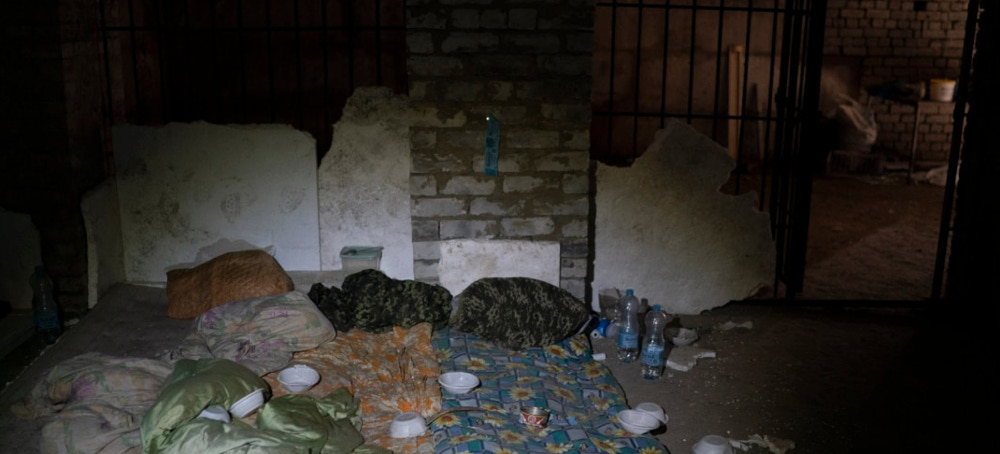 Duvets and sleeping bag are seen in a basement which, according to Ukrainian authorities, was used as a torture cell during the Russian occupation, in the retaken village of Kozacha Lopan, Ukraine, Sept. 17, 2022. (photo: AP)
How Russian Invaders Unleashed Violence on Small-Town Residents
Anne Applebaum and Nataliya Gumenyuk The Atlantic
How Russian invaders unleashed violence on small-town residents
Occupied. Marunyak had been expecting the war to break out, but he had no sense of what a Russian occupation of his village might mean. Like his colleagues, Marunyak is an elected official—genuinely elected, since 2006, under Ukrainian laws giving real power to local governments, not appointed following a falsified plebiscite, as a similar official might have been in the Soviet era or might be in modern Russia. That meant that when the occupation began, he felt an enormous responsibility to stay in Stara Zburjivka and help his constituents cope with a cascade of emergencies. “Already, within a few days, there were families lacking food,” he recalls. “There was no bread or flour, so I was trying to buy grain from the farmers … Many residents began contributing the food they could share, and so we created a fund, providing assistance on demand.”