
Here’s How Trump Can Get Us Out of the Mess in Iran
William J. Burns The New York Times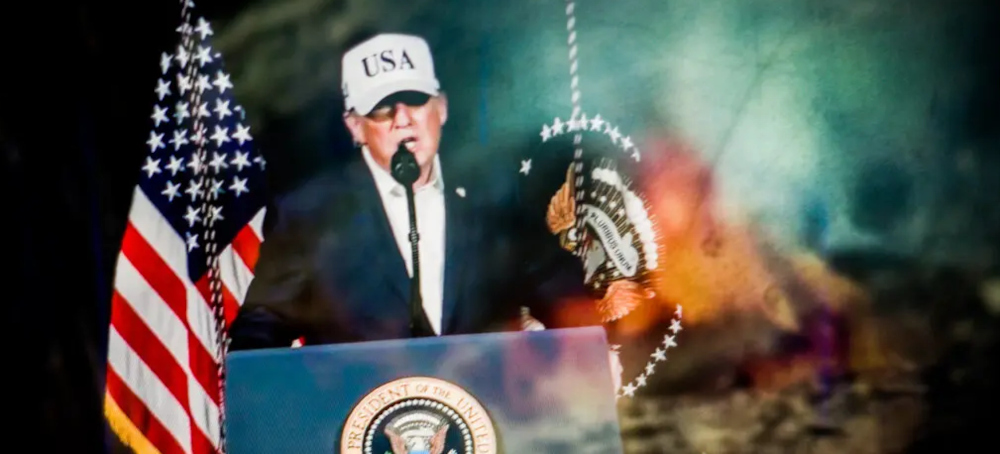 President Trump’s war of choice with Iran has paid little attention to our past mistakes and added many of his own. (photo: The New York Times)
 Here’s How Trump Can Get Us Out of the Mess in Iran
William J. Burns The New York TimesPresident Trump’s war of choice with Iran has paid little attention to our mistakes and added many of his own. He assumed that bombs and assassinations could bring about regime change. He misread tactical military success as a workable strategy. He made policy choices based on presidential id and court politics. He negotiated on the fly with little forethought or planning.
These unforced errors have already done a great deal of strategic damage. But, with a fragile cease-fire extension in place and the flickering potential for resumed negotiations, there is a chance to limit the harm. Three essential lessons from the past eight weeks can help Mr. Trump salvage America’s interests.
First, managing difficult foreign policy problems well takes time and patience. This lesson is not about fatalism or avoiding tough choices. It’s about what you can accomplish at an acceptable cost to other priorities, both foreign and domestic. Perfect is rarely on the menu in diplomacy, especially with a ruthless, ideological and entrenched regime. Decapitating leadership can seem like an appealing shortcut, but as this administration quickly discovered in Iran, it can be an illusion.
President Barack Obama’s logic in pursuing direct diplomacy with Iran was to play a longer game, curbing the worst risk posed by Tehran — the potential for nuclear weaponization — and blunting other threats over time while supporting political freedoms for the Iranian people. Like his predecessor George W. Bush, Mr. Obama looked carefully at the risks and second- and third-order consequences of war and concluded they far outweighed the likely benefits.
Mr. Trump, emboldened by his sense of success in the June 2025 war and last winter’s Venezuela operation, made a different and tragic choice. There is no redo in statecraft. There is still, however, an outside possibility of addressing the most acute dangers that Iran poses against its neighbors, the United States and the rest of the world if the administration can prioritize, focus and overcome its addiction to quick fixes.
Second, there is no substitute for harnessing all the instruments of U.S. national security. You never get very far in diplomacy without military and economic leverage. But force alone — without patient, painstaking diplomacy, backed up by good intelligence taken seriously by policymakers — rarely delivers. Nor are negotiations dictation. They almost always involve a complicated, drawn-out process of give and take, in which expertise matters and many different points of pressure are applied.
That will be critical, if the cease-fire holds, for negotiations on the two core challenges: the nuclear issue and the Strait of Hormuz. At the heart of any good deal will be tight nuclear inspections, an extended moratorium on the enrichment of uranium and the export or dilution of Tehran’s existing stockpile of enriched uranium in exchange for tangible sanctions relief for Iran. On the reopening of the strait, some agreement involving littoral states and other key global players could help durably protect free passage and generate some revenue for demining and economic recovery — without allowing an Iranian tollbooth.
The United States has a strong hand to play, but a lasting agreement will require imagination, mobilizing allies and partners and expert attention to detail with deeply experienced and occasionally duplicitous Iranian negotiators. Unless the lines are clearly drawn and strictly monitored, the Iranians will paint outside them. We can’t afford to wing it.
A last and vital lesson of the conflict is that mowing the grass — using blunt force against immediate threats with no long-term plan for success — has only seeded the lawn with wider problems. The list is long: The Iranian regime is battered but intact, weaker in many respects but even nastier and more hard-line in its instincts. The Strait of Hormuz, geography’s strategic gift to Iran, is now a more potent source of influence for Tehran than its nuclear program, ballistic missiles or proxies have ever been. The United States has eroded trust with the Persian Gulf Arabs and with our European allies. Our friends in the Indo-Pacific are economically damaged and losing confidence in American leadership.
The war has also thrown a lifeline to Vladimir Putin, resulting in more energy revenue and diminished U.S. military inventories at a time when Ukraine had been making progress on the battlefield and the Russian economy was facing its own dire straits. Xi Jinping appears to believe the conflict has put China on higher strategic ground as Mr. Trump prepares to visit Beijing in mid-May, giving Mr. Xi an opportunity to extract concessions on trade, technology and Taiwan. And there will be longer-term challenges in the global economy, with a significant lag in impact even if a cease-fire is sustained.
We didn’t have to dig the hole this deep. Fortunately, there’s still time to put our shovel down, learn some hard lessons and apply them with a little more humility.