
Hegseth is Wrong: Rules of Engagement Actually Help Ensure Victory
Bobby Ghosh Substack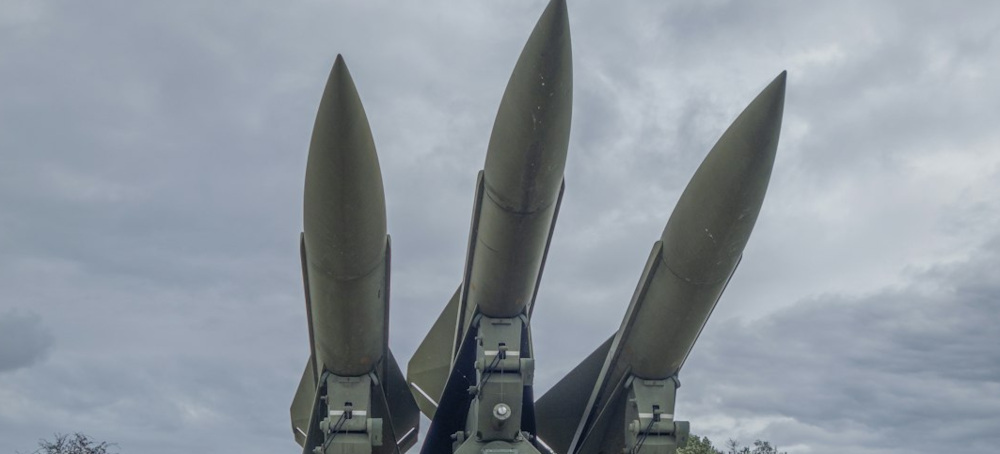 Hegseth is Wrong: Rules of Engagement Actually Help Ensure Victory. (photo: Snap Wander/Unspash)
 Hegseth is Wrong: Rules of Engagement Actually Help Ensure Victory
Bobby Ghosh SubstackALSO SEE: Ghoshworld, Bobby Ghosh on Substack
Hegseth is Wrong: Rules of Engagement Actually Help Ensure Victory
Unshackling the US military is what Hegseth claims to have done in the war against Iran, and it is what he claims will bring the regime in Tehran to its knees.
It’s a bracing idea. It is also almost perfectly wrong.
To be fair to Hegseth: there is a legitimate complaint buried inside the bad one. Over-bureaucratic rules of engagement have, at times, created dangerous hesitation on the battlefield. Some ROE were tactically dysfunctional. The briefly floated idea of a “courageous restraint” medal in Afghanistan — awarded for not shooting — was rightly mocked. Soldiers have died because rules were written badly or applied rigidly. These are real grievances, and they deserve real answers. But the answer to bad rules is better rules. The answer to bureaucratic excess is cleaner, more operationally sensible guidelines.
No serious military theorist argues for zero constraints. What Hegseth is proposing is not a reform — it is an abdication, and history has a great deal to say about where that leads.
Consider the army that has most thoroughly embraced Hegseth’s vision of unshackled warfare. The Soviet Union sent its military into Afghanistan in December 1979 with no patience for squeamishness. They burned villages, destroyed irrigation systems, mined farmland, and bombed hospitals with breathtaking indifference to civilian life. Between one and two million Afghan civilians were killed — scholar Marek Sliwinski estimates 1.25 million, roughly nine percent of the pre-war population. A third of the country fled.
We know what happened next. The Soviets won every major set-piece battle and lost the war entirely. They turned Afghanistan into a country seething with anti-Soviet fury, helped create a mujahideen insurgency hardened by a decade of atrocity, and ended up with their own military reputation in ruins. As Mikhail Gorbachev himself came to describe it, Afghanistan was a “bleeding wound.”
The “unshackled” army lost.
We don’t need to look that far back. Vladimir Putin has given us a real-time demonstration of war without meaningful rules of engagement. Since the full-scale invasion of Ukraine in February 2022, Russian forces have documented themselves committing what international investigators call war crimes with almost casual regularity. Bucha, where retreating Russian soldiers left behind the executed bodies of civilians, hands bound behind their backs. Mariupol, systematically reduced to rubble. Hospitals struck. Power grids targeted. Each atrocity, each image on a phone screen, each UN report has produced the same result: more weapons for Ukraine, more money, more international solidarity, more NATO expansion. Finland and Sweden — neutral for generations — joined NATO, a strategic catastrophe for Moscow that Putin’s own invasion made inevitable. The alliance he sought to weaken has grown stronger with every Russian war crime. Russia’s “unshackled” military has been, strategically, a disaster for Russia.
Like Hegseth, Putin subscribes to the idea that rules of engagement prevented the Soviets from winning in Afghanistan.
Afghanistan was lost — first by the Soviets and then by the Americans — for reasons that have nothing to do with ROE: a mission that metastasized from counterterrorism into nation-building without anyone quite deciding to make that choice; a Pakistani intelligence service that provided sanctuary and support to the Taliban throughout; an Afghan government so corrupt that ordinary Afghans sometimes preferred Taliban justice to the official kind; and an American strategic attention span that ran out before the job was done. When the 2003 invasion of Iraq hoovered up resources, personnel, and presidential focus, Afghanistan was quietly deprioritized. None of that is a rules-of-engagement problem.
In fact, when American forces did abandon restraint — the drone strikes that killed wedding parties along with their intended targets, the night raids that terrorized villages — things got measurably worse. The Taliban’s most effective recruiting tool wasn’t American discipline. It was American excess.
The closest thing to success America had in Iraq came when General David Petraeus did the precise opposite of what Hegseth prescribes. During the 2007 surge, Petraeus didn’t loosen the rules, he tightened them. He required soldiers to live among Iraqi civilians, to be seen as protectors rather than occupiers, to treat the population not as a backdrop to the war but as its decisive terrain. His counterinsurgency manual, which he co-wrote, is essentially a philosophical argument that restraint and discipline are not weaknesses but force multipliers. Civilian deaths in Iraq fell by half from their 2006 peak. The Sunni Awakening — tribal leaders peeling away from al-Qaeda — became possible only because American forces had demonstrated they were not indiscriminate killers.
The rules didn’t prevent that success. They enabled it.
When General McChrystal later applied similar logic to Afghanistan, tightening ROE in July 2009 to restrict air strikes near civilian areas, he was explicit: “We must avoid the trap of winning tactical victories — but suffering strategic defeats — by causing civilian casualties or excessive damage and thus alienating the people.” It is worth pausing on that phrase, winning tactical victories, suffering strategic defeats, because it is the perfect summary of what Hegseth’s “unshackled” approach actually produces.
America has other cautionary tales to heed in its own military history. On March 16, 1968, U.S. soldiers massacred between 347 and 504 unarmed civilians in the South Vietnamese hamlet of My Lai — old men, women, children, infants. The Army covered it up for more than a year, until investigative journalist Seymour Hersh exposed the massacre in November 1969, and photographs by Army photographer Ron Haeberle made the reality undeniable. The public reaction was not merely moral revulsion — it was the effective end of American political will to continue the war. The brutality of My Lai and the official cover-up fueled anti-war sentiment and further divided the United States in ways from which the war effort never recovered.
Note what My Lai was: not a policy, but a violation — exactly the kind of breakdown that rules of engagement are designed to prevent. The soldiers of Charlie Company were not following the rules; they were ignoring them. And that one morning of unrestrained violence cost America more in strategic terms than a dozen battlefield defeats.
What the Army did next is equally instructive, and it is the part of this history Hegseth seems determined to undo. In the direct aftermath of My Lai, an Army inquiry found that inadequate training in the Law of War had been a factor in the killings. The Army revised its regulations in 1970 to require more thorough training on the Geneva and Hague Conventions. The Department of Defense established a formal joint Law of War program in 1974, with the JAG Corps designated to implement it and — critically — to conduct legal review of operational plans.
The Army that emerged from this painful institutional reckoning was a more disciplined, more professional, and more effective fighting force. The proof came in the Gulf War of 1991: a hundred-hour ground campaign that obliterated the fourth-largest army in the world with coalition casualties in the hundreds. That stunning victory was built on precision, restraint, and an institutional culture that My Lai’s horrors, and the rules that followed, had helped create. You don’t get Desert Storm without the lessons of My Lai.
Now Hegseth wants to dismantle the JAG Corps that embodies those lessons. This is the arithmetic that his framework ignores. In a counterinsurgency or an occupation, every civilian wrongly killed doesn’t subtract from the enemy — it adds to it. The bereaved father, the humiliated community, the village that watched soldiers murder their neighbors: these become the insurgency’s next generation. Rules of engagement exist, in part, to break this terrible arithmetic.
There is a more fundamental point, one that supersedes tactics and strategy. In the era of smartphones, satellite imagery, and real-time social media, every military action is instantly global. The battlefield is everywhere; the audience is everyone. A military that massacres civilians doesn’t merely lose the moral argument — though it does that — it loses allies, it loses legitimacy, it loses the post-conflict peace. And the peace, as the architects of the Marshall Plan understood, is the real prize.
After World War II, America made a deliberate choice. Rather than treating defeated Germany and Japan as conquered peoples to be punished — the approach of the Treaty of Versailles, which humiliated Germany so thoroughly it produced the conditions for the next war within twenty years — America fed its former enemies, rebuilt their cities, and staged the Nuremberg trials to establish that the laws of war existed and would be enforced. The Marshall Plan invested $13.3 billion in the reconstruction of Western Europe, including the nation America had just finished bombing. The result was not weakness. It was the most durable strategic victory in American history: two of the world’s strongest democracies and most reliable American allies, built from the rubble of total war by the disciplined application of principled restraint. The rules didn’t weaken that victory. They completed it.
The men and women who developed America’s rules of engagement were not naive civilians imposing peacetime sensibilities on wartime realities. They were soldiers and lawyers who had seen the consequences of unrestrained force: failed occupations, endless insurgencies, strategic humiliations that outlasted any tactical victory. They built the rules because the rules work.
Pete Hegseth calls those rules weakness. History, rather emphatically, disagrees.
There is nothing woke about wanting to win.