
Graham Platner Is No Nazi
Michelle Goldberg The New York Times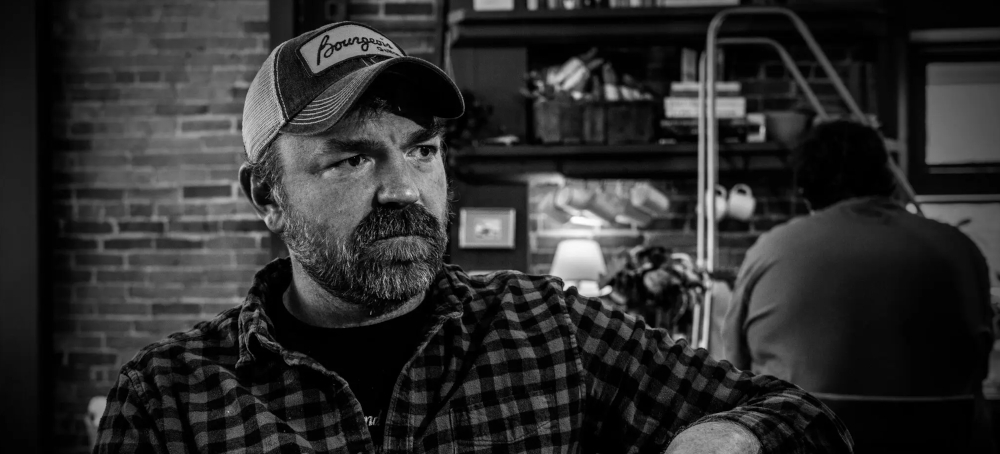 Democratic Maine Senate candidate Graham Platner. (photo: Mark Peterson/The New York Timed)
 Graham Platner Is No Nazi
Michelle Goldberg The New York TimesI also can’t quite blame those who detest Platner’s left-wing politics for refusing to give him the benefit of the doubt. They have an easy line of attack, and naturally they’re going to use it. Still, it’s worth drawing a distinction between what is true and what makes an easy political narrative.
Platner’s haters are embracing a distorted conception of him — and his following — built on a fundamental misunderstanding of his appeal. Some appalled by Platner’s rise have convinced themselves that many voters are drawn to him because of his supposed antisemitism, and that anyone who denies this is being mendacious. Platner, wrote Philip Klein in National Review, “had one thing going for him, which is that he gained attention for his antisemitism. That is a ticket to success in the modern Democratic Party.”
This argument is premised on a deliberate misreading of both Platner and his progressive fans. We know about many of the outré and occasionally disturbing views Platner once held because years of his Reddit posts have come to light. He’s apologized for some of them, saying that he made them at a time in his life when he was lost, deeply angry and suffering from PTSD from his military service in Iraq and Afghanistan. But aside from a single post, written when he was a bartender, suggesting that Black people were bad tippers, there is nothing in these messages that indicates an interest in racial hierarchies or anti-Jewish conspiracy theories.
On the contrary, he is consistently, militantly antifascist. If people “expect to fight fascism without a good semiautomatic rifle, they ought to do some reading of history,” he wrote in 2018. In another, he wrote that since leaving the military, he’d become a “vegetable growing, psychedelic taking socialist,” but added, “Still got the guns though, I don’t trust the fascists to act politely.” He referred to himself, jokingly, as an “antifa supersoldier,” and was involved with the Socialist Rifle Association, a left-wing alternative to the National Rifle Association. He lionized the men who volunteered to fight fascists in the Spanish Civil War.
These views appear consistent through much of his life. In high school, he was voted “most likely to start a revolution,” and his yearbook picture shows him holding a sign that says, “Free Kosovo Chechnya Kashmir Palestine Kurdistan Tibet.”
It’s worth pausing on the inclusion of “Palestine” here. Israel’s defenders often accuse pro-Palestinian activists of singling Israel out and ignoring human rights abuses elsewhere. But Platner, from a young age, seems to have seen the Palestinians as one oppressed people among many. His condemnation of Israel, unlike that of some of the country’s right-wing enemies, has nothing to do with its Jewish character, but with its killing and dispossession of a subject population, a stance shared by many left-wing Jews.
Israel’s champions may not want to hear it, but there’s a difference between those who revile Israel because it’s Jewish, and those who oppose it because they believe states should grant equal rights and liberties to all those under their dominion. People in the second camp are usually reliable champions of the multiracial democracy that has allowed Jews to thrive in America.
For some conservatives, there’s no contradiction between seeing Platner as both a leftist and a Nazi, since they think that Nazis were socialists. That’s mostly a canard, but even if you believe it, virtually no left-wing person does. In other words, the notion of a socialist antifa Nazi might make sense if you don’t take Platner’s politics seriously. But Platner appears to take them very seriously indeed.
I’ll admit I find it hard to believe that Platner didn’t know what his tattoo represented before last fall, when he had it covered up. An anonymous acquaintance told journalists that he jokingly called it “my Totenkopf,” and his former political director has said that Platner told her it could be “problematic.” My best guess about what happened is that he got the tattoo, later learned what it resembled, and didn’t take it seriously enough until it became a political liability. You might argue that alone is disqualifying. But to suggest that Platner harbors secret Nazi sympathies is to misjudge not just him, but his voters, many of whom are gravitating to him precisely because they see him as someone willing to fight fascism.
Of course, some of the right’s Platner discourse is simple trolling. Conservatives are angry at liberals who call people on the right Nazis and are relishing the chance to turn the tables. Attacking liberal Platner defenders on X, the writer Matt Shapiro was admirably frank about this. It’s absurd, he wrote, for liberals to “expect their right-wing opponents to be honest” about Platner’s tattoo given that “they have an entire industry” that levels “accusations of racism and Nazism in order to destroy the lives of their ideological opponents.”
As an illustration, he cites progressives who accused Elon Musk of giving a Nazi salute at Donald Trump’s inauguration rally. This seems to me an odd example, given the unending stream of white nationalist slop that Musk posts online. Still, I appreciate the acknowledgment that much of this debate is premised on dishonesty and revenge. Conservatives think they’ve been treated unfairly and are now seizing the opportunity to do the same to their foes.
It’s unfortunate that Platner gives them this opportunity. That, not any covert affection for Hitler, is the biggest problem with his candidacy.