
Flock Is Catching Flak. Experts Say Other Surveillance Tools Are More Worrisome
Meg Anderson NPR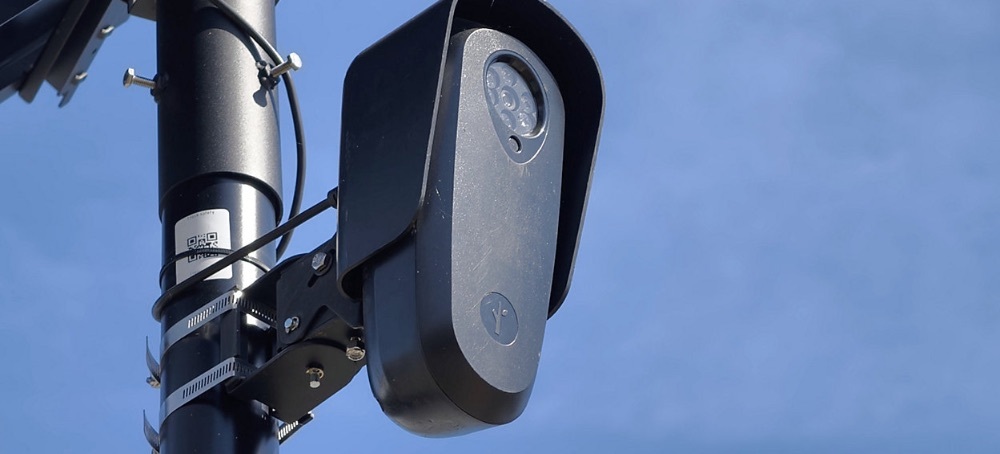 Flock cameras, the AI-powered license plate readers, have faced protests nation wide. (photo: Jamie Kennedy/Spectrum News)
 Flock Is Catching Flak. Experts Say Other Surveillance Tools Are More Worrisome
Meg Anderson NPRTranscript
MARY LOUISE KELLY, HOST:
Flock cameras, the AI-powered license plate readers, have faced protests nation wide. Privacy experts point out they're just the tip of the police surveillance iceburg. Technology and police command centers can watch a whole city from one place using many sources of information, as NPR's Meg Anderson reports.
MEG ANDERSON, BYLINE: Police officers in cities across the country will tell you their real-time crime center is a game-changer. They'll tell you how it helps them find missing children, monitor big events from the skies, scope out dangerous scenes before putting an officer in harm's way. Hundreds of police departments have one of these central hubs. They've existed for years. But now many of them are being powered with AI.
(SOUNDBITE OF ARCHIVED RECORDING)
UNIDENTIFIED PERSON: Welcome to Axon Fusus, your rapidly deployable real-time crime center in the cloud.
ANDERSON: Software like Fusus, from the public safety tech company Axon, functions like a brain. It synthesizes the data it pulls in, creating a one-stop shop for police surveillance.
(SOUNDBITE OF ARCHIVED RECORDING)
UNIDENTIFIED PERSON: Now video and data feeds from a variety of sources and apps can be viewed together in a single pane of glass.
ANDERSON: By now, you've probably heard a lot about automated license plate readers like Flock. But researchers who study police technology told NPR real-time crime centers are much more extensive. They pull in license plate data, but also body-worn cameras, police dashcams, drones, 911 dispatch, gunshot detectors and surveillance cameras, sometimes even from private businesses. Quincy Whitner is with the Greenville County Sheriff's Department in South Carolina. He says Fusus helped his department find a man who shot a police officer and fled by combining city surveillance footage with license plate data.
QUINCY WHITNER: It's a time and a force multiplier for us. Instead of having to go to a million different systems, a million different places to find answers, we can get it in one platform and one place somewhat instantaneously.
ANDERSON: But that push-of-a-button mentality is exactly what makes privacy experts nervous. Rachel Levinson-Waldman studies these tools at New York University's Brennan Center for Justice. She says even just a few decades ago, there were more hurdles in surveillance.
RACHEL LEVINSON-WALDMAN: If an officer or a police department wanted to follow somebody, wanted to do a stakeout, wanted to launch an investigation, part of the friction is the resources that go into that.
ANDERSON: Like staffing and time. There needed to be a good reason to go to all that effort. Now, she says, it is just easier to justify watching people.
LEVINSON-WALDMAN: So in some ways, going from the, we have this individualized reason to suspect wrongdoing, to, well, we just have a wealth of data - let's look in there and maybe see if we can find something wrong.
ANDERSON: Police told NPR they understand those concerns but that the good outweighs the bad. Michelle Iezzi manages the real-time crime center at the Montgomery County Police Department in Maryland.
MICHELLE IEZZI: I understand people's concerns. But if you're not up to no good, we're not looking at you (laughter). We are looking at people who are committing crimes.
ANDERSON: Axon did not respond to multiple requests for comment. But CEO Rick Smith said in the company's latest earnings call that they strongly value privacy.
(SOUNDBITE OF ARCHIVED RECORDING)
RICK SMITH: We just have to be thoughtful and understand those concerns and say, look, this is a tool to amplify human ability not to replace human judgment.
ANDERSON: But, like we've seen with Flock cameras, there is potential for abuse when a police department is always watching. Privacy experts say tech can get it wrong. People can get swept up by mistake or even targeted.
Meg Anderson, NPR News.