
Feminism Is Inextricably Tied to Economic Inequality - but Democrats Don't See It
Arwa Mahdawi Guardian UK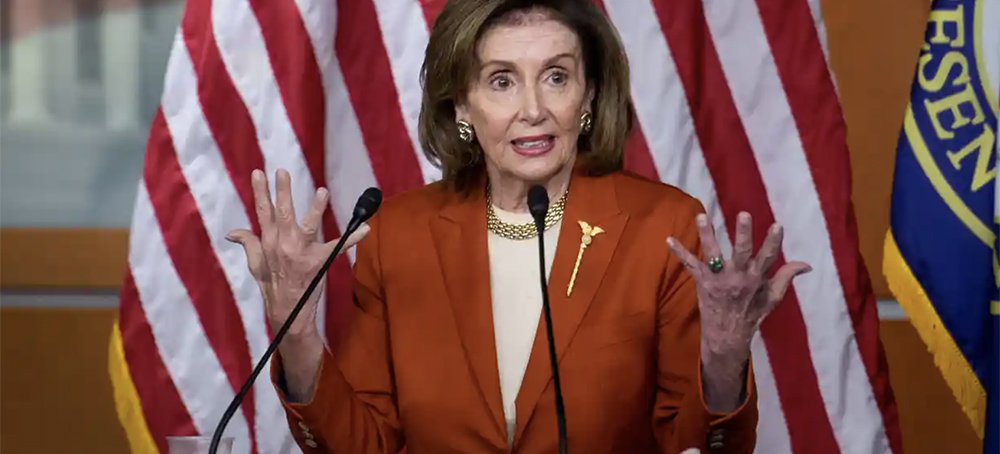 Some young TikTokers have started to watch Nancy Pelosi's financial disclosures for stock tips. (photo: Shutterstock)
Feminism Is Inextricably Tied to Economic Inequality - but Democrats Don't See It
Arwa Mahdawi Guardian UK
Feminism isn’t about championing women like Nancy Pelosi just because they’re in high-powered positions: it’s about fighting for a more equal society
Here’s a thorny philosophical quandary for you: if you’re a politician who shapes policy and is privy to confidential information that will impact the stock market, should you and your immediate family be able to trade individual stocks?
For most people the answer to this is “hell no”. Allowing lawmakers to buy and sell individual stocks raises glaringly obvious conflict of interest issues: America may be divided on a lot of things but the country is incredibly unified on this. A recent poll found that found that 76% of voters believe that members of Congress and their spouses have an “unfair advantage” in the stock market – just 5% of respondents approved of members trading stocks.
Were those 5% of respondents related to politicians, I wonder? Because the people on Capitol Hill sure seem to love playing the market. In the early days of the pandemic there were multiple scandals about well-timed stock trades by Republican and Democratic lawmakers. In one of the most egregious examples, Senator Richard Burr and his brother-in-law dumped $1.6m in stocks in February 2020 a week before the market crashed; Burr’s brother-in-law reportedly sold his holdings one minute after getting off the phone with the senator. There were the usual internal investigations into all these trades but nobody faced any meaningful consequences. Eventually the issue faded from the headlines.
Now, however, political stocks are back in the spotlight. On Wednesday two Democratic senators (Jon Ossoff from Georgia and Mark Kelly from Arizona) introduced the Ban Congressional Stock Trading Act, which would prevent congressional lawmakers and their immediate families from picking stocks. Spotting that this would clearly go down well with the public, Republicans immediately got in on the act. Josh Hawley announced a competing proposal to limit stock trading just hours after. On Friday it was reported that Ted Cruz might introduce his own legislation. “Hawley and Cruz want to one-up each other,” a source told On The Money. “They don’t want to let the other one own the issue … they’d never join the other senator’s bill because it would mean they couldn’t be the star.”
Hawley and Cruz aren’t exactly known for championing progressive issues: why are they so keen on being the face of this? Most likely, I reckon, because they don’t think the legislation will really go anywhere but championing it will make them look good. And also, of course, because it gives them a perfect opportunity to bash house speaker Nancy Pelosi who, along with her husband Paul Pelosi, are extremely active, and very successful in the market. Some young TikTokers have even started to watch her financial disclosures for stock tips. Pelosi, known as the Queen of Stonks, has become something of a meme.
Funnily enough, Pelosi (who is one of the richest people in Congress) isn’t keen on the idea of having her stock market activities limited. “We are a free-market economy. They should be able to participate in that,” Pelosi told Insider when questioned on the issue last year. She conveniently ignored the fact that there are plenty of ways that politicians can participate in the stock market without it raising such ludicrous conflict of interest issues. They can passively invest in mutual funds or put their assets in a blind trust. Let’s be very clear here: for most people, actively trading individual stocks versus passively investing in index funds is a great way to lose money. There are endless studies on this. If you’ve got a track record of picking great stocks then you’re either very lucky or you might just have information other people can’t access.
Last week, in an interview with the Guardian, Bernie Sanders lamented the fact that the Democrats have turned their back on the working class, leading Republicans to win more and more support from working people. Pelosi’s attitude toward stock trading is a perfect example of this phenomenon. Ossoff and Kelly’s bill to ban congressional stock trading is very good – and very overdue. But here’s what I’m afraid is going to happen now: Republicans will hijack the issue and endlessly message about Pelosi’s multimillion-dollar stock trades. They’ll cast her, and the Democrats, as out-of-touch elitists. Which of course, many of them are. The Democrats will lose even more support from working people – which they’ll most likely blame on progressives.
The Week in Patriarchy is a newsletter about feminism: some readers might be wondering why I’m writing about stocks this week. Here’s the thing though: gender inequality is inextricably bound up with economic inequality. Feminism isn’t about championing women like Pelosi just because they’re women in high-powered positions: it’s about fighting for a more equal society. It’s a shame that the Democrats don’t seem to realise that.