
Donald Trump’s Bullying of Canada Is Endless
The Economist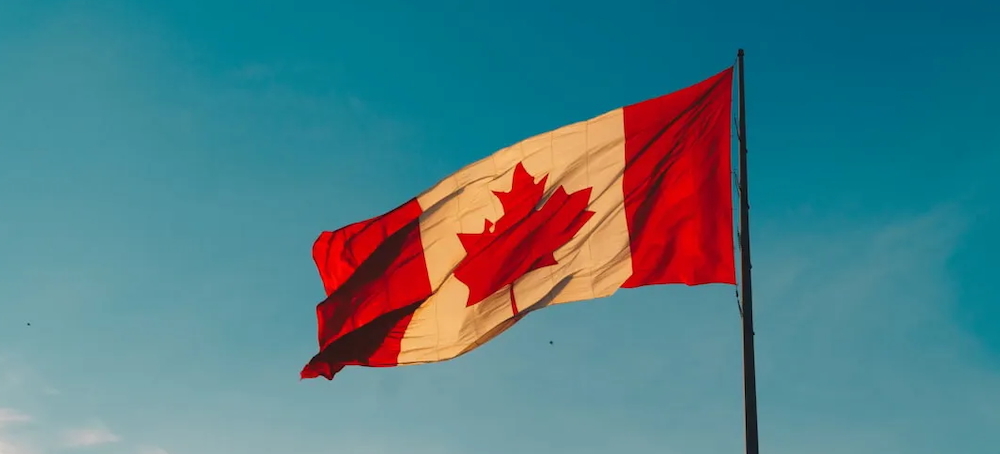 The Canadian flag. (photo: Hermes Rivera/Unsplash)
 Donald Trump’s Bullying of Canada Is Endless
The Economist
Canadians are starting to turn against Mark Carney’s pragmatic response
Europe and the rest of the world should take heed. Mr Trump has form in attacking Canada first with weapons which he subsequently turns on others, both tariffs and threats to territory. This time, if the new tariffs come into force on August 19th, Canada will be the first country ever to be subjected to tariffs under Section 338 of the Smoot-Hawley Tariff Act, a law passed in 1930 that allows the president to respond to perceived trade discrimination. Tariffs under that act, unlike the emergency duties struck down by the us Supreme Court in February, need no congressional approval. “This looks a lot like the future of Donald Trump’s trade policy because it gives him flexibility,” says Eric Miller, head of the Rideau Potomac Strategy Group, a trade consultancy in Washington.
Mr Trump is using that freedom to place tariffs on $20bn-worth of Canadian exports, from hockey sticks to honey. These would pile up next to older duties that have hobbled the Canadian car, steel, aluminium, wood and copper industries. Crucially, and unlike the emergency tariffs imposed in 2025, the new tariffs also apply to goods covered by the usmca, the North American free-trade pact.
Mr Carney seems to think he has room to negotiate. He had better be right. His surprise election win in 2025 came after he promised to stand up to Mr Trump. Mr Carney committed to delivering “an even better deal” than the usmca. One concession has followed another since then: Canada abandoned its digital-services tax on mostly American social-media giants, then dropped most of its retaliatory tariffs and a different tax on streamers such as Netflix. Mr Trump’s response has been indifference. “We don’t need them,” Mr Trump said on July 28th ahead of negotiations with the two other parties to usmca, Mexico and Canada. “The deal is important for them. It’s not important for us.”
This bullying appears to be hurting Mr Carney domestically, particularly the Gordie Howe mortification. Canada agreed to pay for the construction of the bridge in 2012 on the condition that it would take all tolling revenue until its costs were recovered. After Mr Trump demanded and received a new deal, Mr Carney claimed repeatedly that Canada’s costs would still be paid first. A crowing tweet from Howard Lutnick, the us commerce secretary, made it clear that was not true. In fact, for the first 15 years of the bridge’s operation the us government will now take half of net revenues, after operating costs but before debt repayment, a concession that will cost Canada some C$300m. The share of Canadians who say they feel confident that Mr Carney can land a good deal with Mr Trump fell by eight percentage points between April and July, according to research published on July 26th by Angus Reid, a pollster.
That same poll shows that Canadians remain outraged by Mr Trump’s tariffs; almost two-thirds want Mr Carney to strike back with tariffs of his own. But that would only compound Canadian misery. “You’ve got to realise that punching the bully back here is also going to punch the Canadian people in the guts,” says Justin Wolfers of the University of Michigan. Mr Carney has sent negotiators back to Washington with instructions to intensify discussions aimed at extending usmca. The Trump administration declined to do this in early July, but agreement could still come at any time. Mr Carney has ruled out playing Canada’s strongest card, energy exports, in any retaliation.
In 1930 Canada did not show Carney levels of forbearance. It retaliated against Smoot-Hawley pre-emptively, launching tariffs of its own on American imports before the bill had even become law. Many other countries retaliated too. Within four years the nominal value of world trade had fallen by two-thirds and the Depression had hit its nadir.
And so, unpleasant as it is, Canadians should hope that Mr Carney’s resolve holds. And everyone else should hope that other world leaders follow suit when Mr Trump turns his new tariffs upon them.