
Attacking Cuba Would Be a Huge Mistake
The Economist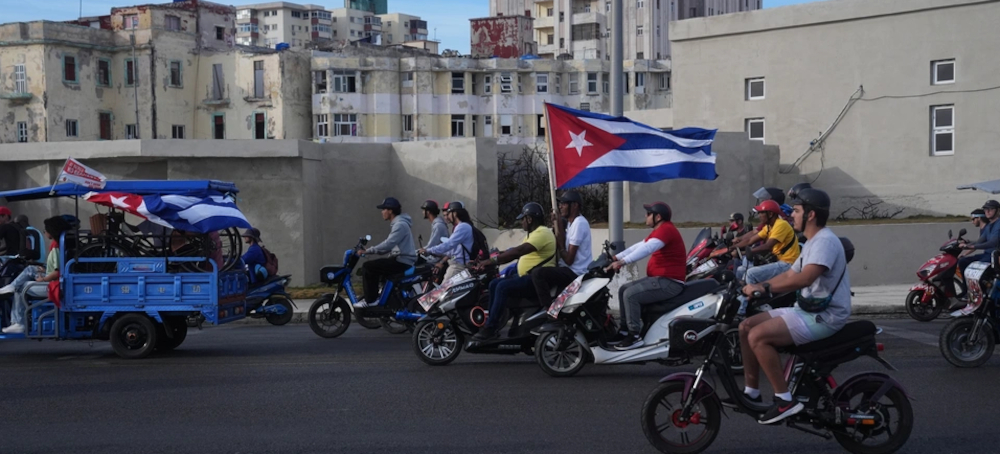 Not since the Cuban missile crisis in 1962 has the United States held so much power over Cuba’s fate. (photo: Getty)
 Attacking Cuba Would Be a Huge Mistake
The Economist
But Donald Trump could make a deal with the communist regime
Mr Trump is right to want Cuba to change. Its communist rulers are vile. For nearly seven decades they have locked up dissidents and impoverished their compatriots. Ordinary Cubans struggle to afford food or medicine. Cronies of the regime dominate the government-run economy and live large. Cuba is also a (mild) threat to American security; it lets Russia and China run listening posts less than 200km from Florida.
Negotiating in the dark
The oil embargo has made Cubans even more miserable than before. But the regime is paying attention. It is negotiating. A few political prisoners have been released, and a flurry of economic reforms have been announced. On March 16th the regime said it would let Cubans living abroad wholly own businesses in Cuba. But Mr Trump and Marco Rubio, his Cuban-American secretary of state, often say they want much more: nothing short of regime change.
They are weighing their options. One is military force. Surveillance drones have been buzzing Cuba. On May 20th the uss Nimitz, one of America’s 11 nuclear-powered aircraft-carriers, arrived in the Caribbean. On the same day America’s Department of Justice indicted Raúl Castro, Cuba’s de facto leader. Mr Rubio says the chances of peaceful agreement are “not high”, and that Cuba cannot be fixed with the current political system in place. Asked if America would use force to change the regime, he said Mr Trump would do “whatever it takes”.
There are echoes here of the escalation that preceded Mr Trump’s Venezuelan venture, which he overconfidently claims was a great success. The threat of force may give him extra leverage at the negotiating table. But an actual military operation would be highly risky and unlikely to improve matters.
A swift, illegal incursion to decapitate the regime might succeed, but what then? Cuba is not Venezuela. Its dictatorship is more entrenched and ideological. Perhaps Mr Trump can replace the top communists with more pliable leaders, but even the modest degree of control he has over Venezuela would be hard to replicate.
A full-scale invasion is even less appealing. America could smash Cuba’s army, but could it build a better Cuba? Its record of nation-building in the face of guerrilla insurgencies in other countries is poor. Few Cubans have any memory of freedom. Any attempt to impose democracy by force would be slow, fraught and probably doomed.
If not force, then what? America could prolong the oil blockade, causing more hunger and blackouts, hoping desperate Cubans turn on their rulers. But there is no organised political opposition. So many young people have fled that Cuba has become the most aged country in the Americas. So far, most protests have been limited to public pot-banging.
That leaves the least bad option: pressing for a gradual transition. Some components of a possible deal have been made public. America would let more oil flow and provide $100m in humanitarian aid for the Catholic church and ngos to dish out, bypassing the Cuban army’s corrupt business empire. It would also provide free internet access, via satellite, for every Cuban. That would be good in itself, and might help create space for political opposition to emerge. For its part the regime would be required to release more prisoners, ease up on the repression and open Cuba to private investment.
Even if Cuba’s rulers agreed to such a deal, vast challenges would remain. Cuba is much poorer than Venezuela, and has no big oil reserves to tempt foreign investors. Nor does it have the rule of law. Many Cuban-Americans would like to invest, but only when the property-grabbing communists are gone. Yet genuine economic reform could make a big difference. Tourism could increase rapidly, if Americans were no longer barred from visiting. Farmland could be put to more productive uses. Economic opening would probably have to precede the political sort, which could take a long time.
If the Trump administration negotiates forcefully and shrewdly, it could do Cubans a big favour. If it resorts to armed force, it could make things much worse. With luck, Mr Trump has learned that lesson from Iran.