
An Old Fort Retaken, An Old Folly Forgotten
Bobby Ghosh Substack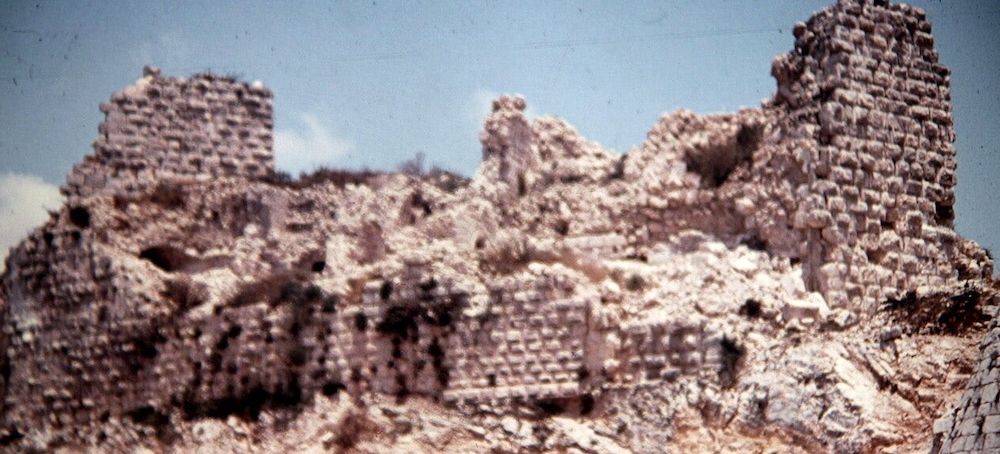 "Benjamin Netanyahu rarely stops a war to give a history lesson, so it was worth listening when he did." (photo: Roded Shlomo/Pikiwiki Israel/CC BY 2.5/Wikimedia Commons)
 An Old Fort Retaken, An Old Folly Forgotten
Bobby Ghosh Substack
Israel’s renewed military campaign in Lebanon endangers chances of a US-Iran deal. It’s a bad idea on its own.
The prime minister is also choosing his moment. Israeli troops took the ridge just as Washington was straining to close a deal with Iran, and Tehran has said any agreement depends on calm in Lebanon; each new strike on Hezbollah sets those talks back. But the campaign is a bad idea independent of that diplomacy.
Back to Beaufort. Netanyahu has the history only half right.
The fight itself was brutal. Six soldiers of the Golani Brigade died taking the hill, among them the reconnaissance commander, Major Goni Harnik. The trouble came the next morning. Prime Minister Menachem Begin and his defense minister, Ariel Sharon, flew in with photographers; Sharon told reporters the fortress had fallen easily, and Begin, assured that no one had been lost, asked the exhausted survivors whether the enemy had even owned machine guns. The episode became a national scandal — commanders dressing up a bloody battle as a walkover — and it is the “division” Netanyahu now mentions so lightly. Israelis have distrusted triumphant bulletins out of Lebanon ever since.
What came next is the part he left out. After Israel fell back to its self-declared “security zone” in 1985, Beaufort became a permanent garrison: a lonely Israeli position in the middle of southern Lebanon, held under fire for fifteen years until Israel gave it up, along with the zone, in 2000. The occupation meant to quiet the north did the opposite. Augustus Richard Norton, the American scholar whose 2007 short history of Hezbollah is still the standard account, traces the group to the 1982 invasion and its rise to the long fight against the occupiers. Hezbollah called the 2000 withdrawal its founding victory, and much of the Arab world agreed.
Now Israel is rebuilding the security zone. Defense Minister Israel Katz wants the land up to the Litani turned into a belt under Israeli military control, emptied of weapons and fighters — the 1982 map, redrawn. On Monday, Netanyahu ordered fresh strikes on Dahiyeh, the southern Beirut suburb where Hezbollah holds sway and where an Israeli bomb killed Hassan Nasrallah in 2024; families jammed the roads out as the warnings went up. France’s president, Emmanuel Macron, whose government called an emergency Security Council session, said “nothing justifies the major escalation under way in south Lebanon.”
Netanyahu has reasons to be confident. Hezbollah is a husk of the force that fought it to a standstill in 2006; its commanders are dead, its arsenal thinned. Ease up now, the hawks’ argument goes, and Iran will restock the depots, which Reuters reports it is already doing.
All true. But none of it reaches the problem. Israeli firepower can grind Hezbollah down, take a ridge, run a flag up a castle — but it cannot make the Shia of the south stop wanting a militia of their own, and that is the only disarmament that lasts. The security zone proved as much: 18 years of Israeli boots on Lebanese soil did not break Hezbollah, they kept it in business.
Ironically, it is the Lebanese army — not the Israeli one — that had recently begun the real work of disarming the militia. For the first time in four decades, Lebanese troops controlled the ground south of the Litani, and they hauled away thousands of rockets and missiles.
That process depends on a government in Beirut strong enough to confront Hezbollah without tearing the country apart. But every bomb on Dahiyeh makes President Joseph Aoun look like Israel’s agent and restores Hezbollah’s oldest role, protector against a foreign occupier. A government cannot disarm a militia while the occupier’s jets are hitting its capital. Netanyahu’s vow to keep striking Hezbollah until the rockets stop has it backward: the bombing does not stop the rockets, it gives Hezbollah its reason to keep firing them.
Israel has more than 3,000 Lebanese dead and over a million people driven from their homes to show for this campaign. And it has a flag over Beaufort. Netanyahu says the road to security for Israel’s north runs over that hill. He, of all people, should remember where it led the last time: back down, in retreat, because nothing else would stop the shooting.