
American Real Estate Was a Money Launderer's Dream. That’s Changing.
Farah Stockman The New York Times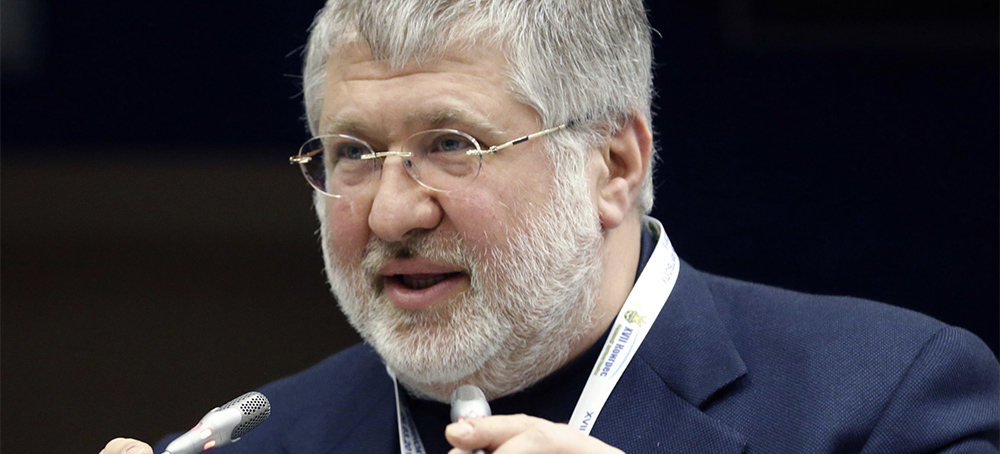 Oligarch Ihor Kolomoisky is accused by federal prosecutors of amassing a real estate empire in the U.S., with millions in stolen funds from Ukraine bank. (photo: Vladyslav Musienko/Unian/AFP/Getty Images)
 American Real Estate Was a Money Launderer's Dream. That’s Changing.
Farah Stockman The New York TimesIt was 2008, and the city had fallen over the edge of a massive foreclosure crisis. Cleveland was hurting, and Optima (which has used different versions of its name) eventually became its largest holder of commercial real estate. And Cleveland was not alone. In communities from West Virginia to Kentucky, a desperate need for investors led elected officials in struggling cities and towns to roll out the red carpet for Optima, which bought up steel plants, factories and commercial real estate.
But things that seem too good to be true often are. In 2019, a Ukrainian bank filed a lawsuit in Delaware alleging that Optima was a front for two Ukrainian oligarchs who used it to launder hundreds of millions of dollars of stolen money. The Federal Bureau of Investigation raided Optima’s offices the following year. In 2021, the State Department issued sanctions against one of the oligarchs, Ihor Kolomoisky.
Cleveland has now become a poster child for the need for more transparency in the U.S. real estate industry. A raft of new anti-money laundering laws and regulations is aimed at the industry, which has attracted more than $2 billion in illicit funds over a recent five-year period, according to one report. Chipping away at the culture of anonymous ownership is a good thing, and is long overdue. But the new rules won’t address the elephant in the room: Many cities and small towns, especially in the American Midwest, badly need investment, and sometimes shadowy foreign money is the only kind that comes calling.
“Over and over again, Kolomoisky and his network allegedly turned to Middle America — overlooked towns, forgotten areas, regions that needed an economic lifeline, whatever the source — for their massive laundering needs,” Casey Michel, the author of “American Kleptocracy: How the U.S. Created the World’s Greatest Money Laundering Scheme in History,” wrote recently in Foreign Policy magazine. “Those on the receiving end had no incentive to look this foreign gift horse in the mouth, even when the signs of money laundering were clear.”
Mr. Schochet, Mr. Kolomoisky and their associates have denied the allegations against them and have repeatedly appealed rulings against them in court that aim to strip them of their assets. One by one, Optima’s properties are being sold off to new owners.
Cleveland is still struggling to recover from the 2008 foreclosure crisis, which made it particularly vulnerable to secretive strangers with deep pockets. Local officials and an economic development fund saw a ray of hope in Optima and lent the company at least $42 million in 2011 to fix up a hotel that anchored a block near City Hall. But after the construction wrapped up, it was clear that the company wasn’t holding up its end of the bargain. It defaulted on loans and failed to pay taxes. In the end, it didn’t even bother to change the light bulbs in the hotel parking garage when they went out, according to a former hotel employee.
The Pittsburgh Post-Gazette published an investigative series last year with a story about how elected leaders in Ohio and West Virginia helped Optima keep some of the factories it had purchased open, despite environmental and safety violations. As Ukrainian officials began investigating Mr. Kolomoisky for stealing billions of dollars, Optima stopped paying bills in the United States. Municipalities were left with shuttered factories, neglected properties, injured workers and unpaid tax bills. Making good on these investments was, apparently, less important than being able to park whatever money they could in the U.S. Money-launderers are like false lovers. They promise the moon, but then they leave you high and dry.
The ordeal has sparked soul-searching in Cleveland and beyond about what went wrong and how to fix it. Scott Greytak, director of advocacy for Transparency International U.S. and a Cleveland native, told me that one of the biggest problems is that many American professionals aren’t required to do due diligence into their foreign clients. “Ihor Kolomoisky could not have raided Cleveland without the help of American enablers,” he said. “The middlemen who incorporate companies and who close on properties should have to ask basic questions about their clients before taking their money.”
He has been pushing for the ENABLERS Act, which the House passed in July. It would empower the Treasury Department to require so-called “gatekeepers” to the U.S. financial system — including certain lawyers, accountants and registered agents — to look into their clients and report suspicious activity, just as banks are required to do. It’s not clear whether the Senate will pass it, but the principle behind it is an important one: Americans who make a business model out of money laundering shouldn’t be allowed to get away with it.
Another big problem that the saga of Optima reveals is the secrecy of the U.S. real estate industry itself, which encourages the use of limited liability companies, shell companies and land trusts that often end up protecting the privacy and the holdings of the wealthy. Jay Westbrook, a retired city councilman in Cleveland, told me that Ukrainian oligarchs aren’t the only ones who hide their identities. Mr. Westbrook, who now works with land banks to clean up abandoned and neglected properties, said it is not uncommon for out-of-town investors to buy property under the names of various L.L.C.s and then walk away from their responsibilities at the first sign of trouble, leaving unpaid taxes and messes behind. In many jurisdictions that have not been deemed at “high risk” for money laundering, cash buyers can essentially purchase property anonymously, without anyone involved in the transaction recording and verifying their true identities.
His solution? To hold the wealthy to the same disclosure standards that working stiffs have to go through to get a mortgage.
Congress took a small but important step in this direction when it passed the Corporate Transparency Act in the waning days of the Trump administration, overriding a presidential veto. The new law directs the financial crimes bureau of the Treasury Department, known as FinCEN, to collect information from companies about their true ownership and keep it in a massive, confidential database that can be used by law enforcement for money laundering investigations. Eventually, this law could touch millions of businesses, forcing them to file an additional form. As long as the filing process isn’t onerous, the benefits of greater transparency should outweigh the hassle.
But this database won’t be available to the public, and it’s unclear exactly how accessible it will be for people in cities like Cleveland who may want to use it to figure out if a potential investor is a deadbeat or a kleptocrat. It’s also far from clear that FinCEN has the capacity to build and manage the massive database it has been ordered to create. A Government Accountability Office report found that the agency can take years to make use of other ownership information that it collects and inform law enforcement agencies about the information’s existence. Unless this data is used effectively, there’s no point in collecting it.
To be clear, these steps to combat money laundering are important. The United States has been ranked the most secretive financial jurisdiction in the world. A 2016 report by the Financial Action Task Force, an intergovernmental group that combats money laundering, gave the United States some embarrassingly low rankings, although some improvements have been made since then. To have strong credibility on the world stage in the fight against international corruption, the United States must continue these efforts. This is especially crucial now that the Biden administration has called corruption a core national security interest.
But it’s not clear that any of these new rules — as necessary as they might be — would stop another Optima.
Stephen Strnisha, the chief executive of the Cleveland International Fund, which pairs foreign investors with local business opportunities, lent the lion’s share of the package that Optima received to revamp the hotel. He has spent nearly two years in court trying to get that money back through a sale to a new owner. Greater transparency “would be a good thing,” he told me. But it might not have prevented Optima from buying up so much of Cleveland.
Even if he had known that Optima was owned by an oligarch, no allegations had been made public against Mr. Kolomoisky at the time, so the loan might have gone through anyway.
Mr. Strnisha assured me that neither the saga of Optima — nor the new rules that are being adopted to combat similar situations — will stop Cleveland’s comeback. “Cleveland doesn’t need dirty money,” he said, and the city will survive this. But smaller communities that have been more reliant on Optima’s investments have been hit far harder, he added. The cautionary tale of what shadowy money can do to struggling communities could prove to be the most effective anti-money laundering tool yet.