
‘A Mass Disaster Nonstop’: Inside the Turmoil at Robert F. Kennedy Jr.’s C.D.C.
Jeneen Interlandi The New York Times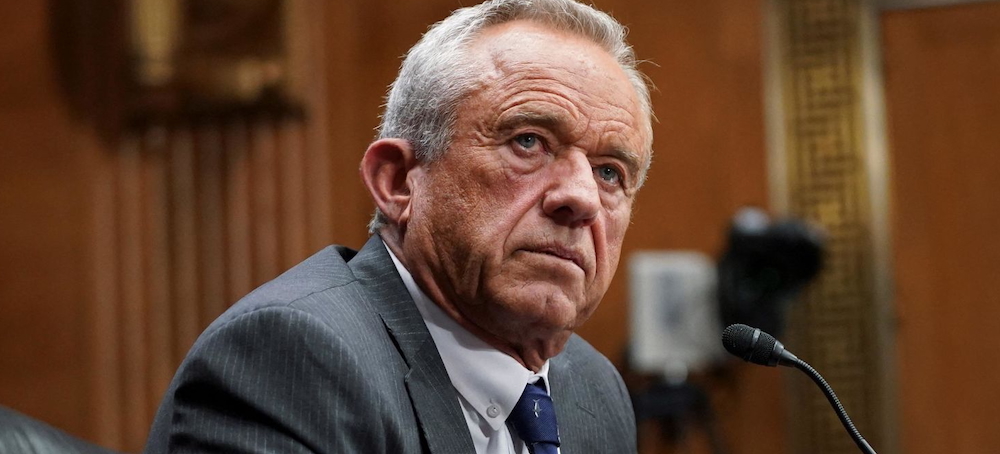 Robert F. Kennedy Jr. (photo: Nathan Howard/Reuters)
 ‘A Mass Disaster Nonstop’: Inside the Turmoil at Robert F. Kennedy Jr.’s C.D.C.
Jeneen Interlandi The New York Times
Forty-three current and former C.D.C. employees on the changes they say are replacing science with ideology — and making Americans more vulnerable.
Since his confirmation in February 2025, Kennedy has taken particular aim at the Centers for Disease Control and Prevention, a federal agency charged with safeguarding the nation’s public health. He has called the C.D.C. “the most corrupt agency at H.H.S. and maybe the government” and vigorously defended mass terminations carried out by Elon Musk’s DOGE. At least 2,400 employees, or 18 percent of the C.D.C. staff, have been fired or have resigned since January 2025.
Kennedy has said that the C.D.C. — which comprises more than 20 centers focused on a wide range of public health issues, including infectious diseases, food-borne illness, substance abuse and violence prevention — had grown unwieldy and that its size was undermining its mission. As proof, he has cited the agency’s failures during the coronavirus pandemic. “We literally did worse than any country in the world,” he said at a Senate hearing in September, “and the people at C.D.C. who oversaw that process, who put masks on our children, who closed our schools, are the people who will be leaving.”
Kennedy wants to move large parts of the agency to a new entity, the Administration for a Healthy America, while leaving the C.D.C. to focus on monitoring infectious diseases. The secretary’s critics say that his real goal is not to reform the agency but to dismantle the nation’s vaccination programs, in which the C.D.C. plays a key part.
I interviewed more than 40 people who work at the C.D.C. or who left during Trump’s second term. Some sources spoke on the condition of anonymity because they feared that speaking out would cost them their jobs or subject them to retaliation from the administration.
Many of them acknowledge that the agency’s initial Covid response fell short: Its labs failed to develop reliable diagnostic tests, its communications were confusing and sometimes contradictory and its disease-surveillance efforts struggled to stay ahead of the virus’s spread. But they say that the C.D.C. has made significant strides in the years since. Now, they argue, agency scientists are being sidelined, political appointees are taking charge and a vital public health institution is being remade into a vehicle for ideologues.
In June, Kennedy fired all 17 voting members of the Advisory Committee on Immunization Practices, or ACIP, a group of doctors and scientists that meets several times a year to develop vaccine recommendations for the nation, and largely replaced them with people who share his views. The former C.D.C. director, Susan Monarez, says she was fired for refusing to approve any changes to vaccine recommendations without first seeing the scientific evidence behind them. (Kennedy has denied this.) Monarez was the only permanent director to lead the agency in the past year. She lasted just 29 days. No one has yet been nominated to succeed her.
The Department of Health and Human Services did not make Kennedy available for a interview. In response to my requests for comment and a detailed list of questions, Andrew Nixon, a department spokesman, said in a statement: “Within a year, Secretary Kennedy restored the C.D.C. on its core mission of fighting infectious disease by eliminating mission creep and replacing leaders who resisted reform.”
I also reached out the White House for comment. “The Trump administration is focused on restoring the public’s trust and accountability in public health bodies like the C.D.C. by re-establishing Gold Standard Science as the only factor behind policymaking,” a spokesman, Kush Desai, said in a statement.
The civil servants who spoke to me worry that, instead, a century’s worth of expertise is being lost — leaving Americans increasingly exposed to a wide range of health threats.
November 14, 2024
Anticipating his cabinet position as secretary of health and human services, Kennedy wrote on X, “I look forward to working with the more than 80,000 employees at H.H.S. to free the agencies from the smothering cloud of corporate capture so they can pursue their mission to make Americans once again the healthiest people on Earth.”
Debra Houry, former chief medical officer: I read Project 2025. I read the American Enterprise Institute reports. I read three of R.F.K. Jr.’s books. I took notes. What are the criticisms? What are their recommendations? I sent them to each center that was impacted. I’d say: Explain this to me. Is this true? How should we address this?
When I met with the Trump transition team, instead of doing the usual C.D.C. 101 to walk them through the budget and the programs, I framed it around the progress we had made since the first Trump administration. We put electronic case-reporting technology into tens of thousands of hospitals so that they could share data in real time. We built wastewater-monitoring programs to track potential outbreaks. And we were working with the private sector to scale up laboratory capacity.
Jonathan Mermin, former director of the National Center for H.I.V., Viral Hepatitis, S.T.D. and Tuberculosis Prevention: We had worked closely with Dr. Robert Redfield, who led the C.D.C. during the first Trump administration, to design and implement the Ending the H.I.V. Epidemic initiative, and we were very excited to share the results, because it was such a win-win. New infections went down, health equity improved and money was saved. We were hopeful they’d want to continue that.
Tom Simon, former senior director for scientific programs in the division of violence prevention: We anticipated it being rough, but the first Trump administration really wasn’t that bad for our team. It was then that we got our first appropriations in many years for gun-violence-prevention research.
Government adviser: The thinking was that we could work on those who were most skeptical and try to bring them along. Maybe the C.D.C. wouldn’t look exactly like it had when Mandy Cohen was director [during the Biden administration], but we could advance our priorities. Then there was a meeting with Kennedy and Matt Buzzelli, the C.D.C.’s new chief of staff, and it went terribly — and not because of Matt. Matt went in with talking points about the value of the staff and how they’re world experts. And the first thing Kennedy said was, “How do you know they’re good people?”
(Matthew Buzzelli did not respond to a request for comment.)
January 20, 2025
On his first day in office, Trump issued a flurry of executive orders. One ended federal diversity, equity and inclusion initiatives, and another defended women against “gender ideology extremism.” C.D.C. staff members were told to scrub any references to identifying pronouns — and terms including “transgender” and “pregnant people” — from the agency’s website. Hundreds of other words, including “diversity,” “health equity,” “disparity,” “trauma” and “women,” were also flagged. Entire pages were quickly taken offline in an effort to meet compliance deadlines.
Debra Houry, former chief medical officer: The guidance we were given by our political leaders was to err on the side of caution and overinterpret these executive orders. We took down some of the immunization information on Mpox because it had the word “transgender” in it. Then we were asked by H.H.S. and our political leadership at C.D.C. to put it back up because Kennedy was about to go through his confirmation hearing. They were concerned it would look like there were questions around his support of vaccines.
Meanwhile, the things that we would want the C.D.C. to do — like helping states respond to outbreaks or implementing various public health programs — were not really happening because so much of the agency’s time was being spent on scrubbing the website. Somebody from the H.H.S. communications team said, “Well, don’t you do this every four years, changing the priorities and things like that?” I said, “Science doesn’t change based on who is in office. ”
Tom Simon, former senior director for scientific programs in the division of violence prevention: There was an executive order about defending the Second Amendment that called on the attorney general’s office to examine how federal agencies interfered with gun owners’ rights. Political appointees from H.H.S. sent us a blank spreadsheet and asked us to fill in which of our programs interfered with gun rights. I told them we only evaluated prevention strategies to see if they worked; we had no authority to regulate or prohibit anything.
They took down the first-ever surgeon-general advisory on firearm violence, written by Vivek Murthy, the surgeon general who served under Obama, Biden and the first Trump administration. You’re trying to move the field forward, and you start to see very quickly that — wow, we are not just losing momentum; we are going backward.
Jonathan Mermin, former director of the National Center for H.I.V., Viral Hepatitis, S.T.D. and Tuberculosis Prevention: It seemed like someone had just run an A.I. algorithm to find any program with the word “equity” in it. You couldn’t even say that certain populations are more likely to get H.I.V. or sexually transmitted infections. When you explain the concept of health equity to people who are against D.E.I., most would say health equity is still consistent with what they consider appropriate work. But we did not have that chance.
Maternal H.I.V. specialist: Some of the changes the executive orders required didn’t really affect the work. You change “diversity” to “variety,” but you’re still doing the same thing. But “gender-based violence” was really hard. “Sex-based violence” sounds like sexual violence, and gender-based violence is not always sexual in nature. The idea of gender-based violence is that there are gender roles and gender dynamics that lead to violence. If you can’t acknowledge that there is such a thing as gender, it’s really hard to talk about.
January 22
The acting director of H.H.S. issued a directive that all public communications had to be reviewed by a presidential appointee or designee before being released. As a result, C.D.C. meetings were canceled, the publication of research data was delayed and C.D.C. staff members were told that they could not speak in any official capacity. The administration described this as a short pause so new staff members could establish communication priorities. The directive was officially lifted after 10 days, but C.D.C. employees say the effects of the strictures lingered for months.
Daniel Jernigan, former director of the National Center for Emerging and Zoonotic Infectious Diseases: You had the president and whoever else saying, “Stop talking.” I think what they probably meant was, “Don’t engage publicly or in a high-profile way.” But you had a whole new layer of people with no public health experience, no government experience and no scientific knowledge, and they didn’t know what to do. And so everybody was told: “Don’t engage. You can’t even get on the phone.” If you said: “Well, we have an outbreak right now of X, Y, Z. I should be talking to them.” They’d say, “Well, OK, but only for that outbreak.”
Karen Hacker, former director of the National Center for Chronic Disease Prevention and Health Promotion: A big part of being a senior leader is going into the field, doing site visits, talking with Congress. And to have all of that curtailed leaves you where you literally can’t do your job.
Epidemiologist: They took control of all our communications. There was a Morbidity and Mortality Weekly Report that came out on Feb. 27 on cervical cancer trends. In response to a standard question from a reporter, one author said that one of the best ways to prevent cervical cancer is to get the HPV vaccine. And H.H.S. edited it, adding a message to the effect of “vaccines are a matter of choice, and you should talk to your doctor,” attributing it to the scientist without telling her. Thank God somebody alerted her before it went out.
Elizabeth Soda, medical officer for immigrant and refugee health: There was a lot of obeying in advance from some people within C.D.C., who were pre-emptively telling us not to do things. Depending on what division or branch you were in, what you could or couldn’t communicate was potentially very different. The worst part of it was just never knowing.
Maternal H.I.V. specialist: No one wanted to put anything in writing because there was the idea that DOGE people were looking at chats and calls. Many people were leaving their laptops in their garage because they thought their computers were recording them. We would walk outside to take phone calls.
January 24
The Trump administration issued a formal stop-work order for virtually all foreign aid, including funds disbursed by the United States Agency for International Development (or U.S.A.I.D.). It had also begun the process of formally withdrawing the United States from the World Health Organization. The C.D.C.’s global health initiatives relied heavily on funding from U.S.A.I.D. and collaboration with the W.H.O.
Daniel Jernigan, former director of the National Center for Emerging and Zoonotic Infectious Diseases: There was no understanding of the connectivities between the U.S. government and W.H.O. There was magical thinking that you could build a bilateral set of relationships that would take care of what W.H.O. is doing. For flu, we had 57 different bilateral cooperative agreements with countries. But to make things happen, we went through W.H.O., because they have the ability to bring people together. Without W.H.O. involved, there’s an uncertainty among some nations about whether or not to work with the United States at all.
Ebola is one example of how this works. Do we hear about cases because we have given money to a country’s ministry of health and they’re required to let us know? No. We hear about them because we have people who are doing contract services out in the forest or we’ve got people who have spent 15 years working on the same projects. The loss of that soft surveillance is really significant.
C.D.C. also did a lot of work on malaria through U.S.A.I.D., and that work was all stopped. We already have some 2,500 traveler-acquired malaria cases in the United States, and two years ago we had 10 cases of local transmission. Those numbers will increase now, and the costs of dealing with malaria will go up, especially in places like Florida, Puerto Rico and Texas.
Susan A. Wang, former senior medical adviser in the global immunization division: When Trump tried to withdraw from W.H.O. in 2020, about a dozen of us from C.D.C. who were stationed at W.H.O.’s headquarters in Geneva and asked to get on a conference call by the State Department. I thought they were going to make us leave right away. But they hadn’t realized they needed to give a year’s notice before they could withdraw.
This time they knew what they were doing. We had a couple dozen C.D.C. staff members in cities around the world, embedded with W.H.O. We were told that within 24 hours they could no longer report to their W.H.O. offices, could no longer use the W.H.O. computers or phones or even communicate with their W.H.O. co-workers. If you’re a regional W.H.O. office and one or two of your eight experts are from the U.S. C.D.C., that could be a quarter of your human resources gone in 24 hours.
Maternal H.I.V. specialist: About a week after foreign aid was stopped, the State Department issued an emergency humanitarian waiver for lifesaving services, which led to a bajillion meetings about what you could and couldn’t do. It’s tricky because you might have a nurse doing multiple things, but only certain things were covered by the waiver.
Then a federal judge temporarily halted the funding freeze. We were told to ignore the waiver and proceed as we normally would. But that edict was only for H.H.S. and C.D.C., not U.S.A.I.D. Meanwhile, a lot of the groups we partnered with began firing staff because they weren’t getting funds and because of all the uncertainty.
The administration also began trying to change PEPFAR [the President’s Emergency Plan for AIDS Relief, established in 2003 by President George W. Bush] from something that’s funded through Congress every year into something that’s based on country-by-country deals. So instead of “Here is the money you need to fight H.I.V.,” it’s “We’ll give you this H.I.V. money, but what mineral rights can you give us?”
January 30
At his Senate confirmation hearing, Kennedy said he wanted “gold standard” science to set the nation’s health policy and was open to being proved wrong. He also insisted that despite his work for Children’s Health Defense — supporting lawsuits against vaccine makers and promoting vaccine disinformation — he was not anti-vaccine. “I support the measles vaccine,” he said. “I support the polio vaccine. I will do nothing as H.H.S. secretary that makes it difficult or discourages people from taking it.”
Government adviser: There was a big meeting to help him prepare for his hearings, and one goal was to get him riled up and teach him to stay calm and collected under questioning. And he had no interest in that or in listening to expertise. For instance, people tried to explain what ACIP was and why some of the things he was saying didn’t make sense. He wanted to address vaccine safety by changing ACIP. But the initial safety determination is made by F.D.A. not C.D.C. Instead of listening, he just said, “No, you’re wrong.”
Daniel Jernigan, former director of the National Center for Emerging and Zoonotic Infectious Diseases: We were all avidly following the hearings. And we were encouraged when Kennedy said that he was going to leave his presuppositions at the door and work collaboratively with scientists and epidemiologists and others. But we never heard from him after that.
February 26
An unvaccinated child in West Texas became the first to die from measles in an outbreak that had been spreading for months across the region. In cabinet meetings and television appearances, Kennedy downplayed the outbreak as “not unusual.” He did not outline what steps his department was taking to contain it, and instead of promoting vaccination as a means of preventing infection, he recommended a range of unproven treatments, including cod-liver oil and antibiotics.
Debra Houry, former chief medical officer: We did get the secretary to put out some tweets that were positive about vaccination. But while speaking to the media, he would talk about deaths from vaccines, saying things like, “I understand why some parents don’t want to inject their children with fetal parts.” I said to our political leadership: “I really want the secretary to be successful. However, when he says that there are fetal parts in vaccines, it doesn’t help him look like he knows what he’s talking about. So how can we ensure he has the talking points that he needs?” And one person in the team said, “I thought there were fetal parts in the vaccine.” I said, “No, there are not.”
Demetre C. Daskalakis, former director of the National Center for Immunization and Respiratory Diseases: Kennedy’s deputies would come and talk to C.D.C. in this very kumbaya way: “We really love you all. We think you’re so amazing. Talk to us, and we’ll make sure that we can make things happen.” And every time they did that, I would say: “We’ve never briefed the secretary. We would love the opportunity to talk to him about vaccine-preventable diseases, about measles, about flu, about Covid.” And they would say: “Well, thank you so much. Just reach out.” And then when we reached out, we would just get crickets.
Kennedy then went, unbriefed, to his first cabinet meeting and got the numbers wrong on measles. We’d had one death at that point, and he said there were two. We went into a tailspin, reaching out to every jurisdiction to figure out if there had been a second death. There hadn’t. Then he said that measles outbreaks were not a big deal. I’ve never seen my team look so deflated.
March 25
After being appointed acting C.D.C. director by Trump in late January, Susan Monarez was officially nominated to lead the agency. She would be the first prospective director required to secure Senate confirmation, owing to new rules established during the Biden administration. She would also be the first director in more than 70 years without a medical degree.
While her confirmation was pending, she stepped away from her position as acting director, as required. But her brief tenure had coincided with a round of firings and executive orders that left agency employees rattled and deeply skeptical of her leadership.
Government adviser: Susan had been under an enormous amount of pressure to give H.H.S. a plan for dismantling the agency. They wanted to fold everything except infectious diseases into a new, so-called Administration for a Healthy America. She managed to extract promises that they weren’t going to dismantle chronic disease, even if it moved.
But the real driver was Rachel Riley, DOGE’s representative at C.D.C. When they were firing people, Riley would print out spreadsheets and say, “OK, tell me the names of the people you want to stay, and I am getting rid of everyone else.” She would say, ’Do this, this and this in the next 12 hours” or “the next 20 hours” — which, if you are new to the agency, is just the dumbest way. It led to things like NIOSH [the National Institute for Occupational Safety and Health] being eliminated without anyone thinking of the consequences. And then when things went wrong, they would get mad. “Why did this happen?” And it’s like, “Well, you put a gun to our heads.”
(Rachel Riley could not be reached for comment.)
Abby Tighe, former public health adviser in the division of overdose prevention: There were a lot of conflicted feelings about Susan. On one hand, she had a clear commitment to public service. On the other, she seemed quite aligned with Kennedy and with the R.I.F.s [reductions in force] that had already happened. But we wanted to give her a chance. So we pulled together all these questions that we had about her and gave them to the senators who were going to vote on her confirmation.
Health scientist: Monarez had been our acting director for some time, and we never knew if she was on campus. Meanwhile, we were seeing more and more political appointees coming in and career staff leaving. We assumed she was just going to be a rubber stamp for whatever the administration was about to do.
(Monarez declined to comment.)
April 1
The administration laid off thousands of federal health workers, including at the C.D.C. offices devoted to sexually transmitted diseases, workplace safety and violence prevention, among other projects, suffered heavy losses. Kennedy said his goal was to shrink the agency to a few departments focused on infectious-disease monitoring and to shift all other programs to the proposed Administration for a Healthy America. When he was later called to testify before Congress about the large cuts to H.H.S., he said: “We are under a court order not to do any further planning on the reorganization, and I’ve been advised by my attorneys not to comment. But I will just say broadly, many of the programs that the Democrats are now saying were cut at the C.D.C. were not cut at all.”
Debra Houry, former chief medical officer: I called every one of my center directors together, including those who were being fired that day, and we walked through all their programs. Do we have people deployed overseas that we have to be concerned about? What data systems are shutting down? And I just had a pit in my stomach. At the end, I cried. You think about programs that are needed for the nation that are just going away.
Vi Le, behavioral scientist for violence prevention: I did research on sexual violence and how to prevent it. We had programs that were proven effective, over and over, at reducing multiple forms of violence, including teen-dating violence, bullying, sexual violence. We had rape-prevention programs. Three out of four branches were basically wiped out. Entire programmatic areas, things that were congressionally mandated, just gone.
Aryn Melton Backus, former health communications specialist in the Office on Smoking and Health: At one point, somebody had gotten on a whiteboard, and as news of different programs came in, they were making a list of the ones that got cut. That was the main way we knew who had been fired, because H.H.S. would not release a list of all the programs that they cut. I was in disbelief. We thought that because Secretary Kennedy wanted to focus on chronic illness, the Office on Smoking and Health would be untouched. But they got rid of it completely.
Sherri Zobel, former public health adviser for newborn screening: C.D.C.’s newborn-screening program has been helping laboratories around the world test for hereditary diseases in infants since the 1960s. Our blood tests are now so routine that just about every newborn in the United States, and in most of the developed world, has had one. The tests make it possible to identify congenital disorders so that you can treat them right away and prevent — or minimize — the worst symptoms. In 2025, we lost about 40 percent of our staff.
Karen Hacker, former director of the National Center for Chronic Disease Prevention and Health Promotion: It wasn’t simply the top group being removed and replaced or political appointees being brought in. It was really this very deep shift. Most of the people they were bringing in did not have any public health experience. Some of them did not have any health experience at all.
Tom Simon, former senior director for scientific programs in the division of violence prevention: I’m supportive of government efficiency, but if you’re taking over a new company, you work with the people in leadership positions to help you understand where you can cut. There are ways to do it that are ethical but also in the best interest of efficiency. Instead, it was: Fire everybody first, and then sort it out later.
April 10
Kennedy vowed to find the cause of autism by September. H.H.S. promised to leave “no stone unturned” in determining why the disorder is on the rise. A few weeks earlier, Kennedy hired David Geier, a prominent vaccine skeptic who was sanctioned by the Maryland State Board of Physicians in 2012 for treating autistic patients without a medical license, to lead this effort. Geier has no medical degree or scientific credentials, and his research has been widely discredited. Kennedy defended Geier in a post on X.
Most experts agree that the increased incidence of autism is largely due to expanded diagnostic criteria and better overall reporting, and that autism itself is most likely caused by a mix of factors, including genetic and environmental ones. But Kennedy and Geier say that vaccine ingredients like the preservative thimerosal are the culprits.
Abby Tighe, former public health adviser in the division of overdose prevention: There was a lot of frustration that the administration was cutting research — into environmental exposures, into chronic health conditions, birth defects, etc. — and then you have Kennedy acting like there hadn’t been people trying to understand the rise in autism. The difference was that the scientists were focused on where the research led them. And R.F.K. was focused on an outcome. He wants to say vaccines cause autism, and he’s working backward from there. And that is not how science works.
Elizabeth Soda, medical officer for immigrant and refugee health: To an average person, that sounds amazing. Like, finally, this guy is going to get to the bottom of things! But to make a claim that in four or five months you are going to find the cause proves that Kennedy has no idea what he’s doing. No scientist would ever make a statement like that.
Daniel Jernigan, former director of the National Center for Emerging and Zoonotic Infectious Diseases: It started with a call from Susan Monarez, saying: “Hey, we’re going to be looking at autism. Let’s think big, and I’d like you to work with immunization and birth defects and so on.” So we put together a research agenda. Then I got an email from her connecting me to David Geier, which was frankly very concerning. I asked Deb Houry and Matt Buzzelli, the chief of staff at H.H.S., what they knew about this. And Matt said: “Don’t worry. We’ll take care of it.” Then we were asked to turn over data sets from before 2001.
That data requires a data use agreement to be signed, because it contains sensitive identifying patient information, much of which has nothing to do with autism. But H.H.S. counsel insisted that Geier didn’t have to sign because he was acting as a direct agent of the secretary. And that led to a back-and-forth. But instead of getting a call from another scientist or administrator, it was all done through lawyers, with emails that say, “Attorney-client privilege, not for sharing.” That means all of it is now protected from FOIA [Freedom of Information Act] requests.
We ended up setting up a special computer for Geier, where he could access the data but not remove it. I think he and Kennedy believed strongly that C.D.C. was covering up the autism connection by hiding information contained in that data. But when they got in there, they realized, Oh, this data is useless, which we had told them all along. It’s not the type of data that’s going to tell you the cause of autism.
(David Geier did not respond to a request for comment. According to Nixon, the Health and Human Services Department spokesman, Geier signed a data-use agreement in July.)
Mid- and late April
The measles case count topped 800 nationwide. C.D.C. officials acknowledged that the outbreak — which was spreading in Texas, Oklahoma and New Mexico — was the largest since the disease was declared eliminated in the United States in 2000. Some 70 percent of cases were in children, and a vast majority were among those who had not been vaccinated or whose vaccination status was unknown.
Fiona Havers, former medical epidemiologist in the respiratory viruses division: It’s not a coincidence that the high number of measles cases and the fact that we may lose our measles-elimination status coincide with the first year that a leader of the anti-vaccine movement has been overseeing the nation’s health agencies. They’re out there talking about the often spurious harms of vaccines while saying nothing at all about the very real dangers of the diseases that vaccines prevent.
Demetre C. Daskalakis, former director of the National Center for Immunization and Respiratory Diseases: Even as the outbreak grew, R.F.K. was still just praising the doctors who were giving snake-oil treatments like budesonide, a corticosteroid, and clarithromycin, an antibiotic, to kids with measles and saying how they saved hundreds of lives, which was absolute garbage. We were asked to add those treatments to the measles guidelines. We managed to mitigate that by including the words on the guidelines but saying that none of these were proven. Giving people the wrong medicines delayed lots of care for lots of kids.
Meanwhile, we were learning about pivotal things related to the outbreak by watching the Children’s Health Defense website. Whatever they said, he would repeat. Back in 2018 and 2019, when I was at the New York City health department, we were trying to control a measles outbreak in the Hasidic communities. The Children’s Health Defense backed a lawsuit against vaccine mandates. It felt like the people who had once sued us were now running the entire country’s health department.
Susan A. Wang, former senior medical adviser in the global immunization division: C.D.C. was still tracking the cases and communicating with states. But it was not clear if they were intervening beyond that.
As a pediatrician, I was not getting any of the alerts or communications that I normally would. Normally, C.D.C. would be bringing communities, health providers, health departments together to try and stamp it out. There would be weekly conference calls and a shared sense of emergency. And there would be constant reminders about what each group, including the general public, needed to do to combat the threat. The federal government was not doing any of that.
May 14
In his first Senate hearing since taking office, Kennedy defended the mass layoffs across H.H.S. in heated exchanges with Democrats. When he was asked who was leading the C.D.C., he named Matthew Buzzelli, the chief of staff. According to employees, the agency had been leaderless since Monarez stepped away in late March, pending her Senate confirmation.
Debra Houry, former chief medical officer: I started to worry that nobody was really in charge and that none of them knew what was happening. The political appointees were still shutting things down and trying to move random divisions into this new Administration for a Healthy America, which didn’t even exist.
I kept flagging that there’s a mine, a missile silo and toxic chemicals that they use for experiments that need to be dealt with as part of any NIOSH transition. I never got an answer. NIOSH also had a lot of lab animals. Their entire West Virginia campus had been shut down and their veterinarian had been fired, and we had a limited amount of time to transfer or euthanize the animals before we were out of compliance with animal-safety laws. We sent it up to H.H.S. so many times, and I even verbally briefed them. Eventually, we sent a note saying, “If we don’t hear back by 1 p.m., we’re going to have to do an emergency shutdown.” And we didn’t hear back. And so we had to euthanize many animals. (According to Nixon, the department spokesman, “by April 25, 2025, C.D.C. transferred 627 laboratory mice and 7 laboratory rats to other institutions and all remaining animals, total 321, were euthanized.”)
Susan A. Wang, former senior medical adviser in the global immunization division: We would have divisionwide meetings and centerwide meetings. And the staff would ask a series of questions. But none of our managers or leaders could get answers. It was like being in “The Wizard of Oz” and discovering that there is no man behind the curtain.
Historically, whenever we got any kind of instructions, there would be an email signature with a name, a title and a note about who to contact with questions. But from January on, a lot of it looked like spam, and a lot of things were coming from the Office of Personnel Management, not C.D.C. or H.H.S.
At some point, C.D.C. appointees told us that we could not put our qualifications in our email signatures anymore. We couldn’t say if we were an M.D. or a M.P.H. or a Ph.D. Nobody explained why. We were also told by our managers that on some topics you could only communicate verbally going forward, which is the opposite of what we have been trained to do. As a C.D.C. employee, you get annual trainings on FOIA and record keeping. All of a sudden it was like a complete withdrawal of that. It was really frightening and eerie.
Abby Tighe, former public health adviser in the division of overdose prevention: We had formed an advocacy group, called Fired but Fighting, to draw lawmakers’ attention to the things our colleagues were telling us they couldn’t speak publicly about — things that were going unnoticed because the agency had no real leader. Milwaukee had a lead crisis in their schools, and they made a standard request for assistance from C.D.C., and the request was ignored for weeks, and then declined, because the entire lead team had been fired. In May, there was still no lead team on the ground in Milwaukee. We got the media to bring that to light, and the team was reinstated in June.
(According to the health department, no requests were ignored.)
May 20-27
The F.D.A. commissioner, Martin Makary, and Vinay Prasad, the director of the Center for Biologics Evaluation and Research, published a new framework for coronavirus vaccines in The New England Journal of Medicine, indicating that only certain groups — people over 65 and others with health conditions that put them at a higher risk for severe illness — should receive the shot. A week later, in a video posted on X, Kennedy announced that the United States would no longer recommend coronavirus vaccines for healthy children or healthy pregnant women.
The announcements upended longstanding public health norms: Neither the secretary nor the commissioner had consulted with C.D.C. scientists, and ACIP had not held any public hearings on the changes. They also contradicted one another: Kennedy said that healthy pregnant women should not receive the vaccine; Makary and Prasad indicated that they should.
Fiona Havers, former medical epidemiologist in the respiratory viruses division: Our data shows clearly that children younger than 2 who get Covid are vulnerable. Their immune systems and lungs are not fully developed, and their Covid hospitalization rates continue to be high, even when they are otherwise healthy. The people at F.D.A. used my data but lumped all 0- to 4-year-olds together to say that for healthy kids, the risks from Covid are low. They missed all the nuance.
Debra Houry, former chief medical officer: I saw a note from one of R.F.K.’s policy directors saying, “You know, pregnancy shouldn’t be on the website as a risk factor for Covid.” And I thought, I can’t change science for you.
Demetre C. Daskalakis, former director of the National Center for Immunization and Respiratory Diseases: I was sitting in a meeting of C.D.C. leadership, and my phone started to buzz with messages saying, “Did you see the changes to the childhood vaccine schedule?” I did not know what they were talking about, and the childhood vaccine schedule lives under my center.
The political appointees told us to change the schedule based on Kennedy’s video. I told them that if it’s a secretarial directive to put it on paper. They promised to send supporting documents. We got two pages that differed from what the video said. The video said that no healthy kids or healthy pregnant women should get the vaccine for Covid. The memo said that no healthy children and no pregnant women — period — should get the vaccine. We had no idea what the justification was, because our own data did not support those statements. I went through the general counsel at C.D.C. and H.H.S. trying to get additional data, and they flat out refused to share it.
We had let all the organizations that previously endorsed the schedule — the Infectious Diseases Society of America, the American Academy of Pediatrics and so on — know that we were going to temporarily remove their names and would reach out to see if they wanted to be added back once they saw the changes. When they saw the changes, every one of them said, “No, thank you.”
June 9-25
Kennedy fired all 17 voting members of the Advisory Committee on Immunization Practices, claiming that they were “a rubber stamp for industry profit-taking agendas.” A few days later, he announced eight replacements, most of whom were outspoken vaccine skeptics. The fired committee members and the relevant C.D.C. directors found out about the changes through word of mouth or on social media.
At their first meeting, the newly installed advisory committee rescinded recommendations for any flu vaccines that contained the preservative thimerosal, without consulting staff scientists or inviting them to speak about it. Agency scientists had posted a report on ACIP’s web pages summarizing the evidence that shows thimerosal to be safe. Political appointees at the C.D.C. quickly ordered that the report be removed.
The committee would go on to change several additional vaccine recommendations, including for the coronavirus, hepatitis B and M.M.R.V. (measles, mumps, rubella and varicella), without consulting agency staff members.
Fiona Havers, former medical epidemiologist in the respiratory viruses division: I got a text from my team’s deputy that all of ACIP had just been fired. And I thought, I guess my career at C.D.C. is done. I didn’t want to be part of any machine that they were going to use to spread false information about vaccines or to take vaccines away.
Debra Houry, former chief medical officer: When we used to talk about potential new ACIP members, you would look at: OK, we need somebody from the Midwest who has a background in immunocompromised people. That was the level you would get down to. With the new committee, they eliminated not only most of the expertise but also that deep bench. And you could see the impact of that loss right away.
We found out that they were going to discuss thimerosal as well as M.M.R.V at the next ACIP meeting. The scientists were proactive and developed evidence summaries and posted them. We flagged both documents for the political appointees, noting that they had gone through scientific clearance and were on the ACIP website.
The day of the meeting, we were told that the thimerosal document had to come down; the M.M.R.V. one did not. And I think it was because the M.M.R.V. document mentioned febrile seizures [a rare and temporary side effect]. But the thimerosal one had nothing in it to support the secretary’s intention to remove it. Afterward, about 20 of us had to meet with the lawyers to find out if by putting both documents up we were being subversive. After that, staff were really worried about their jobs.
(According to the health department, C.D.C. staff members did not go through the proper procedures to upload the documents on the website.)
Susan A. Wang, former senior medical adviser in the global immunization division: I started witnessing extraordinary levels of fear among management and staff whom I respected. At the first ACIP meeting with the new panel, I was astounded to find nobody else there except the media and a few C.D.C. experts slated to speak. Normally that room would be filled with C.D.C. scientists. Apparently some of the centers told their staff not to come in person. Some security people tried to stop me, but when I opened the door, there were reporters on the other side, so they backed off.
(The health department denies that security was preventing people from entering.)
Vaccine specialist: Our vaccine team decided that in the unlikely event that ACIP even wanted to hear from us, only our division director would be made available. Anti-vaxxers have been known to dox people. And we really wanted to protect our staff.
July 29
The Senate confirmed Susan Monarez as C.D.C. director. During her hearing, Monarez was clear in her support for vaccines and fluoridated drinking water (which medical consensus supports but Kennedy has opposed). But she also did not oppose the secretary’s plans to shrink the C.D.C. and move many of its operations to his proposed Administration for a Healthy America. Every Democratic senator and both independents voted against her confirmation, citing concerns over her willingness to defend the agency against political interference. After swearing her in, Kennedy called her “a public health expert with unimpeachable scientific credentials” and said that he had “full confidence” in her ability to restore trust at the agency.
Demetre C. Daskalakis, former director of the National Center for Immunization and Respiratory Diseases: When Susan was confirmed, I had a little glimmer of hope. She was trying to find a middle ground on vaccines — changes to ACIP that might improve transparency while also protecting ethics and scientific integrity.
Epidemiologist: For me and my colleagues who didn’t have the kind of access that Deb and some of the C.D.C. directors had to her, we continued to be very suspicious. And for me, part of it was the lack of communication. We hadn’t heard anything from her as acting director. And so we didn’t know who she represented. And then when she finally did speak to us, she came across as very aloof.
August 8
A man opened fire on the C.D.C. headquarters in Atlanta, killing a police officer, David Rose, and penetrating the main building’s glass facade, forcing staff members to shelter in place and sending the campus into a lockdown that would last until after dark. The gunman, who died of a self-inflicted gunshot wound, was convinced that a coronavirus vaccine had harmed him. Neither Trump nor Kennedy addressed staff members that day, and Trump has never publicly condemned the attack. (Kush Desai said in a statement that “the notion that the White House did not respond to the C.D.C. shooting is false.”)
Daniel Jernigan, former director of the National Center for Emerging and Zoonotic Infectious Diseases: At first we thought the noise was construction. Then my associate director for laboratory science, whose husband is in the building next to us, said: “My husband says the building’s shaking. He thinks it’s an active shooter.” You could see fire trucks blocking traffic in both directions. As we realized what was happening, we headed to a shelter-in-place spot.
A total of about 500 bullets were discharged in about 15 minutes, and about 180 marks were found on the buildings. We were there until about 11 p.m. or midnight. They had to go through every floor, and if a door was locked, they had to break it open. There were people who had been hiding for the entire time.
Tom Simon, former senior director for scientific programs in the division of violence prevention: A physician I know was leaving campus and heard the gunshots. She saw him reloading his rifle and open fire again. She was driving away, crouching down in her car, waiting to hear a bullet come through her rear windshield. And she was trying to text her colleagues back at the office that there was a guy spraying bullets. This guy really was intent on killing a lot of people. It was an attack on a federal campus, and President Trump has yet to even acknowledge it.
Debra Houry, former chief medical officer: I had left 10 minutes earlier because my child had a birthday party to go to. The C.D.C. chief of staff, Matt Buzzelli, called me and said, “We’re getting reports that somebody heard gunshots.” And I said: “I’m close. Do you want me to go back?” That’s what my first thought was as a trauma person. He said no. And then I started hearing from staff who were there and started walking people through what to do. I sat in a parking lot for three or four hours, while my child’s at a birthday party, calling people. I FaceTimed with hundreds of staff members who were stuck there, telling them we were going to do what we could to protect them.
Elizabeth Soda, medical officer for immigrant and refugee health: Kennedy made his first visit to the campus after the shooting. He could not have been in the building more than 20 minutes, and he did not address us collectively at any point. There was a beautiful makeshift memorial for the officer who was killed, and we saw him drive right past it. He didn’t even stop to pay his respects.
(According to Nixon, the health department spokesman, “Secretary Kennedy addressed all C.D.C. staffers the morning after the shooting occurred.”)
August 27
A month after being confirmed, Monarez was fired by Kennedy. A Trump spokesman said that she was “not aligned with the president’s agenda of Making America Healthy Again.” In her place, Trump appointed the deputy health secretary, Jim O’Neill, as acting director. A former biotech executive, he had no medical training and no background in public health. In the wake of Monarez’s firing and citing deep concerns over the agency’s direction under Kennedy, Houry, Daskalakis and Jernigan all resigned.
Debra Houry, former chief medical officer: Susan had been told very early on that she couldn’t make any staffing or policy decisions without her chief of staff or the H.H.S. counsel approving them. She still tried to lead. She and I did an all-hands for some of the vaccine staff the day after the shooting. It got leaked to the media. After that, H.H.S. wouldn’t let her do any more.
I told her that I was going to the memorial for Officer Rose that Friday, and she said she was going too. And that’s when H.H.S. demanded she return to Washington. She said, “I’m staying for the service.” When she left for Washington after the funeral, I told my husband, “I’m going to be gone by Labor Day.” I’m an E.R. doc, so I handle stress pretty well. But this was like being in a mass disaster nonstop for eight months.
Epidemiologist: Deb, Dimitri and Dan resigned seemingly very quickly. But it was clear that they had drawn a red line and were prepared to go out together when it was crossed. And this was it. After everything we had been through, it was incredibly inspiring to see our leaders stand up. When we knew they were walking out, we all signed out of work and lined up right in front of campus. There were hundreds of us, and the folks from the Commissioned Corps of the United States Public Health Service [a uniformed public health force] were in front of the building. And as Dan, Deb and Demetre walked down, they all saluted them.
September 4-17
A routine hearing called by the Senate Finance Committee to review the H.H.S. budget focused instead on the changes to ACIP and the circumstances surrounding Monarez’s firing. Kennedy said that he dismissed the director because she had admitted that she was not trustworthy. He also defended the mass terminations across the agency. “We are the sickest country in the world,” he said. “That’s why we have to fire people at C.D.C. They did not do their job.”
Two weeks later, the Senate committee that presided over Monarez’s confirmation called her and Houry to testify. Monarez said she was terminated for refusing to promise to approve new ACIP recommendations without first seeing the science behind them. “He just wanted blanket approval,” she told the committee. She warned that the secretary was leading public health to “a very dangerous place” and that the nation’s children would be harmed by his policies. Houry described an agency overrun by political appointees. “Secretary Kennedy censored C.D.C. science, politicized its processes and stripped leaders of independence,” she said.
Senator Tim Kaine, a Virginia Democrat, apologized to Monarez: “I had concern about your backbone, and I was wrong.”
Health scientist: It really meant everything to see these two women call Kennedy out and say what really happened. It must have taken so much courage on their part, given who they are up against and what this administration is known for. Everyone’s tune changed on Susan in that moment.
Epidemiologist: Seeing Houry and Monarez lay everything out was jarring. We realized we had misread Monarez, and she was fighting for us the whole time.
Susan A. Wang, former senior medical adviser in the global immunization division: There are many current and former employees trying to preserve real science and public health. People are worried that they’re the last one standing and that they will have to concede or get chopped down, so this gave people some strength.
Elizabeth Soda, medical officer for immigrant and refugee health: I listened as I was driving from Atlanta to D.C. to talk to lawmakers. I was flat-out shocked to see that Monarez stood her ground. She knew there would be huge blowback, and she did anyway. It was a real moment of hope.
September 22
A new advisory page for “medicine and pregnancy” on the C.D.C.’s website suggested that autism and A.D.H.D. might be linked to acetaminophen use during pregnancy. In a White House news conference that day, Trump, flanked by his top health officials, urged pregnant women to resist using the medication. “Fight like hell not to take it,” he said. The recommendation ran contrary to medical consensus.
Daniel Jernigan, former director of the National Center for Emerging and Zoonotic Infectious Diseases: You would never have seen that before: statements based on an association found in a review paper that would lead to regulatory change without following any of the regulatory processes. I’ve never seen an agency that is responsible for the health of 340 million Americans be so willy-nilly.
Health scientist: I lean a little MAHA on some things. I don’t take too much medication. I try not to have too many medical interventions. But when I was pregnant and super sick, I did take Tylenol. High fevers can be really dangerous for a developing fetus or a newborn baby. The risk of repeated fevers is actually greater to mother and child than any supposed risk posed by acetaminophen.
Fiona Havers, former medical epidemiologist in the respiratory viruses division: A lot of communications staff have been fired, and scientists are not being given the opportunity to review what’s being said before it goes out. That’s creating a lot of confusion for patients and providers, and it’s very damaging to the credibility that C.D.C. spent a generation building. I think there are always things that we can do better. But what we see out of this administration doesn’t even come close to meeting the standards that we’ve set in the past.
November 20
The C.D.C. altered its webpage on vaccines and autism. The header of the autism page still read: “Vaccines do not cause autism.” But a new statement above it said: “The claim ’vaccines do not cause autism’ is not an evidence-based claim because studies have not ruled out the possibility that infant vaccines cause autism.” A footnote explained that an agreement with the Senate Committee on Health, Education, Labor and Pensions prevented officials from changing the page’s header.
Susan A. Wang, former senior medical adviser in the global immunization division: We had a very stringent scientific process for vetting information that would get published on the C.D.C. website. Everything was checked and double-checked. And for political appointees to take over the means of communication is devastating, and also dangerous. Now, some things are correct and some are not, which means that you can’t trust any of it. People can now point to the C.D.C. website when spreading false information. And we all worry that by co-opting the C.D.C. webpage, R.F.K. will ultimately pollute the algorithms that guide people online now. A.I. might not be able to sort the evidence-based stuff from the trash.
Vaccine specialist: We’ve really worked to get across the message that you can still trust C.D.C. scientists, even if you cannot trust the agency. But that’s a hard message to convey. Nothing I have worked on at a scientific level has been interfered with by our agency. But obviously, the public is not reading what we publish in The Lancet or The New England Journal of Medicine. It’s our public communications that the public turns to — and that’s what’s been hijacked.
December 5-16
On Dec. 5, the advisory committee voted to stop recommending the hepatitis B vaccine for all infants at birth. Instead, it said that mothers who test negative for the virus should delay vaccination and consult with a doctor before deciding when or whether to vaccinate their infants. The W.H.O. and most leading medical groups in the United States recommend starting hepatitis B vaccination at birth to prevent mother-to-child transmission. The virus is highly infectious and can cause severe liver damage. Universal at-birth vaccination has reduced the national incidence of pediatric hepatitis B by 99 percent since 1991.
Nearly two weeks later, the C.D.C. approved a $1.6 million grant to conduct a randomized controlled trial of the hepatitis B vaccine in infants in Guinea-Bissau. The study, proposed by a Danish university, called for not administering the vaccine to half of 14,000 infants for the first six weeks of life, without screening their mothers for the virus. It’s considered unethical to withhold lifesaving treatments for the sake of research. The study was later suspended by the government of Guinea-Bissau.
Demetre C. Daskalakis, former director of the National Center for Immunization and Respiratory Diseases: They didn’t go through any of the standard processes. They didn’t look at the data. They just decided, based on vibes, that this vaccine shouldn’t be given to young children.
Susan A. Wang, former senior medical adviser in the global immunization division: To even entertain an unsolicited proposal from some random scientist in Denmark, and then to award the money, without having any experts at C.D.C. review it, and then to completely skirt standard ethics review — it makes no sense whatsoever.
January 5, 2026
Kennedy announced that the C.D.C. had reduced the number of diseases that it recommended children be vaccinated against to 11 from 17, dropping flu, coronavirus and hepatitis A and B, among others, without the customary ACIP hearing. The move was billed as a common-sense corrective that would bring the United States in line with other advanced nations, like Denmark and Japan, which have fewer vaccine requirements, and would help restore Americans’ trust in public health.
Later in the month, Kirk Milhoan, the new ACIP chair, said that the polio vaccine, a standard requirement for public school attendance for decades, should be optional. In severe cases, polio can lead to permanent paralysis and even death. Milhoan, a pediatric cardiologist, argued that free choice supersedes the duty to protect others, like the immunocompromised and infants who are too young to be vaccinated.
Fiona Havers, former medical epidemiologist in the respiratory viruses division: We heard that when they first broached this broader schedule change in December, their legal and political advisers told them not to do it. They canceled a press conference, and for a minute it looked like maybe they would back off. But right after the holidays, they did it anyway. In retrospect, it should have been clear to everyone that after they succeeded in changing flu, Covid, M.M.R.V. and hepatitis B recommendations, they would come for the rest of the schedule.
Vaccine specialist: They just refused to listen to any rationale that didn’t align with their beliefs. Our constant joke now is “Well, what does Denmark say?” Because apparently Denmark is our standard for everything. Even though actual officials from Denmark are telling us that’s ridiculous.
I understand the concern over Covid not being as high-risk for children as a whole. But flu is very different. We had just gotten out of the ’24-25 flu season, which had the most pediatric deaths since we started collecting data in the 2000s. So we thought that flu, at least, would be spared. But we were wrong.
February 17
Trump named Jay Bhattacharya, a medical economist and former Stanford professor who also leads the National Institutes of Health, as acting C.D.C. director. Bhattacharya became well known during the pandemic as an outspoken critic of coronavirus vaccine mandates and as an author of the October 2020 Great Barrington Declaration, a manifesto against Covid lockdowns. As acting C.D.C. director, he was quick to visit the agency’s main campus, praise the staff for its work and promise to support vaccines.
Elizabeth Soda, medical officer for immigrant and refugee health: Our bar has gotten so low that we are praising him for doing things that should be a bare minimum. He has come to campus and talked with staff. He believes in the measles vaccine. And that’s all great. But that’s also part of what any leader should be doing.
Vaccine specialist: There are reasons to be skeptical, but there’s also a case for benefit of the doubt. We’ve heard more from Bhattacharya in the past 10 days than we heard from Jim O’Neill in his entire six months. I was reading a little bit more about the rationale behind Bhattacharya’s Covid positions and the Barrington Declaration, and I didn’t walk away feeling that he was quite as much of an outsider as the media had portrayed. He’s not fully in line with us. But maybe he was misquoted on some things.
Health scientist: Bhattacharya is an improvement. I want to hear what he has to say before I start calling him out. I think we learned with Susan to give people a chance. He told people not to trust the C.D.C. during Covid, so not everyone is going to feel that way. But the way we did things before was hardly perfect. We were way too hierarchical, and it stifled innovation and dissent. So there’s at least hope that when it all collapses, we can build back not to what it was but to what it was always meant to be.
March 16
A federal judge temporarily halted Kennedy’s reconstitution of ACIP and the changes he made to the childhood vaccine schedule in January, saying that Kennedy had violated the Administrative Procedure Act, which governs how policy changes are evaluated and executed. The judge called Kennedy’s changes to vaccine recommendations “arbitrary and capricious” and noted that only six of ACIP’s 15 panelists “appear to have any meaningful experience in vaccines — the very focus of ACIP.”
Nixon, the health department spokesman, said: “We look forward to this judge’s decision being overturned just like his other attempts to keep the Trump administration from governing.”
Demetre C. Daskalakis, former director of the National Center for Immunization and Respiratory Diseases: This is a major victory, but it is also temporary. ACIP and policy by decree are only two of several levers, including regulatory processes and insurance programs, that Kennedy can use to undermine vaccine access and uptake. As long as he is in charge of H.H.S., vaccines will not be safe.
Abby Tighe, former public health adviser in the division of overdose prevention: I don’t think it is well understood that we’re not going to see the outcomes of all of this until Trump is long gone. We’re setting ourselves up for a generation of problems that we do not have to have. It is so hard to convey to people that just because you can access vaccines right now, for yourself and your kids, doesn’t mean that your grandchildren will definitely have them.
Noel Brewer, a former ACIP voting member who was fired on June 9: It’s unclear what happens next. It will be interesting to see if there’s a response to this lawsuit or if they let it stand. And that may depend on the bigger question of: How deep into the DNA of the Republican Party has this anti-vaccine sentiment gone? The vast majority of Americans still believe in science and want vaccines. But to really move back to what we had before — where shots were a lifesaving public good — will take some resolve.