
A Central African Hotel Has Become a Nightmare Prison for US Deportees
Megha Rajagopalan and Pranav Baskar The New York Times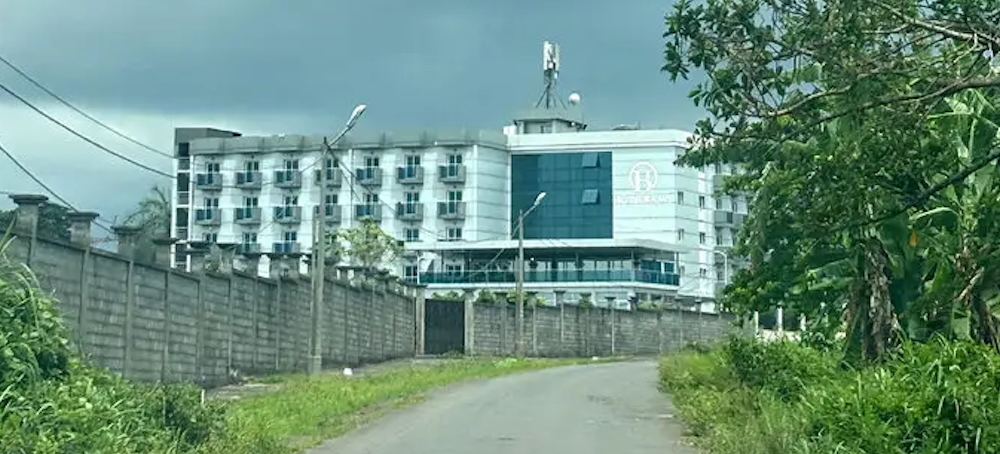 The Hotel Bamy, on the outskirts of Malabo, has been transformed into a makeshift prison. (photo: Monika Pronczuk/AP)
 A Central African Hotel Has Become a Nightmare Prison for US Deportees
Megha Rajagopalan and Pranav Baskar The New York Times
Witnesses say men were hooded and beaten in Equatorial Guinea. The autocratic government there is a partner in President Trump’s deportation program.
The deportees said the beatings and subsequent arrests were intended to stop them from telling the outside world about the deteriorating conditions and growing violence inside the hotel, which has become a de facto prison for 29 men and women from different countries.
Experts and human rights advocates predicted such abuse after the Trump administration began deporting people to authoritarian countries where they had no ties or, in many cases, legal rights. Equatorial Guinea, like other countries cooperating with the U.S. deportation program, is notorious for human rights violations, including torture and arbitrary arrest, according to the State Department.
Equatorial Guinea, a small autocracy on Africa’s western coast, is one of many countries that have agreed to accept immigrants deported from the United States. With no legal status in the country, the deportees are being held in the Hotel Bamy — a dilapidated building on the outskirts of the city of Malabo. Armed police officers stand guard 24 hours a day and frequently harass and intimidate people there with impunity, deportees said.
“We are in imminent danger now and can’t keep living like this,” Ahmed Soliman, a deportee at the hotel, said in a text message to The New York Times this month. “I’m tired and genuinely afraid for my life.” He was one of the two men who were later beaten and hooded, witnesses and the human rights group Amnesty International said.
Though the hotel operates as a prison, none of the immigrants are charged with a crime in Equatorial Guinea. The indefinite detention reflects a contradiction at the heart of many arrangements between Washington and foreign governments. Equatorial Guinea agreed to take people but has given them no legal rights or documents that would let them live or work there, even temporarily.